If you replaced the iron in your blood with copper, would your skin and blood turn bright blue
Imagine bleeding sapphire instead of crimson. Discover the startling science behind swapping iron for copper and whether it would truly transform you into a real-life, blue-blooded marvel.

Too Long; Didn't Read
While oxygenated copper-based blood is blue, your skin would likely appear pale blue or grey rather than bright blue. More importantly, humans cannot survive the swap because copper-based hemocyanin is far less efficient at transporting oxygen than iron-based hemoglobin.
The Cobalt Human: Would Swapping Iron for Copper Really Turn You Bright Blue?
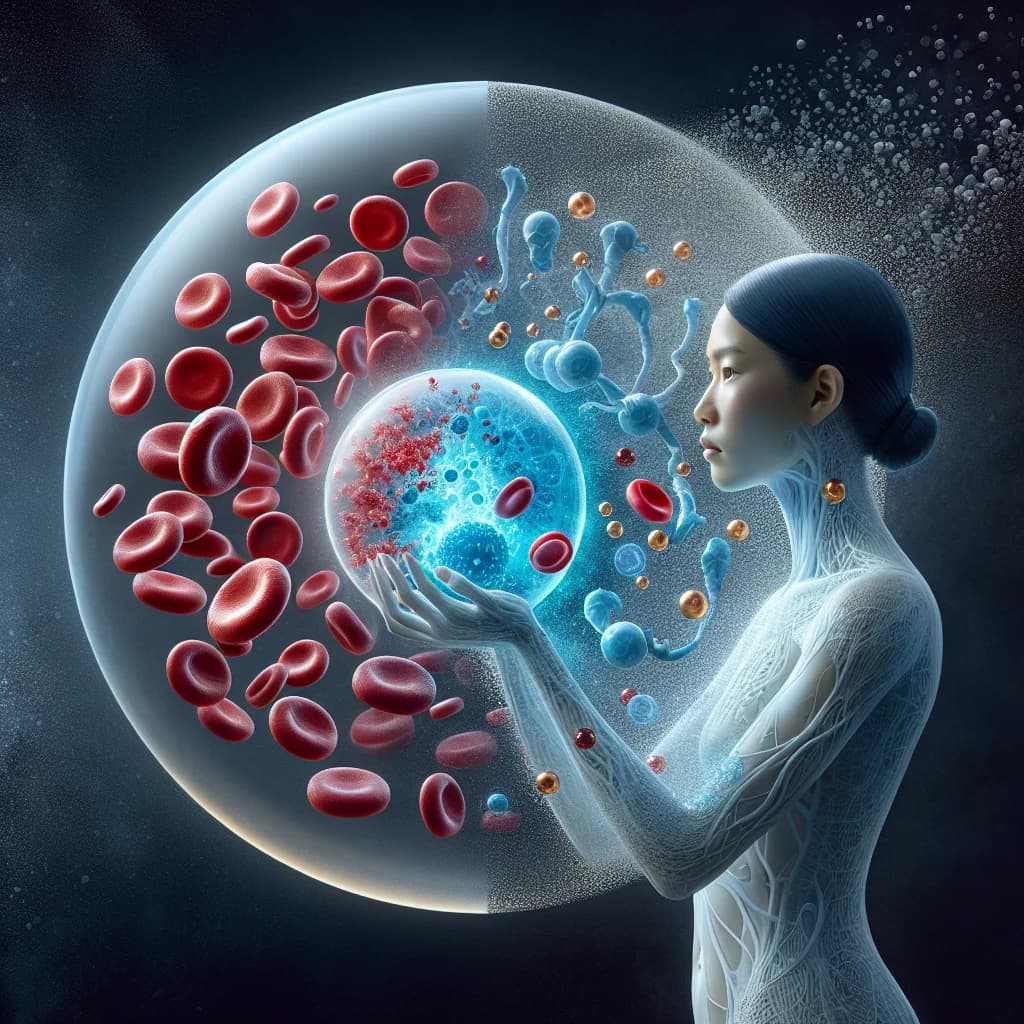
Imagine waking up, glancing in the mirror, and seeing a complexion that rivals the deep azure of the Mediterranean Sea. In the world of speculative biology, one of the most popular "what-if" scenarios involves a fundamental shift in our internal chemistry: replacing the iron in our blood with copper. While this sounds like the origin story of a silver-screen superhero, it is a concept rooted in the real-world diversity of the animal kingdom. Specifically, we are looking at the transition from hemoglobin to hemocyanin. To determine if this swap would result in a vibrant cerulean transformation, we must apply the principles of biochemistry, physiological optics, and evolutionary thermodynamics. This analysis will explore whether a copper-based human would be a "blue-blooded" marvel or a biological impossibility.
The Chemistry of the Color Swap
In our current biological setup, humans rely on hemoglobin, a protein that uses iron ($Fe^{2+}$) to bind and transport oxygen. When iron bonds with oxygen, it reflects red light, giving our blood its characteristic crimson hue.
To turn blue, we would need to switch to hemocyanin, a respiratory protein used by mollusks and arthropods, such as horseshoe crabs and octopuses. Unlike hemoglobin, which carries iron within a heme group, hemocyanin uses two copper atoms ($Cu^{2+}$) to bind a single oxygen molecule.
- Deoxygenated state: Hemocyanin is entirely colorless.
- Oxygenated state: Hemocyanin turns a distinct, beautiful blue.
If you made the switch, your arterial blood (rich in oxygen) would indeed be a vivid blue. However, your venous blood (low in oxygen) would appear clear or slightly milky, creating a fascinating internal light show.
Scaling the Blue: Would Your Skin Follow Suit?
The color of human skin is not just a result of pigment like melanin; it is also influenced by subsurface scattering. This is how light penetrates the skin, bounces off the underlying tissues and blood vessels, and returns to the eye.
The Optical Outcome
Currently, our red blood contributes to the "pinkish" or "warm" undertones in various skin types. If we replaced that red with blue, the visual impact would be significant:
- Undertone Shift: Areas where blood vessels are close to the surface—such as the lips, fingernails, and earlobes—would likely take on a striking violet or cyan tint.
- The "Smurf" Factor: Because human skin acts as a filter, the bright blue of the oxygenated copper-blood would likely appear as a pale, ethereal lavender or a cool teal rather than a "bright" neon blue.
- Transparency Matters: In a hypothetical person with very low melanin, the transition would be most dramatic, potentially mimicking the aesthetic of a "living sapphire."
The Metabolic Cost of Being Blue
While the aesthetic might be stunning, the physics of energy production present a major hurdle. Hemoglobin is remarkably efficient. One hemoglobin molecule can carry four oxygen molecules. Hemocyanin, while effective for a cold-blooded octopus in the freezing depths of the ocean, is much less efficient for a warm-blooded mammal.
- Oxygen Capacity: Hemoglobin is roughly 3 to 4 times more efficient at transporting oxygen at human body temperatures than hemocyanin.
- The Math of Breathing: To maintain your current activity level with copper-based blood, you would likely need to pump blood at a much higher pressure or increase your heart rate significantly—perhaps three times the normal rate—to compensate for the lower oxygen-carrying capacity.
- Volume Requirements: Alternatively, you might need up to 15 liters of blood instead of the standard 5 liters to move the same amount of oxygen, making you significantly heavier and your circulatory system much bulkier.
Environmental Constraints and Cascading Effects
In nature, hemocyanin is an adaptation to specific environments. It works best in cold, low-oxygen conditions. For a human living at 98.6°F (37°C) in a standard 21% oxygen atmosphere, copper-based blood would struggle to release oxygen into the tissues.
From a clinical perspective, a copper-based human would likely face "thermal limitations." As your body temperature rises, the copper atoms struggle to hold onto oxygen. This means that a simple jog on a warm day could lead to immediate oxygen deprivation, not because you aren't breathing, but because your "blue" blood is chemically unable to keep up with the heat.
The Scientific Verdict
If we replaced the iron in our blood with copper, the visual results would be undeniable: you would indeed have blue blood and a strikingly cool-toned, perhaps even lavender, complexion. Scientifically, the shift represents a fascinating trade-off between aesthetic novelty and biological efficiency.
Ultimately, we are red-blooded for a reason. Iron-based hemoglobin is a high-performance engine designed for the high-energy demands of mammalian life. While the idea of being a cobalt-colored human is a delightful thought experiment, it reminds us that our biology is finely tuned to the physics of our planet. Evolution has chosen red not just for the color, but for the incredible power iron provides to every cell in our bodies.