If you replaced the Moon with a giant disco ball, how bright would the night sky become
Imagine trading the soft lunar glow for a blinding, thousand-beam celestial light show that would forever change life on Earth. Discover the startling physics behind turning our Moon into the ultimate cosmic disco—and whether we’d even survive the sparkle.

Too Long; Didn't Read
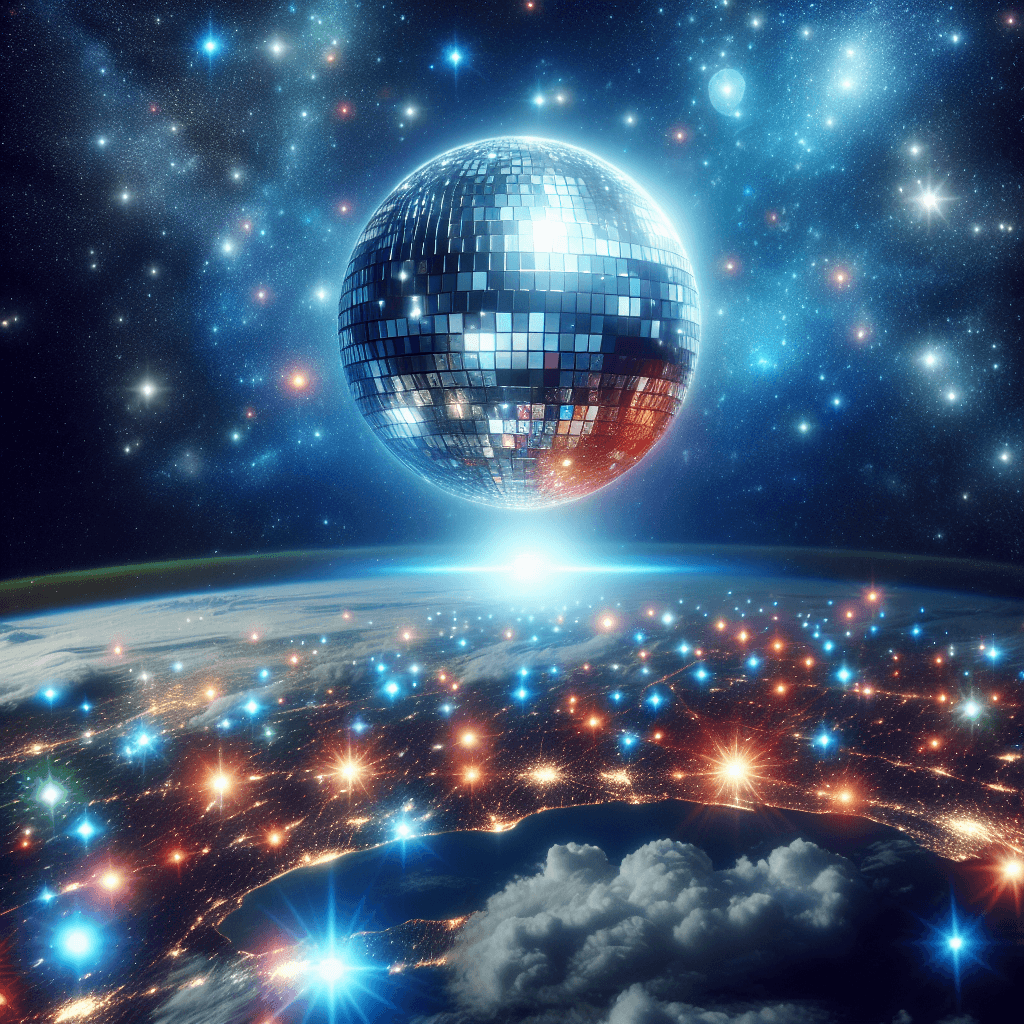
Replacing the Moon with a giant disco ball would transform the steady moonlight into a series of brief, blindingly bright flashes. Because the ball is made of flat mirrors, it would reflect concentrated beams of sunlight toward Earth, creating intense glints thousands of times brighter than the current Moon followed by periods of darkness as the sphere rotates.
Saturday Night Fever: How Bright Would the Night Sky Be If the Moon Were a Giant Disco Ball?
Imagine stepping outside at midnight, not into the soft, milky glow of a crescent moon, but into a celestial light show featuring trillions of tiny, dancing suns. Replacing our dusty, cratered Moon with a perfectly spherical, mirror-tiled disco ball is a classic thought experiment that blends physics with high-concept aesthetics. While it sounds like the ultimate party favor, the reality involves complex optical physics and a radical transformation of how we experience the night.
To analyze this scenario, we must establish our parameters: we are replacing the Moon with an object of the same size (3,474 kilometers in diameter) at the same distance (roughly 384,400 kilometers away). This investigation will rely on the principles of albedo (reflectivity), specular reflection, and geometric optics to determine if we would be dancing in the streets or shielding our eyes from cosmic glare.
The Science of Shine: Albedo and Reflection
To understand how bright a disco-ball Moon would be, we first have to look at how poorly the current Moon reflects light. Despite appearing bright against the dark sky, the Moon has an albedo of approximately 0.12. This means it reflects only 12% of the sunlight that hits it—roughly the same reflectivity as worn asphalt or a dark lump of coal.
A mirror, however, has an albedo approaching 1.0, reflecting nearly 100% of incident light. If we replaced the Moon’s rocky surface with glass mirrors, the "Full Moon" would technically be nearly ten times more efficient at reflecting sunlight toward Earth. However, the way it reflects that light changes everything. The Moon currently provides diffuse reflection, scattering light in every direction. A disco ball provides specular reflection, bouncing light in concentrated, narrow beams.
The Glitter Effect: Thousands of Tiny Suns
A disco ball isn't one smooth mirror; it is a polyhedron made of thousands of flat facets. If the Moon were covered in mirrors roughly the size of a standard floor tile, the visual effect on Earth would be a "glitter" phenomenon.
Estimating the Flash
Instead of a single glowing orb, we would see a dark circle in the sky peppered with thousands of incredibly bright points of light. Each mirror that happened to be at the perfect angle to reflect the Sun directly toward your eyes would appear as a tiny, brilliant star.
- Brightness Metric: Each individual "glint" would be significantly brighter than any star in the sky, appearing almost as a miniature version of the Sun itself.
- The Sweep: Because the Moon rotates and orbits the Earth, these beams would sweep across the Earth's surface at high speeds. A single "spotlight" from the Lunar Disco Ball might only pass over your backyard for a fraction of a second, creating a rhythmic, flickering strobe effect across the landscape.
Impact on the Night Sky
The total amount of light hitting the Earth would increase, but it wouldn't be a steady glow. The overall "luminous flux" (total light perceived) would make the night significantly more illuminated than a standard full moon.
- Ambient Brightness: While the spots of light would be intense, the areas between the spots would remain dark. You wouldn't see a "glow" so much as a rapid-fire sequence of high-intensity flashes.
- Shadow Play: Shadows would become incredibly sharp. Because the light source is a series of distinct points rather than a large, diffuse disc, the "penumbra" (the blurry edge of a shadow) would almost disappear.
- Visual Magnitude: If you were to average the light out, the night sky would be roughly 10 to 30 times brighter than a typical full moon night, potentially making it bright enough to read a book by—provided you could handle the flickering!
Environmental and Atmospheric Consequences
While a giant disco ball in space sounds festive, the atmospheric and biological consequences would be notable. The sudden increase in nocturnal light would disrupt the circadian rhythms of many species.
- Nocturnal Navigation: Migratory birds and insects that rely on moonlight or starlight for navigation would find the "strobe effect" highly confusing.
- Astronomical Interference: For human observers, ground-based astronomy would become nearly impossible during the disco-moon’s "full" phase, as the intense flashes would overexpose sensitive telescope sensors.
- Heat Transfer: Interestingly, because the mirrors reflect light back into space rather than absorbing it, the Moon itself would actually stay cooler than it does now, though this would have no measurable effect on Earth’s climate.
Conclusion
Replacing the Moon with a giant disco ball would transform our night sky from a tranquil vista into a high-energy optical event. Governed by the laws of specular reflection and the high albedo of glass, the night would be defined by thousands of sweeping, sun-bright needles of light. While the total illumination would be vastly higher than what we experience today, it would be delivered in a rhythmic, glittering fashion.
Ultimately, this thought experiment highlights the unique "service" our current Moon provides. By being a dark, dusty rock, it softens the Sun’s harsh glare into the gentle, diffuse silver light that has guided humanity for millennia. The Moon might not be a disco ball, but its subtle glow is exactly what our planet needs to keep its natural rhythms in sync.