If you stood on the Moon during a lunar eclipse, why would Earth appear as a glowing red ring
Imagine witnessing every sunrise and sunset on Earth simultaneously as our planet transforms into a hauntingly beautiful ring of crimson light. Step onto the lunar surface to discover the mind-bending science behind this breathtaking cosmic "ring of fire."

Too Long; Didn't Read
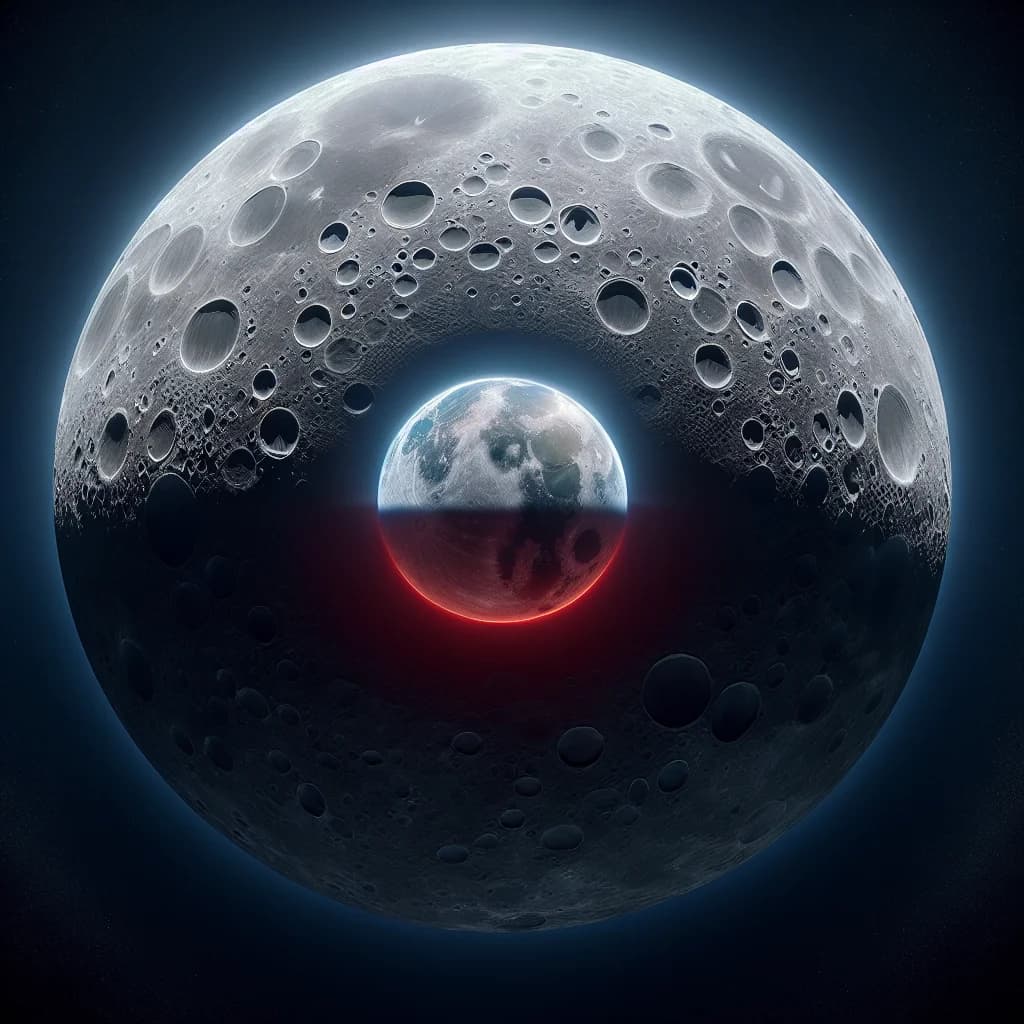
From the Moon, the Earth appears as a glowing red ring because our atmosphere filters and refracts sunlight. As blue light scatters away, only the red wavelengths—representing every sunrise and sunset happening simultaneously—bend around the Earth's edge and project toward the lunar surface.
A Ring of Every Sunrise and Sunset: Why Does the Earth Glow Red from the Lunar Surface?
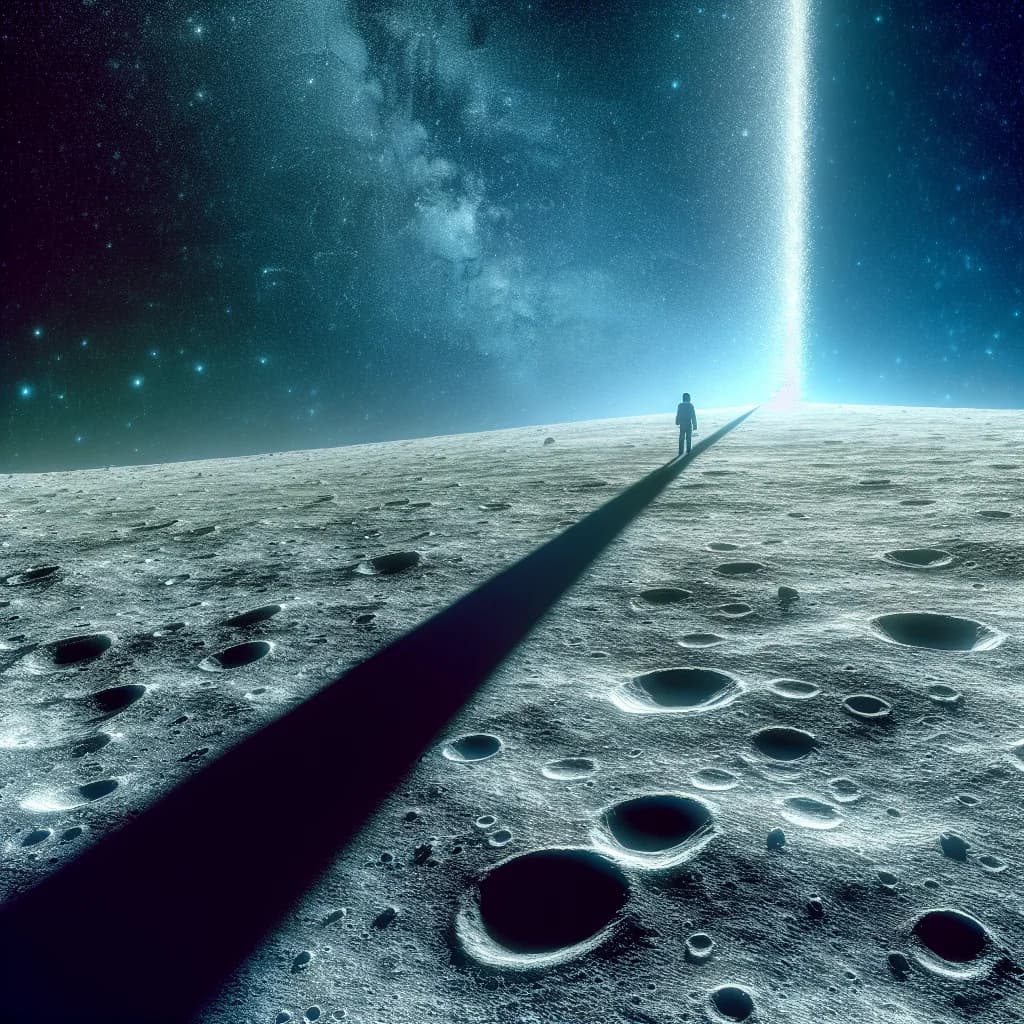
Imagine standing on the desolate, silver-grey plains of the Moon. High above, the familiar "Blue Marble" of Earth hangs in the black sky. Suddenly, the Earth begins to slide directly in front of the Sun. On Earth, people are watching a total lunar eclipse, seeing the Moon turn a deep, copper red. But from your lunar vantage point, the view is even more spectacular. Instead of a simple shadow, the Earth is transformed into a dark disc outlined by a brilliant, glowing red halo. Why does our planet take on this fiery appearance? To solve this cosmic mystery, we must look through the lenses of atmospheric physics, the geometry of light refraction, and the fascinating behavior of Rayleigh scattering.
The Perspective Shift: A Solar Eclipse from the Moon
To understand this phenomenon, we first have to flip our perspective. When we on Earth witness a total lunar eclipse, the Moon is passing through the Earth’s shadow (the umbra). However, if you were standing on the Moon during this event, you would actually be witnessing a solar eclipse.
Because the Earth is much larger than the Moon—roughly 12,742 kilometers in diameter compared to the Moon’s 3,474 kilometers—it appears nearly four times larger in the lunar sky than the Sun does. When the Earth perfectly aligns between the Moon and the Sun, it doesn't just block the Sun; it completely overwhelms it. Yet, even during this total blockage, the Earth’s edges don't go dark. Instead, they ignite with a crimson glow.
Nature’s Giant Lens: Atmospheric Refraction
The primary reason for the red ring is Earth’s atmosphere. If Earth were a barren rock like the Moon, the eclipse would be pitch black. However, our planet is wrapped in a thin, gaseous envelope roughly 100 kilometers thick.
As sunlight travels from the Sun and grazes the edge of the Earth, it doesn't just travel in a straight line. Instead, the Earth’s atmosphere acts like a massive, curved lens. This process, known as refraction, bends the sunlight inward toward the Moon.
- The Curvature of Light: The atmosphere is denser near the surface and thinner further out. This density gradient causes light to bend by about 1.5 degrees as it passes through.
- The Focal Point: This bending allows light that would otherwise miss the Moon to "wrap" around the Earth’s curve and reach the lunar surface, illuminating the Earth's silhouette from behind.
Rayleigh Scattering: Filtering the Rainbow
If the atmosphere bends all sunlight, why is the ring specifically red? This is due to Rayleigh scattering, the same principle that explains why our sky is blue during the day and red at sunset.
Sunlight is composed of a spectrum of colors, each with a different wavelength. Blue light has shorter wavelengths and is easily scattered in all directions by the nitrogen and oxygen molecules in our atmosphere. Red light, conversely, has longer wavelengths and travels more easily through the atmosphere with less interference.
During a lunar eclipse, sunlight must travel a long, horizontal path through the thickest parts of Earth's atmosphere to reach the Moon. By the time the light exits the atmosphere on the other side:
- The blue and violet light has been scattered away entirely.
- Only the long-wavelength reds and oranges survive the journey.
- This filtered light is then refracted toward your eyes on the Moon.
A Global Symphony of Sunsets
The most poetic way to describe this glowing red ring is to realize exactly what you are looking at. The halo surrounding the dark Earth is the combined light of every single sunrise and every single sunset occurring on Earth at that exact moment.
If you were to look at the "top" of the Earth from the Moon, you might be seeing the dawn breaking over the Atlantic; at the "bottom," you might see the sun dipping below the horizon in the Pacific. The ring is a continuous, 40,000-kilometer-long circle of twilight. The intensity of the red—whether it is a bright orange or a dark, brick red—depends on how clear or dusty the Earth’s atmosphere is at that time, often influenced by recent volcanic eruptions or cloud cover.
Conclusion
The transformation of Earth into a glowing red ring is a masterpiece of celestial geometry and physics. It is dictated by the refractive power of our atmosphere and the selective scattering of light wavelengths. Standing on the Moon, you wouldn't just be seeing a shadow; you would be seeing the physical evidence of the gaseous veil that makes life on our planet possible.
This thought experiment highlights a beautiful reality: even in the cold vacuum of space, our atmosphere works to bend, tint, and soften the harsh light of the Sun. It serves as a reminder that the same physics creating a simple sunset in your backyard is capable of painting a ring of fire across the cosmos, connecting our world to its lunar neighbor in a brilliant display of light.