If you threw a baseball on an asteroid, could it orbit and hit you from behind
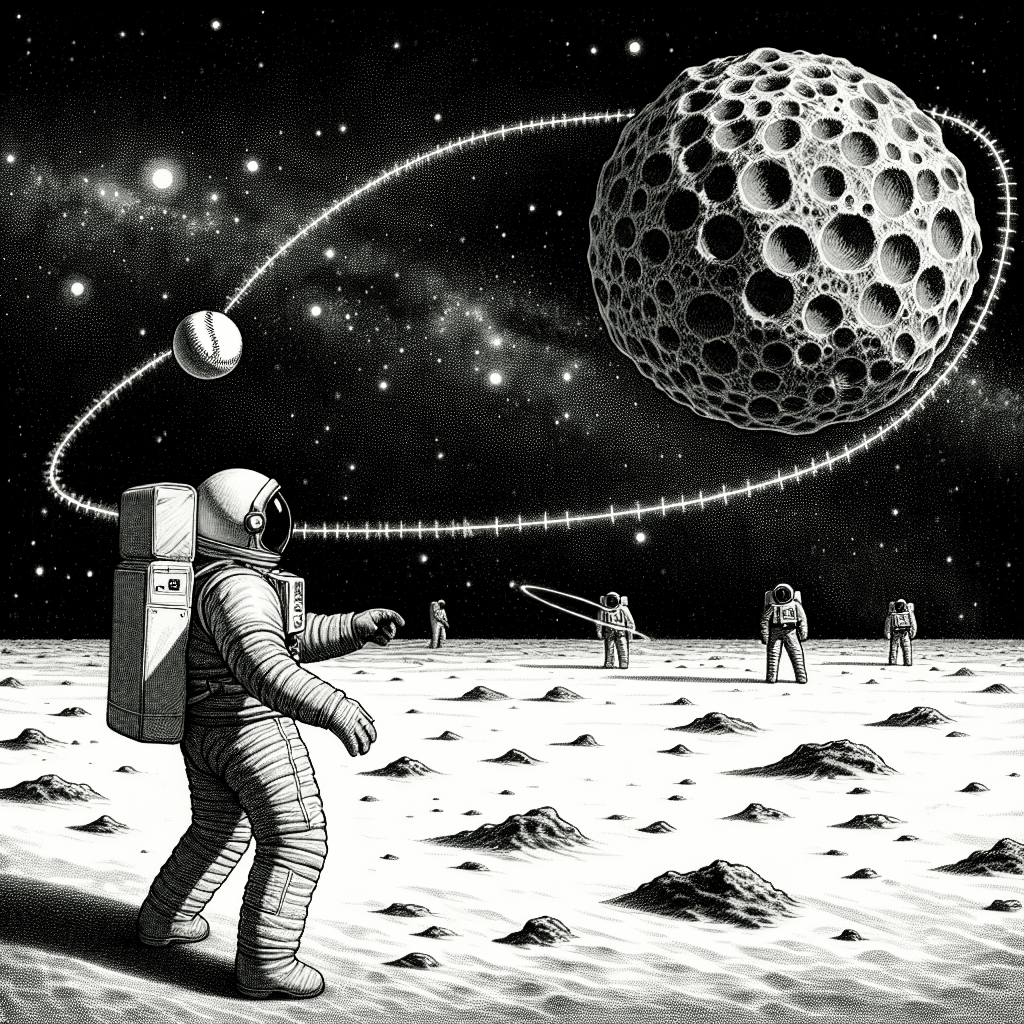
Imagine hurling a fastball into the darkness only to have it smack you in the back of the head minutes later. On the right asteroid, the laws of physics turn a simple pitch into the ultimate cosmic boomerang.

Too Long; Didn't Read
Technically yes. On a small enough asteroid with low gravity, a human can throw a baseball at the specific orbital velocity required to circle the entire body. If the throw is perfectly leveled and timed, the ball could theoretically travel around the asteroid and strike the thrower from behind, though the asteroid’s irregular shape and rotation would make this extremely difficult to achieve in practice.
The Ultimate Home Run: Could You Throw a Baseball Around an Asteroid and Hit Yourself?
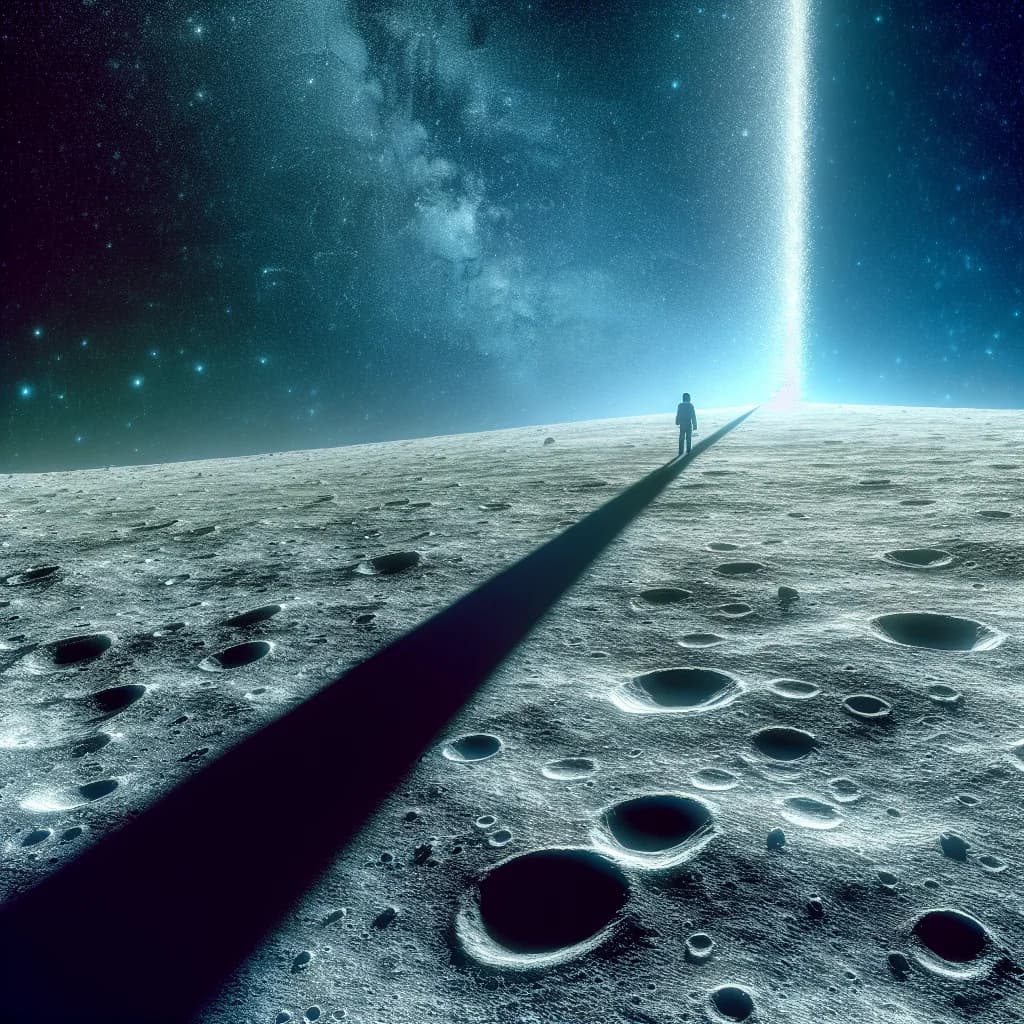
Imagine standing on a silent, dusty celestial body drifting through the void. You grip a standard baseball, wind up, and hurl it toward the horizon. In the vacuum of space, there is no air resistance to slow it down. You wait, and an hour later, you feel a gentle tap on your shoulder. The ball has completed a full lap of the world and returned to its starting point. It sounds like the plot of a surrealist film, but this scenario is a fascinating exercise in orbital mechanics. To determine if this "cosmic game of catch" is actually possible, we must look at the intersection of gravitational pull, mass distribution, and the specific velocities required to maintain a low-altitude orbit around a small planetary body.
The Physics of the "Perfect" Pitch
On Earth, a baseball eventually falls to the ground because gravity pulls it down while air resistance strips away its forward momentum. On an airless asteroid, only gravity is at play. To get a ball to orbit and hit you in the back, you must achieve a very specific "orbital velocity."
If you throw the ball too slowly, it will succumb to the asteroid’s gravity and land on the surface a few hundred yards away. If you throw it too fast—exceeding the "escape velocity"—the ball will break free from the asteroid’s gravitational tether entirely and drift into deep space forever. The "Goldilocks" zone is a circular orbit just a few feet above the surface.
Sizing Up the Cosmic Outfield
The success of your throw depends entirely on the mass and radius of the asteroid. Using the formula for circular orbital velocity—$v = \sqrt{GM/r}$ (where $G$ is the gravitational constant, $M$ is mass, and $r$ is the radius)—we can calculate the ideal world for a human arm.
- The Velocity: A professional pitcher can throw at about 90 mph (40 m/s), but an average person might throw closer to 55 mph (25 m/s).
- The Asteroid: For a thrower to launch a ball into a surface-skimming orbit at 55 mph, the asteroid would need to be roughly 30 miles (48 kilometers) in diameter, assuming a density similar to common stony asteroids.
- Real-World Context: This is roughly the size of the asteroid 243 Ida. If you stood on Ida and threw a baseball at highway speeds, that ball would technically have enough energy to circle the entire moonlet.
The "Lumpy" Reality of Minor Planets
While the math works for a perfect sphere, real asteroids are rarely round. Most are "lumpy" objects, often described as looking like potatoes or peanuts. This irregular shape creates an uneven gravitational field.
- Mass Concentrations: Some areas of the asteroid are denser or more voluminous, creating "mascons" (mass concentrations) that would tug the baseball off its path.
- Orbital Decay: Because the gravity is so weak and inconsistent, a perfectly circular orbit is nearly impossible to maintain. Instead of hitting you in the back, the ball would likely drift higher into space or wobble and crash into a crater a few miles behind you.
- Rotation: Asteroids rotate. If the asteroid spins beneath the ball while the ball is in flight, you won't be in the same spot when the ball returns. You would have to calculate the asteroid's rotation and "lead" your target by standing in the predicted return path.
The Waiting Game: How Long Until Impact?
Even if you find a perfectly spherical asteroid and nail the velocity, don’t expect a quick return. On an asteroid roughly 30 miles wide, a ball traveling at 55 mph would take approximately 1.7 hours to complete one full revolution.
During this time, the "impact" would not be destructive. Because the ball is returning at the same speed you threw it, the encounter would be equivalent to someone tossing you a ball from a few feet away. In the vacuum of space, this contact would be a clinical transfer of kinetic energy—a simple tactile notification that your experiment in celestial physics was a success.
Conclusion
The theoretical possibility of hitting yourself in the back with a baseball on an asteroid is a testament to the elegant laws of motion established by Isaac Newton. It requires a precise balance where your physical strength matches the gravitational tether of a mountain-sized rock. While the irregular shapes and rotations of real-world asteroids make the "self-catch" statistically improbable, the underlying science is sound. This thought experiment highlights the profound difference between our lives in Earth's deep gravity well and the fragile, precarious physics of the small bodies that populate our solar system. In space, even a simple game of catch becomes a complex dance of mathematics and planetary mechanics.