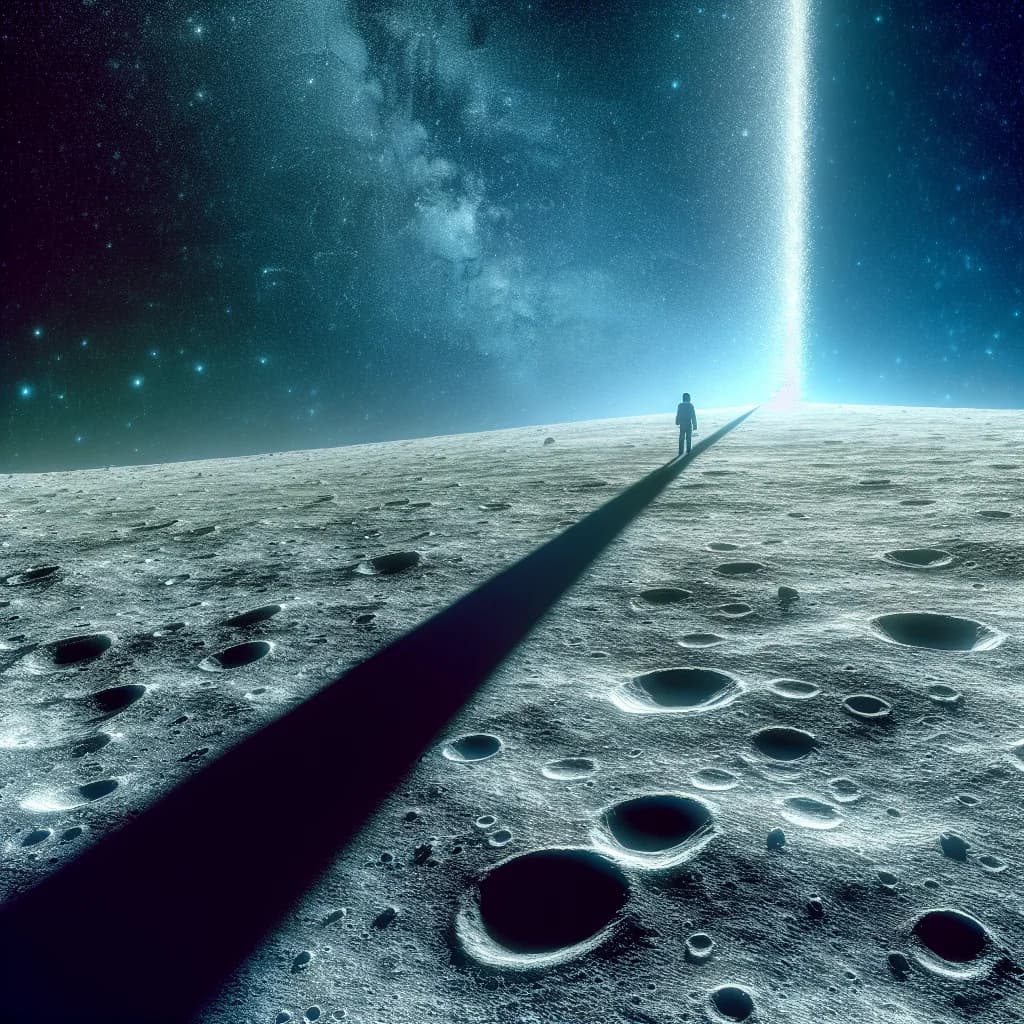
If you tried to cry in zero gravity, could your own tears eventually drown you
In the weightless vacuum of space, your tears don’t fall—they form a growing, suffocating sphere of liquid that clings to your face. Could a simple cry in orbit actually turn into a fatal fight for breath?

Too Long; Didn't Read
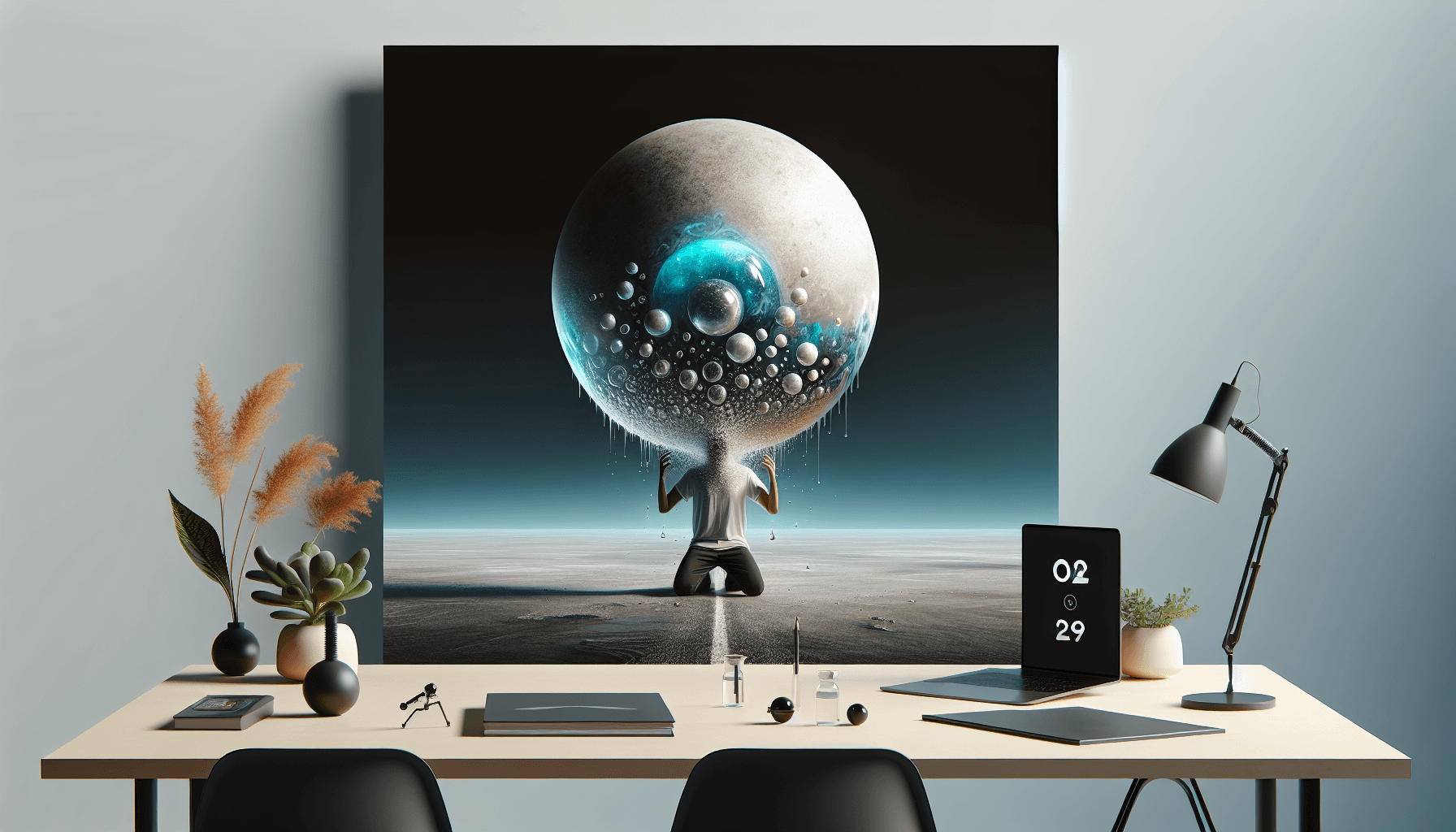
In microgravity, tears do not fall but instead accumulate in a growing ball around your eyes due to surface tension. If you continue to cry without wiping them away, this liquid mass can expand to cover your nose and mouth, making it theoretically possible to drown.
Floating in a Sob: Could Your Own Tears Drown You in Zero Gravity?
In the silent, majestic environment of Earth's orbit, even the most basic human functions undergo a radical transformation. While we often marvel at astronauts somersaulting through the air or eating floating M&Ms, the more somber side of the human experience—crying—presents a unique set of challenges. In a world without "down," a simple sob becomes a complex problem of fluid dynamics. This leads us to a fascinating, albeit slightly absurd, question: If an astronaut were to experience a prolonged bout of crying in microgravity, could they actually drown in their own tears? To answer this, we must examine the intersection of human physiology, surface tension, and the peculiar physics of a weightless environment.
The Physics of a Weightless Tear
On Earth, gravity is the primary force acting on a tear. Once a tear duct overflows, gravity pulls the liquid downward, leading it to roll down the cheek and eventually fall away. In zero gravity, however, gravity’s influence is negligible. Instead, the dominant force becomes surface tension.
Surface tension is the "skin-like" effect on the surface of a liquid caused by the attraction of its molecules. In space, this force causes liquids to pull themselves into the tightest possible shape—a sphere. When an astronaut cries, the tears do not fall. Instead, they form a shimmering, growing blob that clings to the eye and the surrounding facial tissue.
Adhesion and the "Tear Blob"
Because of a property called adhesion, the water molecules are attracted to the surface of the skin. Rather than floating away into the cabin, the tears will:
- Accumulate directly over the eyeball.
- Spread across the bridge of the nose due to capillary action.
- Form a large, gelatinous mass that can migrate toward the other eye or the respiratory openings.
Calculating the Volume of Risk
To understand if this poses a genuine threat, we have to look at the numbers. A typical "heavy cry" might produce about 1 to 2 milliliters of fluid over a short period. While that sounds insignificant, fluid behavior in space makes small volumes much more obstructive.
- Mass and Volume: 1 milliliter of water forms a sphere roughly 1.2 centimeters (0.47 inches) in diameter.
- Surface Coverage: Because the liquid sticks to the face, it doesn't stay a perfect sphere; it flattens into a thick "pancake" of water.
- The Critical Threshold: Research into space safety, particularly following incidents with leaking cooling systems in spacesuits, suggests that as little as 30 to 50 milliliters of water concentrated around the face can create a significant respiratory hazard.
While it would take a monumental and prolonged emotional event to produce 30 milliliters of tears—equivalent to about two tablespoons of liquid—the danger is not just the volume, but the location.
The Threat to Respiration: A Liquid Seal
The primary concern in this hypothetical scenario is the formation of a "liquid seal." In a weightless environment, if a large enough blob of tears migrates from the eyes to the nose or mouth, surface tension can cause the liquid to wrap around the nostrils or enter the oral cavity.
Unlike on Earth, where you could simply tilt your head to let the water run off, an astronaut in this situation would find the water tenaciously clinging to their skin. If the liquid covers the airways, the "suction" created by attempting to inhale could actually pull the viscous blob further into the respiratory tract.
Real-World Precedent
This isn't entirely theoretical. In 2013, Italian astronaut Luca Parmitano experienced a malfunction in his spacesuit during a spacewalk. Water began filling his helmet, clinging to his face, covering his eyes, and eventually entering his nose. He described the sensation as the water "occupying all the space," making it nearly impossible to see or breathe. While this was several hundred milliliters of water, it demonstrated that without gravity to pull the liquid away, a small amount of fluid can become a major biological barrier.
The Conclusion: Can It Happen?
So, could your own tears drown you? The scientific answer is highly improbable, but physically possible.
Under normal circumstances, an astronaut can simply use a cloth or their hands to wipe the tears away, breaking the surface tension and removing the liquid. However, in a scenario where the individual is incapacitated or confined (such as inside a pressurized suit without the use of their hands), a significant and sustained output of tears could theoretically create a localized respiratory obstruction.
Ultimately, the outcome is dictated by the fascinating laws of fluid dynamics and surface tension. In the absence of gravity, the very fluids meant to protect our eyes can become a physical obstacle. It serves as a poignant reminder that while we have adapted perfectly for life at 1g, the simplest human expressions become entirely new adventures once we leave the pull of our home planet.