If you tried to whistle on Mars, would the thin atmosphere make it impossible to produce a sound
Imagine puckering up on the Red Planet only to be met by a haunting, breathless silence. Discover how the thin Martian atmosphere would warp your voice and find out if your favorite tune could ever survive the trip to another world.


Too Long; Didn't Read
Whistling on Mars is likely impossible because the atmosphere is 100 times thinner than Earths. The low density means there is not enough air pressure to create the turbulence and resonance required to produce a whistle sound.
Could You Whistle a Tune on Mars? The Science of Sound in a Thin Atmosphere
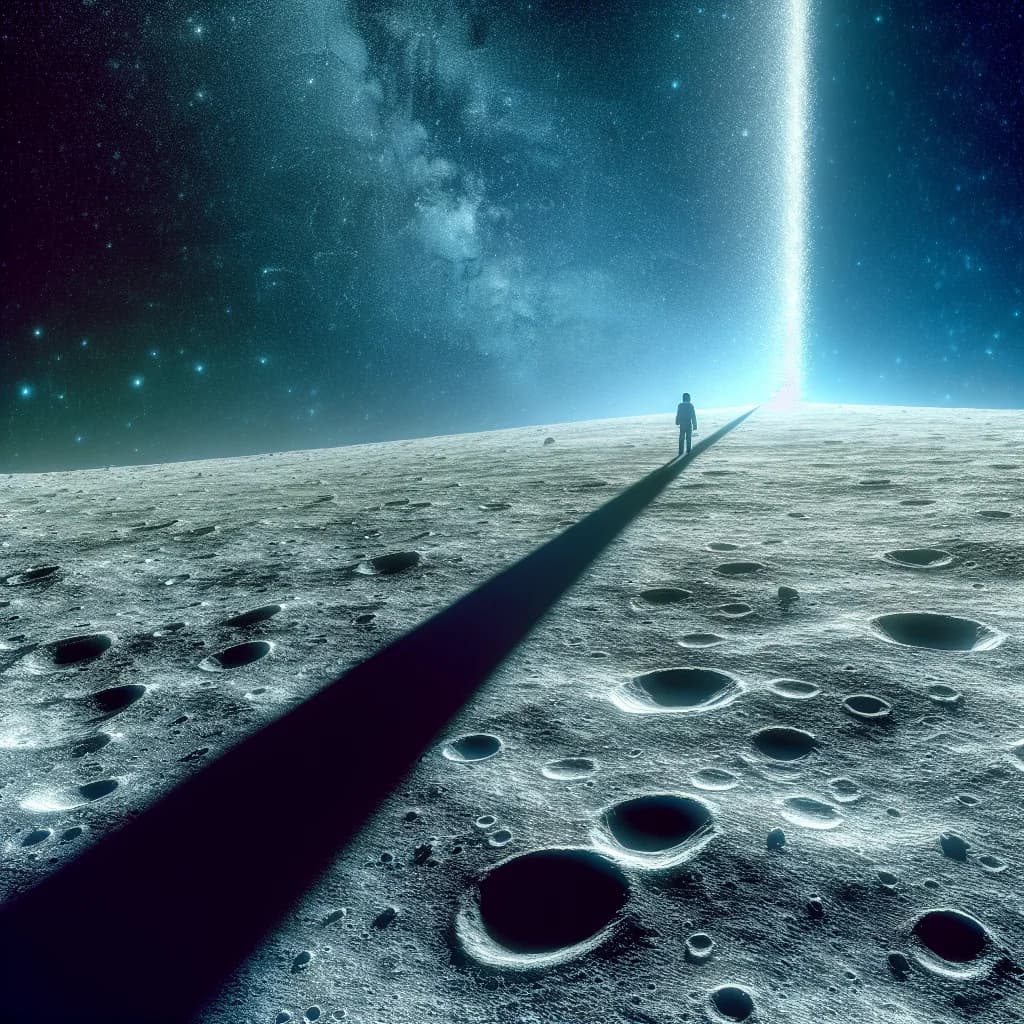
Imagine you are standing on the rust-colored plains of the Jezero Crater, surrounded by the silent grandeur of the Martian landscape. In a moment of triumph, you decide to pucker your lips and whistle a cheerful melody. On Earth, this is a simple act of fluid dynamics. On Mars, however, your attempt at a tune might result in nothing more than a faint, wheezing hiss. The question of whether one can whistle on the Red Planet isn't just a fun "what if"—it is a fascinating dive into the physics of sound and the behavior of gases in extreme environments. To solve this mystery, we must look through the lenses of fluid dynamics, acoustics, and atmospheric science.
The Density Dilemma: Whistling through a Ghostly Atmosphere
To understand why whistling on Mars is so difficult, we first have to look at the "medium" through which the sound travels. On Earth, we live at the bottom of a thick ocean of air. Mars, by comparison, has an incredibly thin atmosphere—roughly 1% of the density of Earth's.
- Pressure Metrics: Earth’s atmospheric pressure at sea level is about 1,013 millibars. Mars averages a mere 6 millibars.
- The Comparison: Trying to whistle on Mars is scientifically comparable to trying to whistle on Earth while standing 100,000 feet in the air—well into the stratosphere.
Whistling relies on the interaction between a fast-moving stream of air and a stable volume of air. When you blow air through your lips, you create a "jet" that oscillates, creating a standing wave of sound. In the Martian environment, there simply aren't enough molecules to provide the resistance needed to trigger that oscillation. It is like trying to play a violin with a bow made of silk; there isn't enough friction or "grip" to create a vibration.
Fluid Dynamics and the Reynolds Number
In physics, we use the Reynolds Number to predict how a fluid (like air) will behave. It helps determine whether a flow will be smooth (laminar) or swirling (turbulent). Whistling requires a specific type of turbulence to create an audible "edge tone."
On Mars, because the air is so thin, the Reynolds Number for the air leaving your mouth would be significantly lower than on Earth.
- Low Turbulence: The air molecules would likely move in a straight, unbothered line rather than tumbling into the vortices required for sound.
- Increased Effort: To compensate for the low density, you would need to blow air out of your lungs at a much higher velocity.
- The Result: Even if you could exhale fast enough to create turbulence, the energy required would be exhausting, and the resulting sound would be incredibly faint.
Acoustic Attenuation: Where Did the Sound Go?
Even if you managed to produce a weak whistle through sheer lung power, you would face a second hurdle: Mars is an acoustic sponge. The Martian atmosphere is 95% carbon dioxide (CO2). Carbon dioxide molecules are particularly efficient at absorbing high-frequency sound waves through a process called viscous relaxation.
On Earth, a whistle might carry across a field. On Mars, the CO2-rich atmosphere acts as a muffling blanket.
- Speed of Sound: Sound travels at about 343 meters per second on Earth, but only about 240 meters per second on Mars.
- High-Frequency Loss: Because a whistle is a high-pitched sound, the CO2 molecules would absorb its energy almost instantly.
From just a few meters away, a Martian whistle would likely be completely inaudible, faded into the background "noise" of the planet's thin winds.
Conclusion: The Silent Red Planet
Ultimately, the laws of physics suggest that whistling on Mars is a scientific impossibility for the unassisted human. The combination of an ultra-thin atmosphere, the lack of molecular density to create turbulence, and the sound-dampening properties of carbon dioxide creates a "perfect storm" of silence. You might produce the physical motion of a whistle, but the atmosphere simply wouldn't "catch" the note.
This thought experiment highlights how much we take our own atmosphere for granted. Earth’s thick, nitrogen-oxygen mix is a perfect conductor for the symphonies of life. While Mars may be a quiet world, understanding its acoustic limitations helps scientists design the sensitive microphones on rovers like Perseverance, allowing us to eavesdrop on a planet that, for all its beauty, will never hear a human whistle.