If you used a giant magnifying glass, could you start a fire using only moonlight
If sunlight can spark a flame through a lens, shouldn’t its silver reflection do the same? Discover the mind-bending physics of why you could build a magnifying glass the size of a stadium and still never start a fire using only the light of the moon.

Too Long; Didn't Read
No, it is physically impossible. According to the laws of thermodynamics, you cannot use a lens to heat an object to a temperature higher than the surface of the light source itself. Since the moon’s surface is relatively cool, even a massive magnifying glass could never concentrate enough energy to reach the ignition point of fire.
Lunar Fire: Could a Giant Magnifying Glass Turn Moonlight into a Flame?
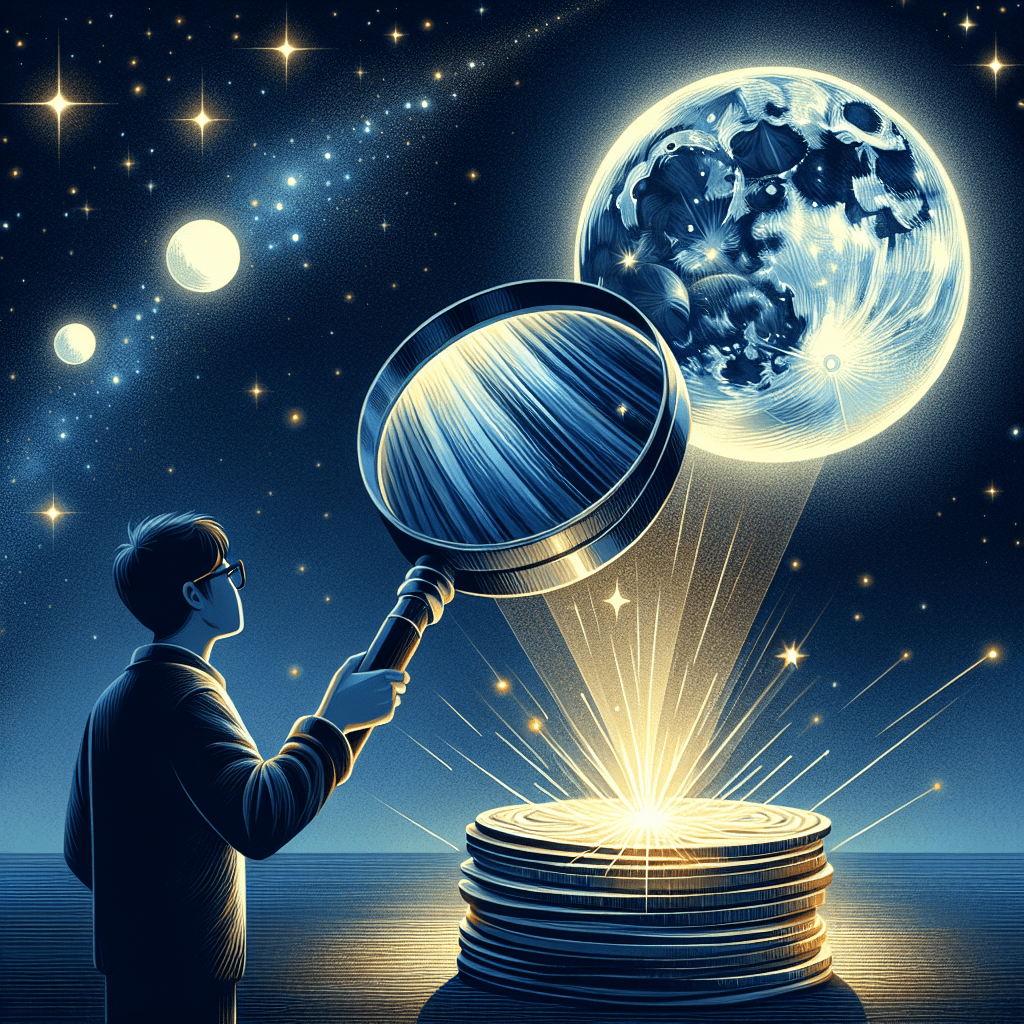
Imagine standing beneath a vibrant full moon, holding a magnifying glass the size of a football stadium. You’ve seen what a small lens can do with sunlight—turning a focused beam into a scorching point of heat capable of singing dry leaves. It stands to reason that if you simply scaled up the equipment, you could harness the silver glow of the moon to achieve the same result. But does the universe play by those rules?
In this thought experiment, we will explore the boundaries of optical physics and thermodynamics to determine if moonlight can be concentrated into an incendiary force. To find our answer, we must look past the brightness of the night sky and examine the fundamental laws governing light, heat, and the Second Law of Thermodynamics.
The Magnitude of Moonlight: A Dim Comparison
To understand the challenge, we first need to look at the sheer difference in energy between our two celestial neighbors. While the moon appears bright against the black backdrop of space, it is significantly less powerful than the sun.
- Albedo and Reflectivity: The moon is not a light source; it is a giant, rocky reflector. Its "albedo"—the measure of how much light it reflects—is roughly 0.12. This means the moon reflects only about 12% of the sunlight that hits it, making it roughly as reflective as worn asphalt.
- The 400,000-to-1 Ratio: Direct sunlight is approximately 400,000 times brighter than the light of a full moon. Even on the clearest night, the total amount of energy reaching Earth from the moon is incredibly small.
To put this in perspective, if you wanted to collect as much energy from the moon as you get from the sun during a quick afternoon stroll, you would need a collection surface the size of several city blocks just to match a few square inches of sunlight.
The Thermodynamic Wall: The Second Law
Even if you built a magnifying glass large enough to cover an entire continent, you would run into a brick wall known as the Second Law of Thermodynamics. This law dictates how heat energy moves through the universe, and it provides a definitive "no" to our lunar fire starter.
The Source Temperature Constraint
In optics, a lens cannot focus light to create a spot that is hotter than the surface of the light source itself. This is a fundamental principle of radiance.
- The Sun: The surface of the sun is roughly 5,500 degrees Celsius (9,932 degrees Fahrenheit). Because the sun is so hot, a magnifying glass can easily concentrate its rays to reach the "kindling point" of paper, which is about 233 degrees Celsius (451 degrees Fahrenheit).
- The Moon: The moon’s surface temperature maxes out at about 127 degrees Celsius (260 degrees Fahrenheit) during its lunar day.
Because the moon's surface is the "source" of the light we see, even the most perfect, giant magnifying glass in the world could only heat a target to a maximum of 127 degrees Celsius. While that is hot enough to boil water, it falls significantly short of the temperatures required to create an open flame.
The Geometry of Light: Why Size Doesn't Matter
You might wonder if a larger lens could overcome this temperature limit by gathering more "total" light. However, the physics of Etendue (the "spread" of light) prevents this.
As you make a lens larger, you also change the angle at which the light hits the focal point. Once the light source (the moon) appears to fill the entire "sky" from the perspective of the focal point, you have reached maximum concentration. At this stage, the object you are trying to burn is effectively "surrounded" by the temperature of the moon's surface.
- Concentration Limit: You can make the spot brighter, but you cannot make it denser in terms of heat energy than the source.
- Energy Equilibrium: Once the target reaches 127 degrees Celsius, it will begin radiating away its own heat as fast as it receives it from the lens.
Conclusion: A Cold Light After All
The ultimate scientific outcome of this experiment is a lukewarm disappointment for aspiring lunar arsonists. No matter the size of your magnifying glass—whether it is the size of a hand-lens or the size of the Earth itself—you simply cannot start a fire using moonlight.
This limitation is dictated by the Second Law of Thermodynamics, which ensures that heat cannot flow from a cooler body (the moon) to a hotter one (a flame) without external work. While the moon provides enough light to guide us through the dark, its energy is a reflected, "cool" radiation that lacks the thermal density required for combustion. It is a fascinating reminder that in physics, sometimes no amount of scale can overcome the fundamental laws of the universe. The moon remains a gentle observer of the night, incapable of even the smallest spark.