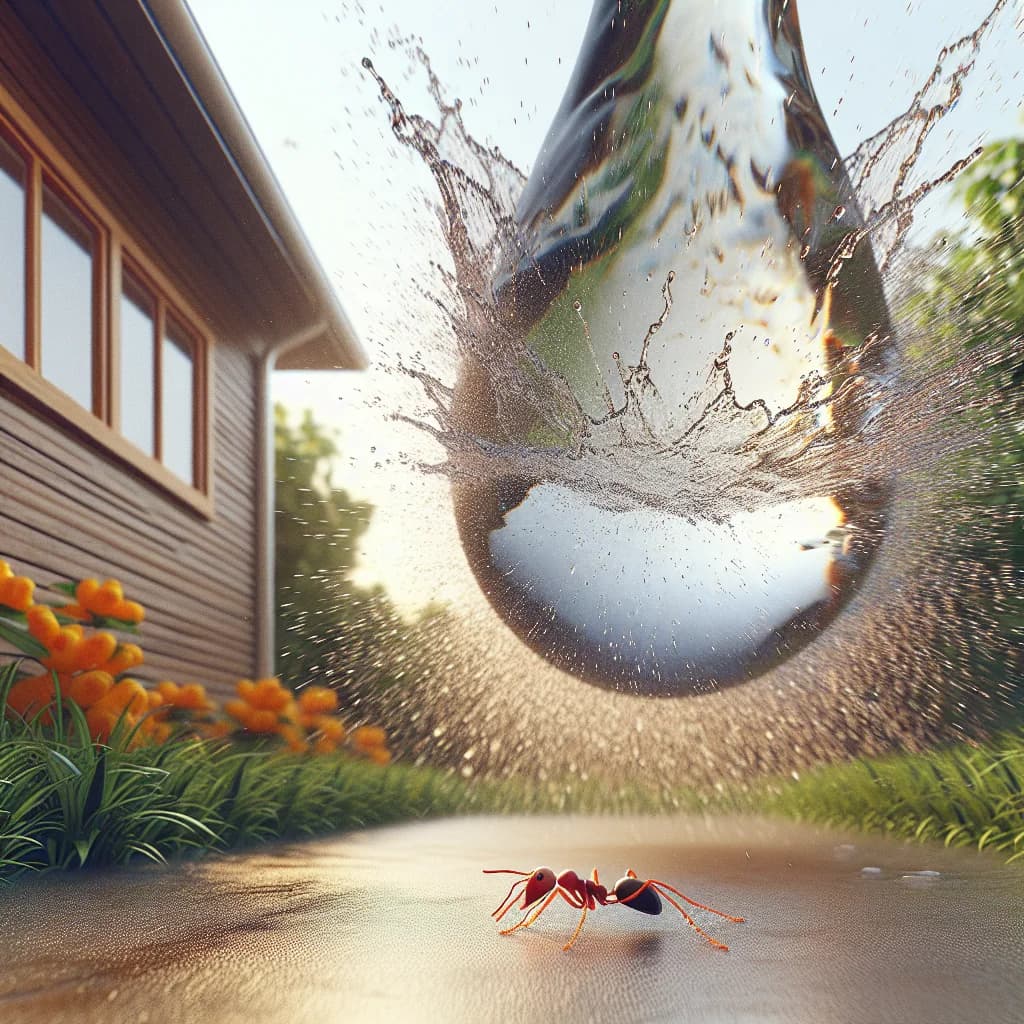
If you were ant-sized, why would a single raindrop hit you with the force of a car
To an ant, a rainy day isn’t just an inconvenience—it’s a lethal bombardment of liquid cannonballs falling from the sky. Discover the mind-bending physics that turn a single drop of water into a high-speed collision with the force of a car.

Too Long; Didn't Read
At an ant's scale, the mass of a raindrop is thousands of times greater than your own body weight. Because of this massive weight disparity and the speed at which the water falls, the kinetic energy transferred during impact is proportional to a car hitting a human, while surface tension threatens to trap you like heavy, liquid cement.
Small Scale, Big Impact: Why Would a Single Raindrop Hit an Ant-Sized Human Like a Speeding Car?
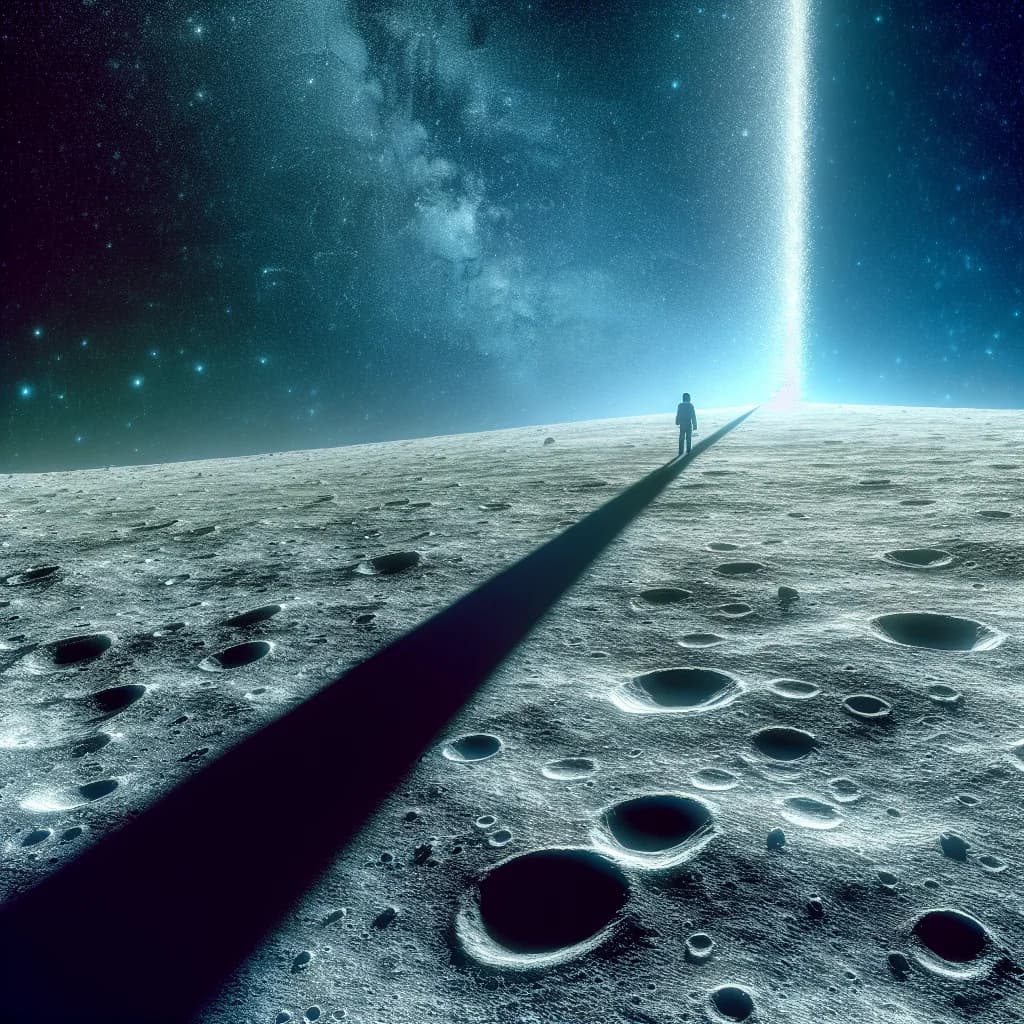
Imagine waking up to a world where a blade of grass towers like a redwood and a common pebble resembles a jagged boulder. While the concept of shrinking to the size of an ant has fueled decades of science fiction, the physical reality of such a transition is far from a playground adventure. In this miniature realm, the mundane becomes monumental, and the gentle pitter-patter of a spring shower transforms into a high-stakes kinetic bombardment.
To understand why a single raindrop would pose a life-altering threat to a microscopic traveler, we must look beyond our human-sized intuition. By applying the principles of fluid dynamics, classical mechanics, and the square-cube law, we can analyze the staggering disparity between a raindrop’s momentum and the structural limitations of a tiny human.
The Square-Cube Law: Losing Your Mass
The primary reason a raindrop becomes a "car-sized" threat starts with how your body changes during the shrinking process. According to the square-cube law, if you reduce an object’s height by a factor of 100, its surface area decreases by 10,000, but its volume (and therefore its mass) drops by a staggering 1,000,000.
An average human weighing 70 kilograms (about 154 pounds) shrunk to the size of an ant (roughly 5-6 millimeters) would retain the same density but would weigh only about 0.07 grams. At this scale, you are light enough to be carried by a breeze, but you also lack the structural inertia to resist any incoming force. You have essentially become a featherweight contender in a heavyweight world.
The Momentum of a Falling Giant
A typical large raindrop is approximately 5 millimeters in diameter and weighs about 0.05 grams. While that sounds negligible to a full-sized human, let’s look at the math for our ant-sized traveler:
- Mass Ratio: The raindrop’s mass is nearly equal to your own miniature body mass.
- Velocity: Raindrops fall at a terminal velocity of approximately 9 meters per second (about 20 miles per hour).
When a raindrop hits a full-sized human, it is 1/1,000,000th of our mass, which is why we barely feel the impact. However, for a 0.07-gram human, being hit by a 0.05-gram raindrop is the mathematical equivalent of a 150-pound person being tackled by a 110-pound object moving at 20 mph. Because the raindrop is liquid and deforms upon impact, the transfer of kinetic energy is immediate and total, resulting in a physical displacement that mirrors the force of a vehicular collision.
The "Sticky" Trap of Surface Tension
The danger of the raindrop doesn't end with the initial impact. At the macroscopic scale, we view water as a simple liquid that splashes and runs off. At the ant scale, the molecular force known as surface tension becomes a dominant, "sticky" power.
To a tiny human, water behaves more like a thick, elastic gel. Surface tension creates a "skin" on the water that is incredibly difficult to break from the inside. If the raindrop doesn't knock you aside, it will likely envelop you. Because of your low mass, the adhesive forces of the water molecules are stronger than your ability to pull away. You wouldn't just be wet; you would be effectively encased in a heavy, liquid sphere that exerts pressure from all sides.
Why Insects Survive (And We Wouldn't)
You might wonder why ants don’t seem bothered by the rain. Insects have evolved specific biological "armor" to handle these conditions:
- Exoskeletons: Their rigid outer shells distribute the force of impact far better than soft human skin.
- Hydrophobic Coatings: Many insects are covered in waxy, water-repellent hairs (pili) that prevent surface tension from "grabbing" them.
- Low Terminal Velocity: Because they are so light and have a high surface-area-to-weight ratio, they are often pushed aside by the air cushion preceding the raindrop before the liquid even touches them.
Conclusion
The scientific reality of being ant-sized reveals a world governed by forces we usually ignore. What we perceive as a refreshing mist is actually a barrage of high-velocity liquid projectiles. This hypothetical scenario highlights the "Square-Cube Law" and the sheer power of momentum, showing that when you change the scale, you change the very laws of survival.
While we might dream of exploring the jungle of our backyard, the physics of rain reminds us that our current size is perfectly calibrated for the environment we inhabit. The next time you see a rainstorm, take a moment to appreciate the incredible engineering of the tiny insects that navigate this "heavy-impact" world every day.