If you were in deep space, could you orbit another person like a tiny human moon
Ever wondered if your own gravity is strong enough to claim a moon of your own? Discover the mind-bending physics of whether two people could actually orbit each other in the silent void of deep space.

Too Long; Didn't Read
Theoretically yes, but practically no. While any mass has gravity, a human’s pull is so weak that an orbit would be incredibly slow and easily disrupted. The slightest movement, or even the faint pressure of starlight, would exert more force than the gravitational bond, making a stable human orbit impossible in reality.
Dancing in the Dark: Could Two Humans Actually Orbit Each Other in Deep Space?
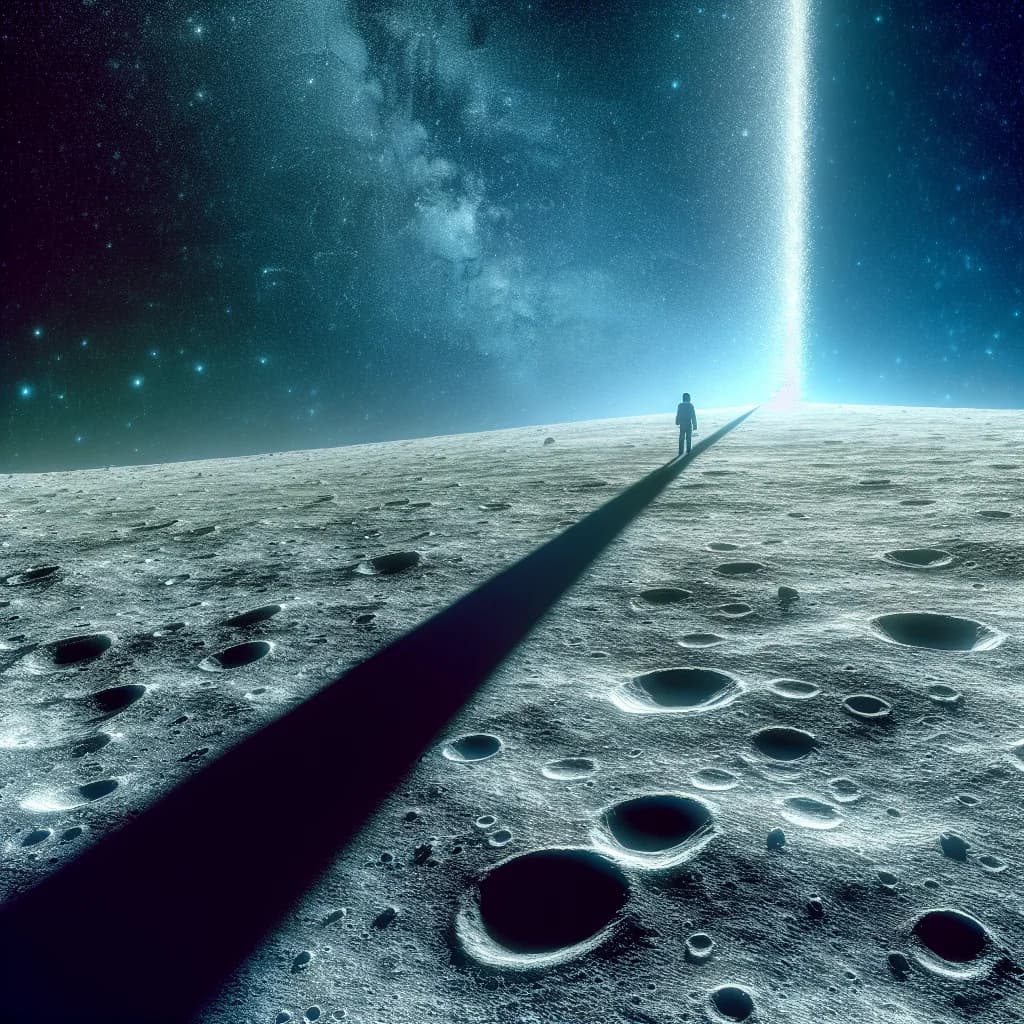
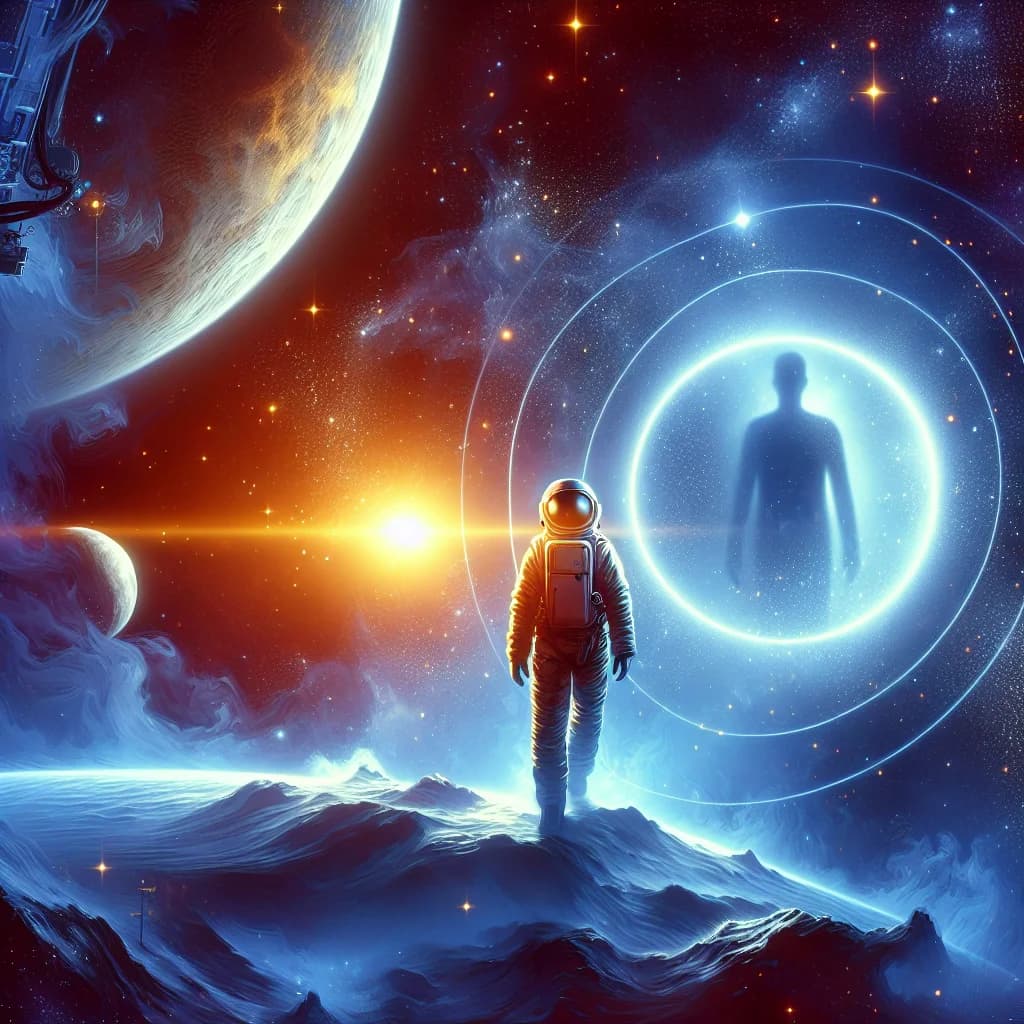
Imagine you are drifting in the infinite, velvet expanse of deep space, far from the tug of Earth, the Sun, or any wandering planets. You aren’t alone; a fellow astronaut is floating a few meters away. In this silent vacuum, could you—through the sheer power of your own mass—pull your companion into a stable orbit, becoming a tiny, biological planet with your very own human moon? This whimsical thought experiment takes us beyond the realm of science fiction and deep into the fundamental mechanics of the universe. By applying Newtonian physics and the laws of orbital mechanics, we can determine whether a "human satellite" is a scientific reality or a mathematical impossibility.
The Universal Pull: Mass and Gravity
To understand if a person can orbit another, we must first look at Sir Isaac Newton’s Law of Universal Gravitation. This law states that every object with mass exerts a gravitational pull on every other object. It doesn’t matter if it is a galaxy or a grain of sand; if it has mass, it has a "tug."
However, the strength of that tug depends on two things: the mass of the objects and the distance between them. In our daily lives on Earth, we don’t feel the gravitational pull of a passing bus or a tall building because the Earth’s mass is so gargantuan that it overwhelms everything else. In deep space, with the Earth’s influence removed, your personal gravity finally gets its chance to shine. But how strong is it, really?
The Math of a Human Moon
Let’s run the numbers. Suppose you have a mass of approximately 80 kilograms (about 176 pounds). To keep your friend in a stable circular orbit at a safe distance of two meters from your center of mass, we need to calculate the required orbital velocity.
Using the formula for orbital speed ($v = \sqrt{G \times M / r}$), where $G$ is the gravitational constant, $M$ is your mass, and $r$ is the distance:
- Your Mass ($M$): 80 kg
- Distance ($r$): 2 meters
- Gravitational Constant ($G$): $6.674 \times 10^{-11} \text{ m}^3 \text{ kg}^{-1} \text{ s}^{-2}$
The resulting orbital velocity is approximately 0.00005 meters per second. To put that into perspective:
- A garden snail moves roughly 1 millimeter per second, which is 20 times faster than your required orbital speed.
- At this velocity, it would take your "human moon" about 251,000 seconds to complete a single lap. That is roughly 69.7 hours, or nearly three full days, to circle you once.
The Fragility of the Human System
While the math says "yes," the practical reality says "good luck." Because your gravitational pull is so incredibly weak, the "bond" holding the orbit together is fragile beyond belief.
1. The Disturbance of Breath and Heartbeats
In this scenario, even the tiniest force could ruin the orbit. If the orbiting astronaut exhales a bit too forcefully, the recoil from the escaping air would likely provide enough thrust to break orbit. Even the mechanical thumping of a heartbeat or the slight shifting of a finger might generate enough kinetic energy to send the "moon" drifting away into the void.
2. Solar Radiation Pressure
Even in "empty" space, you aren't truly alone. Photons (light particles) from distant stars exert a tiny amount of pressure. For a human-sized object, this "solar sail" effect, though microscopic, would likely be stronger than the gravitational attraction between two people, effectively pushing the two astronauts apart before a single orbit could be completed.
3. The Shape Factor
In physics problems, we often treat objects as "point masses" or perfect spheres. Humans, however, are lumpy, elongated, and constantly moving. Because your mass isn't concentrated in a single point, your gravitational field is "bumpy." This would cause the orbiting person to wobble and drift in an erratic path rather than a smooth circle.
The Verdict
If you were in a perfect vacuum, millions of light-years from the nearest star, and both you and your partner remained perfectly still for three days, you could technically orbit one another. However, in any realistic version of our universe, the gravitational "hug" between two humans is simply too faint to withstand the background noise of the cosmos.
Ultimately, this thought experiment highlights the magnificent scale of the universe. It reminds us that while gravity is the force that anchors moons to planets and stars to galaxies, it is also a surprisingly gentle force. We are all walking (or floating) sources of gravity, forever pulling on the world around us, even if that pull is only strong enough to move a friend at the speed of growing fingernails.