If you were several light years tall, why would it take years for your brain to move your feet
Imagine thinking about taking a step, only to wait an entire decade for your toes to actually move. Discover the mind-bending physics of "cosmic lag" and why biology can’t escape the ultimate speed limit of the universe.

Too Long; Didn't Read
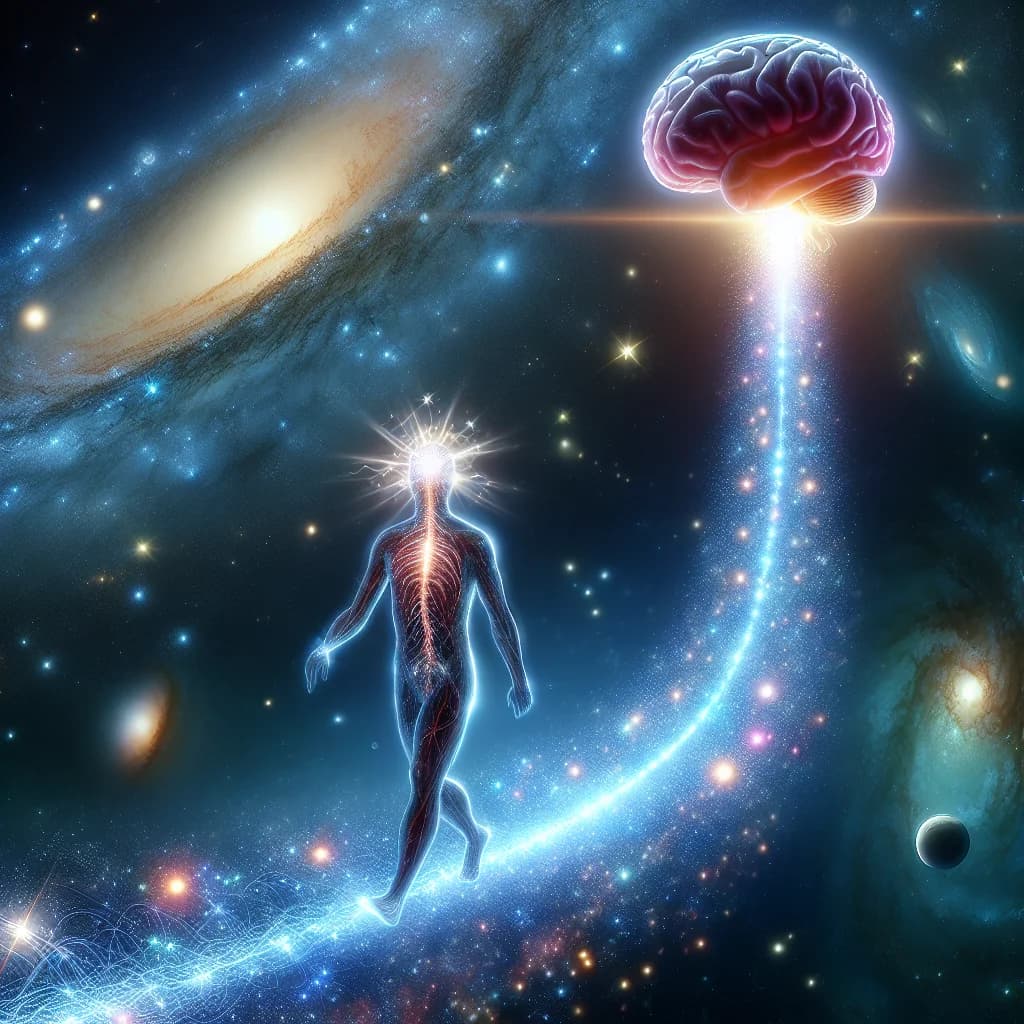
Information cannot travel faster than the speed of light. Since a light-year is the distance light travels in a year, a signal from your brain would take at least one year per light-year of height to reach your feet, making instantaneous movement physically impossible.
The Speed Limit of a Giant: Why a Light-Year-Tall Human Would Wait Eons to Step
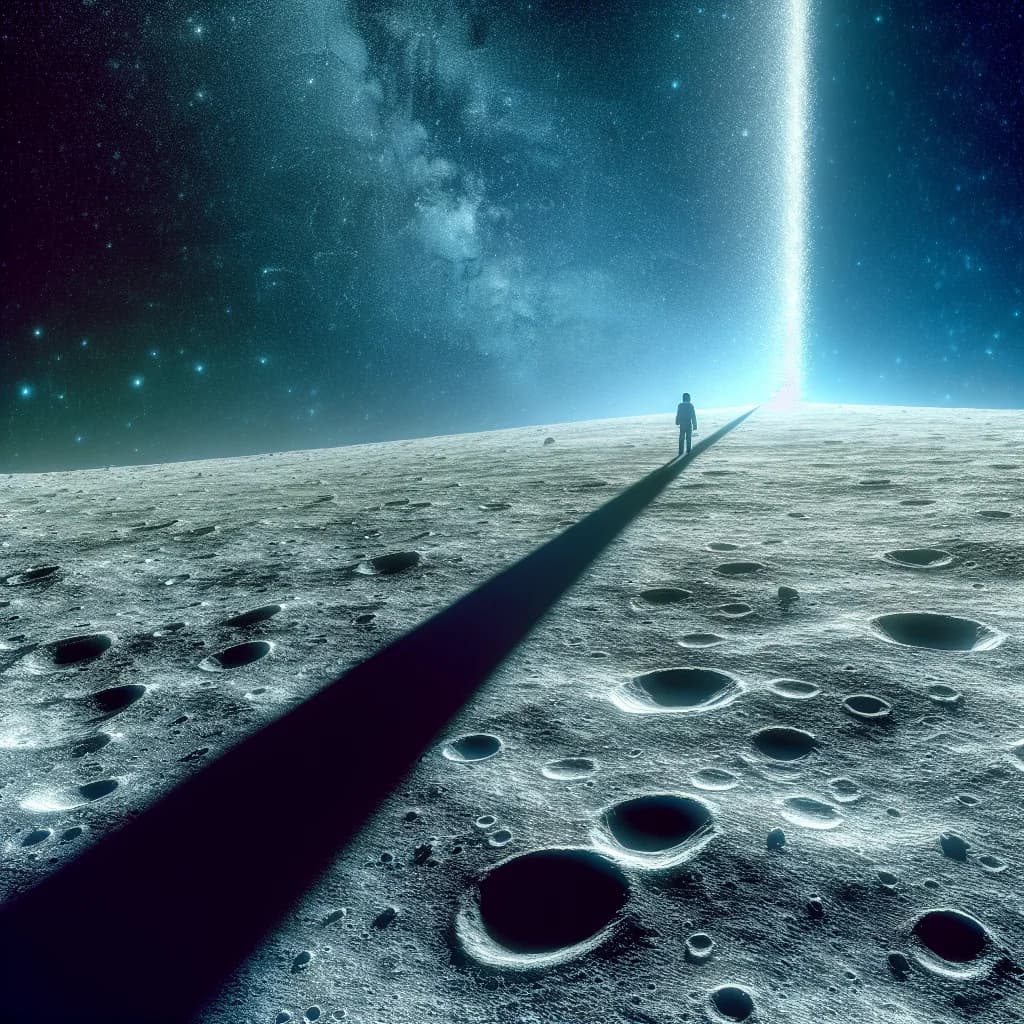
Imagine waking up and finding that your head is comfortably nestled near Alpha Centauri while your feet are resting somewhere past our Sun. In this grand thought experiment, you are several light-years tall—a biological structure so massive it spans interstellar space. While the view would be unparalleled, a peculiar problem arises: if you decided to wiggle your toes, you wouldn’t feel them move for a very, very long time.
To understand why this happens, we must step away from our daily experience of "instant" movement and dive into the rigid laws of physics. By applying principles of neurology, General Relativity, and the square-cube law, we can map out exactly why a galactic-sized human would be trapped in a state of extreme slow motion.
The Biological Speed Limit: Nerve Impulse Lag
In the human body, thoughts aren't instantaneous. When your brain decides to move a muscle, it sends an electrochemical signal through your nervous system. In a standard-sized human, these impulses travel at roughly 120 meters per second (about 270 mph). While this feels immediate to us, it becomes a glaring bottleneck at a light-year scale.
A single light-year is approximately 9.46 trillion kilometers (5.88 trillion miles). If we calculate the transit time for a nerve impulse across that distance:
- Distance: $9.46 \times 10^{15}$ meters.
- Speed: 120 meters per second.
- Time: Roughly $7.8 \times 10^{13}$ seconds.
When you convert that into years, the result is staggering: it would take approximately 2.5 million years for the signal to travel from your brain to your feet. By the time the command to "step" reached your toes, Earth’s evolutionary history would have marched from the era of Homo habilis to modern civilization.
The Universal Ceiling: The Speed of Light
Even if we replace your biological nerves with hypothetical fiber-optic cables that transmit signals at the speed of light—the absolute speed limit of the universe—the delay remains immense. According to Einstein’s Theory of Special Relativity, no information or causation can travel faster than $c$ (approximately 300,000 kilometers per second).
If you are four light-years tall, a signal from your brain to your feet will take exactly four years to arrive, even moving at the fastest speed allowed by physics. You would then have to wait another four years for the sensory feedback to return to your brain confirming that the movement occurred. In this scenario, your "reaction time" is measured in nearly a decade.
The Weight of the World: Mass and Gravity
The physical structure of a light-year-tall human introduces the Square-Cube Law. If you scale an object up by a factor of two, its surface area increases by four, but its volume (and mass) increases by eight. Scaling a human to several light-years would result in a mass that exceeds that of entire galaxies.
- Gravitational Instability: A body of this magnitude would possess such immense gravitational pull that it would cease to function as a biological entity. Instead of standing tall, your mass would naturally pull toward a common center.
- Structural Reconfiguration: In scientific terms, the chemical bonds holding your molecules together would be overwhelmed by gravitational forces. The "giant" would likely condense into a series of incredibly dense spheres, or perhaps a singular supermassive object, governed by the laws of celestial mechanics rather than biology.
Conclusion
The ultimate scientific outcome of being light-years tall is a state of perpetual "lag" followed by a transition into a celestial event. The fundamental constraints of the speed of light and the slow pace of electrochemical signaling ensure that a giant of this scale could never act with the cohesion we enjoy as humans.
This thought experiment highlights the incredible efficiency of our own scale. We live in a "sweet spot" of physics where our nervous systems can respond to the environment in milliseconds. While being a galactic giant sounds like the ultimate superpower, it serves as a fascinating reminder that the laws of the universe favor the small and the swift over the impossibly large.