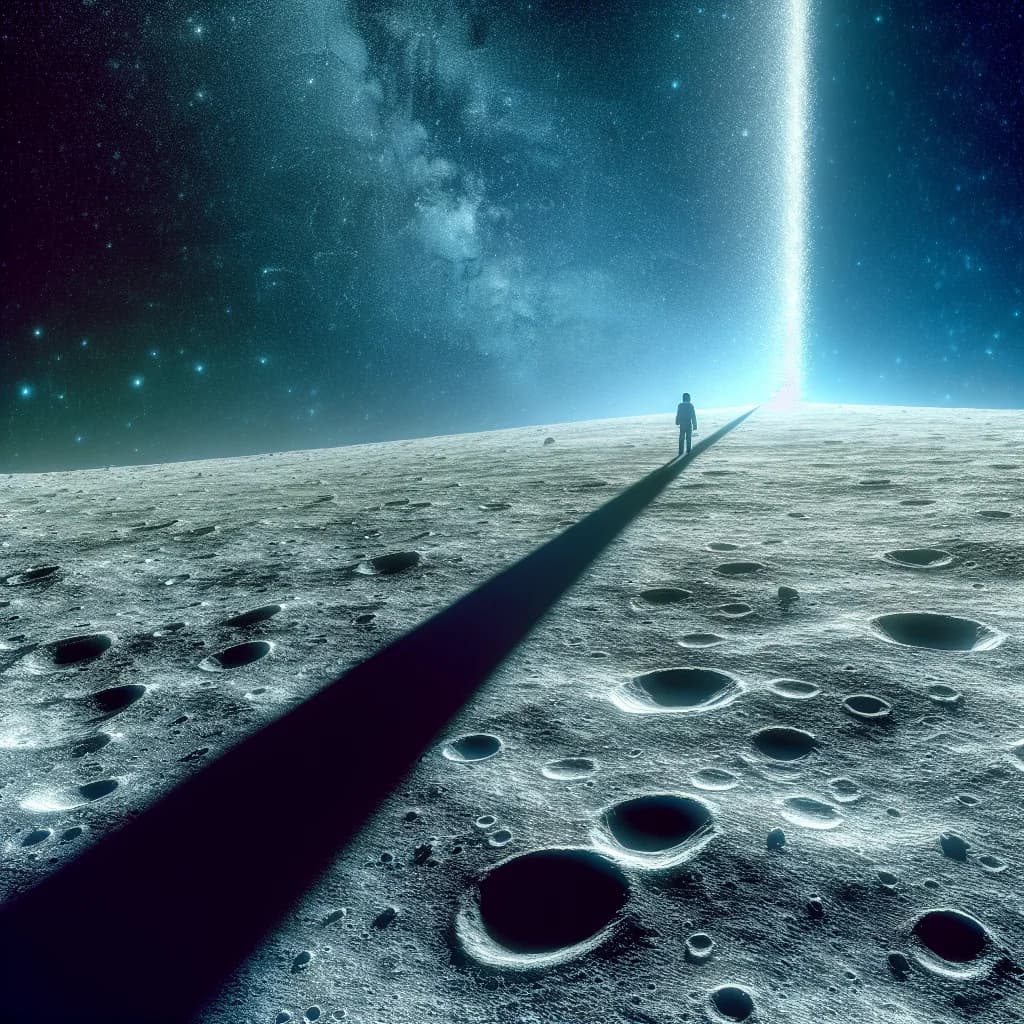
What would happen to Earth if a microscopic black hole with the mass of Mount Everest passed through it
Imagine an object smaller than an atom yet heavier than Mount Everest slicing through the Earth like a cosmic needle. Would it trigger a global apocalypse, or would we barely feel the moment our world was pierced by the ultimate gravitational predator?

Too Long; Didn't Read
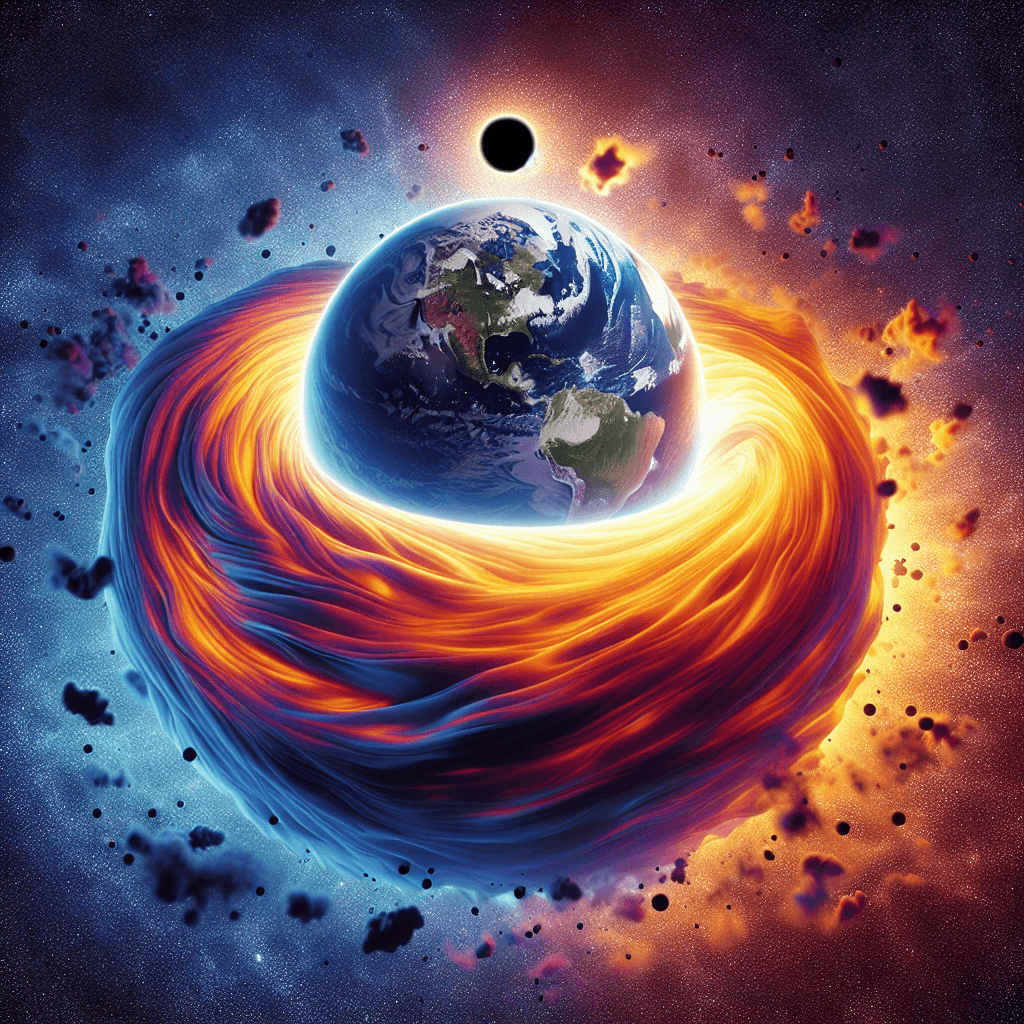
A microscopic black hole with the mass of Mount Everest would be smaller than an atom and travel at hyper-velocity. It would zip through the planet in minutes, leaving a needle-thin trail of radiation and triggering worldwide seismic tremors, but Earth would ultimately survive with minimal overall damage due to the object's tiny physical footprint.
The Subatomic Mountain: What Would Happen if a Microscopic Black Hole Passed Through Earth?
Imagine an object with the weight of the world’s tallest mountain shrunk down until it was smaller than a single atom of hydrogen. This isn't the plot of a science fiction novel; it is a legitimate "what if" based on the theoretical existence of primordial black holes. If such a tiny but massive visitor decided to take a shortcut directly through the center of our planet, would we even notice?
This thought experiment invites us to explore the intersection of General Relativity and planetary physics. By applying the laws of gravitation and fluid dynamics, we can transform this seemingly catastrophic premise into a fascinating study of density and scale. Our analysis will demonstrate that while such an event would be a significant scientific milestone, the outcome is far more subtle—and much less "apocalyptic"—than Hollywood might lead you to believe.
The Scale of the "Little Giant"
To understand this scenario, we must first visualize the proportions of our visitor. A black hole with the mass of Mount Everest (approximately $10^{15}$ kilograms) would have a Schwarzschild radius of about $1.5$ picometers.
To put that in perspective:
- A Human Hair: Roughly 50,000 to 100,000 nanometers wide.
- An Atom: Roughly 0.1 nanometers (100 picometers) wide.
- Our Black Hole: Approximately 1/100th the width of a single hydrogen atom.
Despite its mountain-sized mass, this object is functionally a subatomic particle in terms of size. It is so incredibly dense that it would behave less like a "vacuum cleaner" and more like a hyper-efficient, invisible needle passing through a giant ball of cotton candy.
The Cosmic Needle: Why Earth Doesn't Disappear
A common misconception is that any black hole will immediately "swallow" everything in its vicinity. However, gravity follows the inverse-square law. At a distance of just a few centimeters, the gravitational pull of our subatomic visitor would be no stronger than the pull of the actual Mount Everest.
Because the black hole is so small, its "feeding" area (the event horizon) is virtually non-existent. For it to consume matter, an atom would have to be positioned with impossible precision. Furthermore, these objects would likely be traveling at "virial velocities"—roughly 200 kilometers per second. At that speed, the black hole would zip through the Earth from one side to the other in about 60 seconds. It simply wouldn't spend enough time in any one spot to "eat" a significant amount of our planet’s material.
The Physical Consequences: A Seismic Signature
While the black hole wouldn't consume the Earth, it would certainly leave a calling card. As it travels through the crust, mantle, and core, it interacts with the surrounding matter via a process called "Bondi accretion" and gravitational shockwaves.
- The Gravitational Wake: As the black hole passes, its intense local gravity would briefly tug on the surrounding rock, creating a narrow "tunnel" of highly compressed material.
- The Acoustic Boom: This compression would generate a specialized type of seismic wave. Instead of a traditional earthquake, which usually originates from a single point (an epicenter), this would be a "line-source" earthquake. Every point along the black hole's path would radiate energy simultaneously.
- Atmospheric Entry and Exit: As it enters and exits the atmosphere, the friction of air molecules being accelerated toward the event horizon would create a brilliant, needle-thin streak of light—a "cosmic sparkler" that would outshine any shooting star.
Summary of the Outcome
If a microscopic black hole with the mass of Mount Everest passed through the Earth today, the result would be the world's most unique geological event. We would experience:
- A global seismic hum: Sensitive equipment would detect a uniform vibration echoing through the planet’s layers.
- Minimal structural impact: Because the "tunnel" of interaction is so narrow, the physical displacement of rock would be negligible on a planetary scale.
- Scientific wonder: We would have definitive proof of primordial black holes and a wealth of data on the Earth’s interior.
The laws of physics ensure that the sheer speed and diminutive size of our "subatomic mountain" would prevent a global catastrophe. Instead, we are left with a reminder of how much "empty space" actually exists within solid matter. This thought experiment highlights the beautiful complexity of our universe, where something as massive as a mountain can hide inside the footprint of an atom, passing through us like a ghost in the night.