Why do astronauts sometimes lose their fingernails after performing a spacewalk in a pressurized suit
It sounds like a plot from a space horror film, but for many astronauts, returning from a spacewalk means unexpectedly losing their fingernails. Discover the intense, high-pressure battle between human hands and spacesuit technology that leads to this bizarre orbital injury.

Too Long; Didn't Read
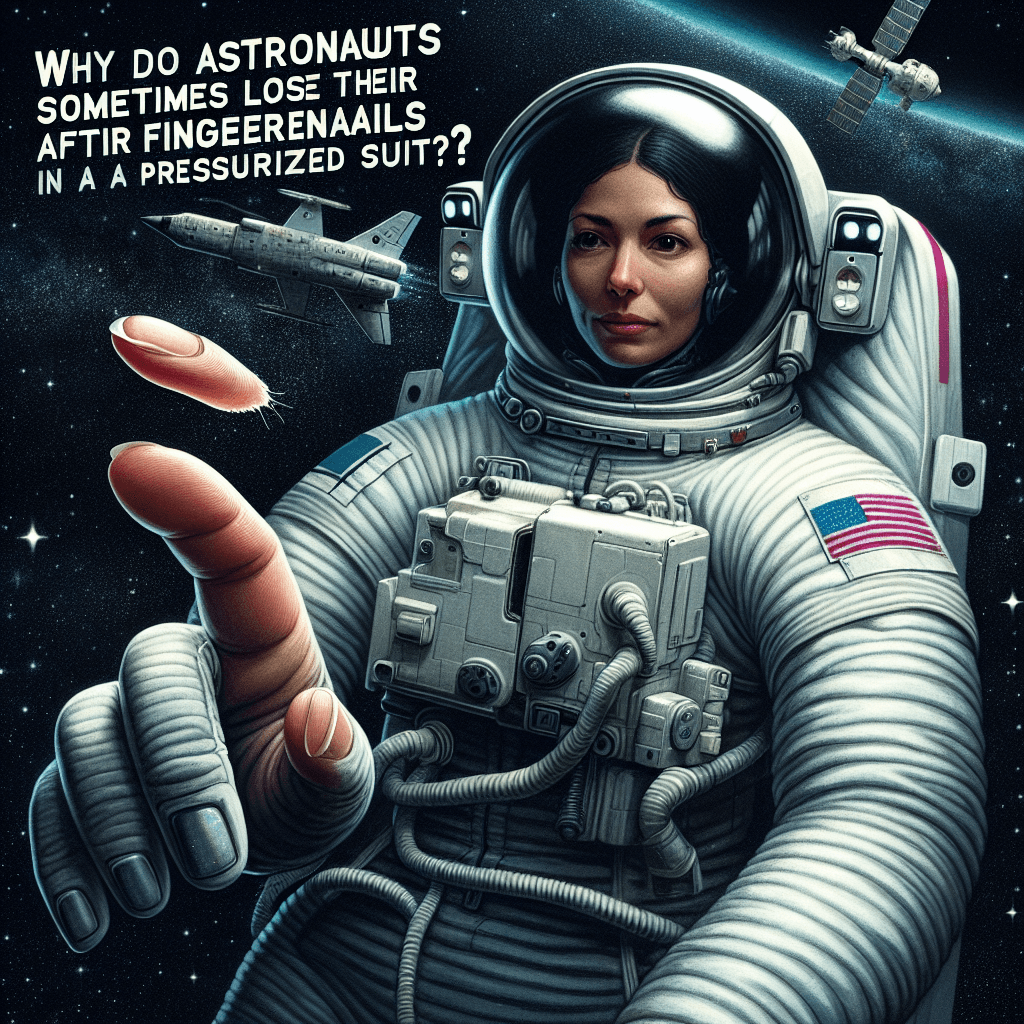
Astronauts lose fingernails due to the intense pressure and mechanical strain caused by stiff, pressurized gloves. During long spacewalks, constant rubbing and restricted circulation lead to fingernail delamination, where the nail separates from the nail bed and eventually falls off.
The High Cost of the Cosmic Grip: Why Do Astronauts Lose Their Fingernails After a Spacewalk?
Stepping out into the vacuum of space is perhaps the most daring feat a human can undertake. Wrapped in a multi-layered, pressurized cocoon known as an Extravehicular Mobility Unit (EMU), astronauts float above the Earth to perform complex repairs. However, many return to the airlock to find a peculiar and painless, yet startling, souvenir: their fingernails have detached from the nail beds. This phenomenon, known clinically as onycholysis, is one of the more bizarre occupational hazards of space exploration. To understand why a "cosmic manicure" occurs, we must look at the intersection of fluid physics, mechanical leverage, and the sheer endurance required to work in a pressurized environment.
The Pressure Vessel Paradox
The primary culprit behind this astronautic anomaly is the physics of pressure. A space suit is essentially a human-shaped balloon. To keep an astronaut alive in the vacuum of space, the suit must be pressurized with oxygen. In the standard NASA EMU, this internal pressure is maintained at approximately 4.3 pounds per square inch (psi).
While 4.3 psi might sound low compared to Earth’s atmospheric pressure (14.7 psi), the difference between the inside of the glove and the vacuum of space creates a significant structural challenge. When an astronaut tries to bend their fingers, they are fighting against the internal pressure that wants to keep the glove’s fingers stiff and straight.
The Mechanics of the "Tennis Ball" Effect
Imagine squeezing a fresh tennis ball. Now, imagine doing that continuously for eight to nine hours while trying to perform delicate mechanical work with a wrench. This is the reality of an Extravehicular Activity (EVA).
- Constant Resistance: Every time an astronaut closes their hand, they exert force against the suit's internal pressure.
- Mechanical Leverage: The glove’s joints, particularly at the knuckles, act as fulcrums.
- Duration: Space walks are marathons, not sprints. The cumulative stress over several hours leads to significant physical fatigue and mechanical wear on the skin and nails.
Fingernail Delamination: A Clinical Analysis
When the fingers are repeatedly flexed inside these pressurized "balloons," the fingertips constantly rub against the inner lining of the glove. This creates a specific set of physical consequences:
1. The Thimble Effect
As astronauts reach and grip, their fingertips are pressed firmly into the hard caps of the glove fingers. This creates intense pressure on the nail bed. Over time, this sustained pressure disrupts the blood flow to the soft tissue beneath the nail.
2. Moisture and Friction
Inside the glove, hands sweat due to the intense physical exertion. This moisture softens the skin and the connection between the nail and the bed. The combination of "wet" skin and the mechanical "tug-of-war" from the glove material causes the nail to eventually separate from the living tissue.
3. Anatomical Sizing
Research has shown that the risk of losing a fingernail is significantly higher for astronauts with larger hands. When a hand is at the upper limit of a glove size, the fingertips are more likely to be compressed against the glove’s interior, increasing the mechanical force applied directly to the nails.
Calculated Constraints: The Numbers Behind the Pinch
To put the forces into perspective, consider the following metrics observed during EVA simulations:
- Grip Cycles: An astronaut may perform hundreds of gripping motions during a single 7-hour EVA.
- Pressure Differential: The 4.3 psi pressure creates a "hoop stress" on the glove material, making the fabric as rigid as a piece of pressurized fire hose.
- Energy Output: Moving the joints of a pressurized suit can increase an astronaut's metabolic rate to levels comparable to running a half-marathon, much of which is concentrated in the small muscles of the hands.
Conclusion
The loss of fingernails in space is a fascinating testament to the rigors of life beyond our atmosphere. It is not caused by the vacuum of space itself, but rather by the very technology designed to protect the astronaut from it. The interplay of internal suit pressure and the mechanical requirements of manual labor creates a unique environment where the human body is pushed to its structural limits.
While engineers are currently working on "active" gloves with mechanical counter-pressure to solve this issue, the "missing fingernail" remains a badge of honor for many spacefarers. It serves as a grounded reminder that even the most high-tech endeavors are still subject to the simple, unyielding laws of physics and biology. Through these challenges, we learn exactly what it takes to grasp the stars—and the physical price of that grip.