Why does a pistol shrimp’s claw snap create a bubble as hot as the surface of the sun
Witness the tiny ocean dweller that packs the power of a star into a single, lethal snap. Discover how the pistol shrimp defies physics to create underwater explosions hotter than the surface of the sun.

Too Long; Didn't Read
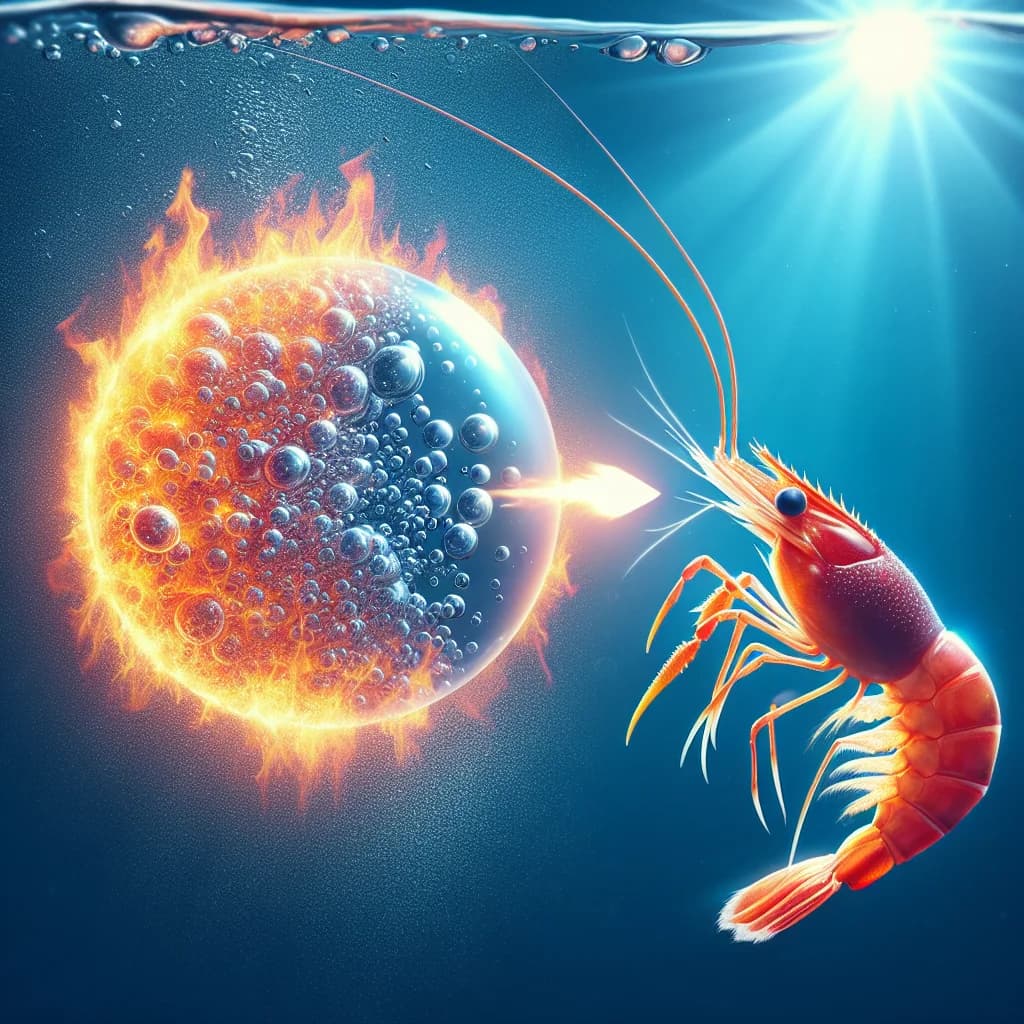
A pistol shrimp snaps its claw so fast it shoots a high-speed water jet, creating a low-pressure cavitation bubble. When this bubble collapses, the gas inside compresses instantly, generating a shockwave, a flash of light, and temperatures reaching levels similar to the sun’s surface.
Nature’s Plasma Cannon: Why Is a Pistol Shrimp’s Bubble as Hot as the Sun?
Imagine a creature no longer than a few inches, lurking in a coral reef, possessing a biological weapon that briefly matches the temperature of the solar surface. It sounds like the premise of a science-fiction novel, yet the pistol shrimp (family Alpheidae) achieves this feat daily. This tiny crustacean doesn't use its claw to pinch; instead, it uses it to create a high-speed pressure wave that results in a phenomenon known as "shrimpoluminescence."
To understand how a biological entity can generate "star-stuff" in the palm of its claw, we must look toward the intersection of fluid dynamics, thermodynamics, and the physics of cavitation. By analyzing the snap of the claw as a mechanical trigger for a cascading energetic event, we can demystify the incredible transformation of mechanical energy into extreme heat and light.
The Mechanical Trigger: 100 Kilometers Per Hour
The process begins with the shrimp’s specialized claw, which features a "plunger" and a "socket" mechanism. When the shrimp releases its cocked claw, the plunger slams into the socket at an incredible velocity—reaching speeds of approximately 60 miles per hour (100 km/h) in less than a millisecond.
Surprisingly, the heat isn't caused by the claw hitting a target. Instead, the snap ejects a jet of water away from the claw at such a high speed that it creates a low-pressure zone behind it. This brings us to the first foundational principle: Bernoulli’s Principle, which states that as the speed of a moving fluid increases, the pressure within that fluid decreases.
The Science of Cavitation: Making Water Boil
Because the water jet is moving so fast, the pressure drops below the vapor pressure of the water. At this point, the water effectively "boils" at room temperature, forming a tiny vapor-filled cavity known as a cavitation bubble.
- Growth Phase: The bubble expands rapidly as it travels with the water jet.
- The Turning Point: Once the bubble reaches an area of higher surrounding pressure or the momentum of the jet slows, the external water pressure overwhelms the internal vapor pressure.
The Great Collapse: Adiabatic Compression
The true magic—and the source of the heat—occurs during the bubble's collapse. This is a process of adiabatic compression, meaning the compression happens so quickly that heat cannot escape into the surrounding environment.
Reaching Solar Temperatures
As the bubble implodes, the gas trapped inside is crushed into a microscopic volume. This rapid reduction in volume leads to an exponential increase in temperature and pressure.
- Temperature: Scientists have measured the temperature inside these collapsing bubbles at approximately 5,000 Kelvin (4,726°C).
- Comparison: For context, the surface of the Sun sits at about 5,778 Kelvin. The pistol shrimp effectively creates a localized hotspot nearly 90% as hot as the solar surface.
The Flash of Light: Sonoluminescence
The energy density becomes so high during this collapse that the gas ionizes into plasma, emitting a short, intense burst of light. This is called sonoluminescence. While the flash is too brief and too small to be seen by the naked eye without specialized equipment, it is a testament to the sheer amount of energy concentrated in that single cubic millimeter of space.
Cascading Environmental Effects
While the "solar" temperature is real, it is important to remember the scale. Because the bubble is so tiny and the heat lasts for only a few nanoseconds, it does not boil the ocean or harm the shrimp itself. However, the physical consequences for its prey are significant:
- Acoustic Shock: The snap produces a sound reaching 210 decibels, which is louder than a gunshot or a jet engine takeoff.
- Pressure Wave: The resulting shockwave is powerful enough to stun or even neutralize small fish and crabs instantly, allowing the shrimp to collect its meal safely.
- Local Displacement: The mechanical energy is so focused that it can crack small glass jars in laboratory settings.
Conclusion
The pistol shrimp’s ability to reach solar temperatures is a masterclass in natural engineering. By utilizing the principles of fluid dynamics to create a cavitation bubble and then using adiabatic compression to collapse it, the shrimp converts simple muscle movement into a high-energy plasma event.
Ultimately, this "tiny titan" reminds us that the laws of physics operate at every scale. While we often look to the stars to find extreme temperatures, sometimes all you need is a high-speed claw and a little bit of water to recreate the physics of the heavens in the palm of a hand. The pistol shrimp is living proof that in the natural world, big things truly do come in small, high-pressure packages.