Why does the Earth lose mass every year despite being bombarded by forty thousand tons of cosmic dust
Every year, forty thousand tons of cosmic dust rain down on us, yet Earth is actually getting lighter. Discover the invisible "leak" that’s causing our planet to shrink despite its constant bombardment from space.


Too Long; Didn't Read
Earth gains 40,000 tons of space dust annually but loses about 96,600 tons of hydrogen and helium gas to space. This results in a net annual mass loss of over 50,000 tons, though the change is negligible compared to the planet’s total mass.
The Shrinking Planet: Why Does Earth Lose Mass Despite Being Bombarded by 40,000 Tons of Cosmic Dust?
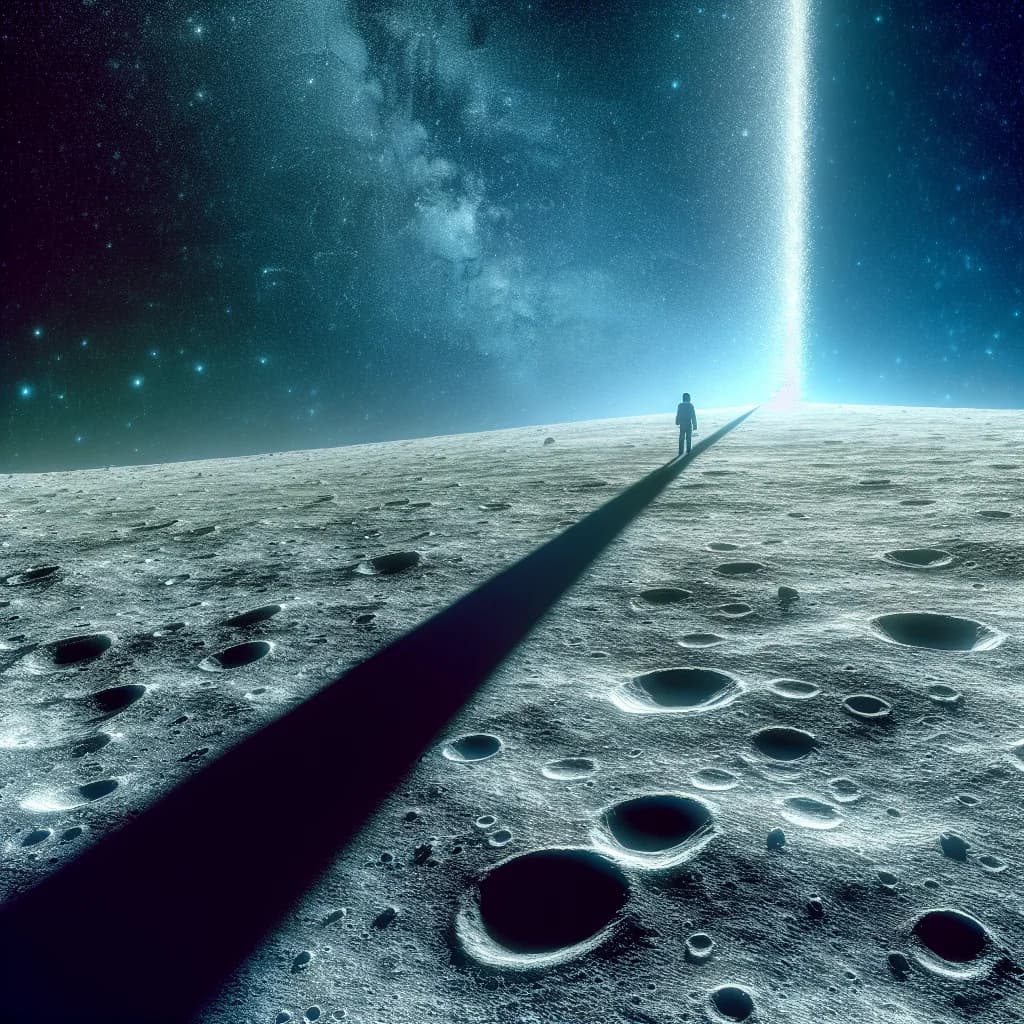
Every single day, our planet is under a constant, gentle siege. Approximately 40,000 tons of cosmic dust—the debris from comets and pulverized asteroids—rain down through our atmosphere annually. You might expect this relentless influx of space matter to make the Earth "bulk up" over time, increasing its gravitational footprint. However, the reality is a scientific paradox: despite this massive yearly delivery, the Earth is actually getting lighter.
This blog post explores the celestial accounting at play, examining the physics of atmospheric escape and the thermodynamics of our planet. By applying the principles of gravitational bound states and the kinetic theory of gases, we will uncover how Earth manages to lose more mass than it gains, and why we don't need to worry about our home disappearing anytime soon.
The Cosmic Influx: Adding Up the Dust
To understand the scale of this phenomenon, we must first look at what we are gaining. Every year, about 40,000 tons of space dust settle on the Earth's surface. To put that into perspective:
- That is roughly the weight of 6,500 African elephants falling from the sky every year.
- It is equivalent to about 110 tons of material per day.
Most of this material consists of microscopic particles that burn up in the atmosphere or settle slowly as "micrometeorites." While this seems like a massive amount of matter, it is a mere "snack" compared to the Earth’s total mass of approximately 5.97 sextillion tons ($5.97 \times 10^{24}$ kg).
The Great Atmospheric Leak: Why We Lose Mass
If we are gaining the weight of thousands of elephants, why is the scale tipping in the other direction? The answer lies at the very edge of our atmosphere. The Earth loses mass primarily through the escape of light gases—specifically hydrogen and helium.
1. The Escape of Hydrogen and Helium
Hydrogen and helium are the lightest elements in the periodic table. Because they are so light, Earth’s gravity has a harder time holding onto them in the upper reaches of the atmosphere (the exosphere). Through a process called Jeans Escape, individual molecules of these gases gain enough kinetic energy from solar heating to reach "escape velocity."
- Hydrogen Loss: Earth loses about 95,000 tons of hydrogen gas to space every year.
- Helium Loss: We lose approximately 1,600 tons of helium annually.
Unlike the dust that falls in, these gases are "leaking" out of our atmospheric chimney and drifting into the vacuum of space, never to return.
2. The Energy-Mass Equivalent ($E=mc^2$)
According to Einstein’s famous equation, mass and energy are two sides of the same coin. The Earth’s core is a massive heat engine driven by radioactive decay. As the planet’s interior slowly cools over billions of years, it loses energy. Since energy has mass, this cooling equates to a loss of weight. Scientists estimate this accounts for a loss of about 16 tons per year—a tiny fraction, but a fascinating application of nuclear physics.
The Net Result: A Planetary Diet
When we crunch the numbers, the planetary balance sheet looks like this:
- Mass Gained: +40,000 tons (Cosmic Dust)
- Mass Lost: -96,600 tons (Hydrogen and Helium)
- Mass Lost: -16 tons (Radioactive Cooling/Energy Loss)
- Net Result: A loss of approximately 56,000 tons per year.
While 56,000 tons sounds like a catastrophic amount of material to lose, the sheer scale of the Earth makes this loss negligible. At the current rate of depletion, it would take roughly 120 trillion years for the Earth to completely disappear. Given that the sun is expected to expand and end the Earth's current form in about 5 billion years, our planet’s "diet" is the least of our long-term concerns!
Conclusion
The Earth is a dynamic, open system, constantly exchanging matter and energy with the surrounding cosmos. While we are bombarded by thousands of tons of space debris annually, the laws of thermodynamics and the kinetic behavior of light gases ensure that our planet remains on a net downward trend in mass.
This celestial balancing act reminds us that even something as seemingly solid and eternal as the Earth is subject to the subtle, shifting laws of physics. We live on a planet that is slowly breathing its lightest elements into the stars, even as it gathers the dust of ancient comets, proving that the universe is always in a state of beautiful, calculated transition.