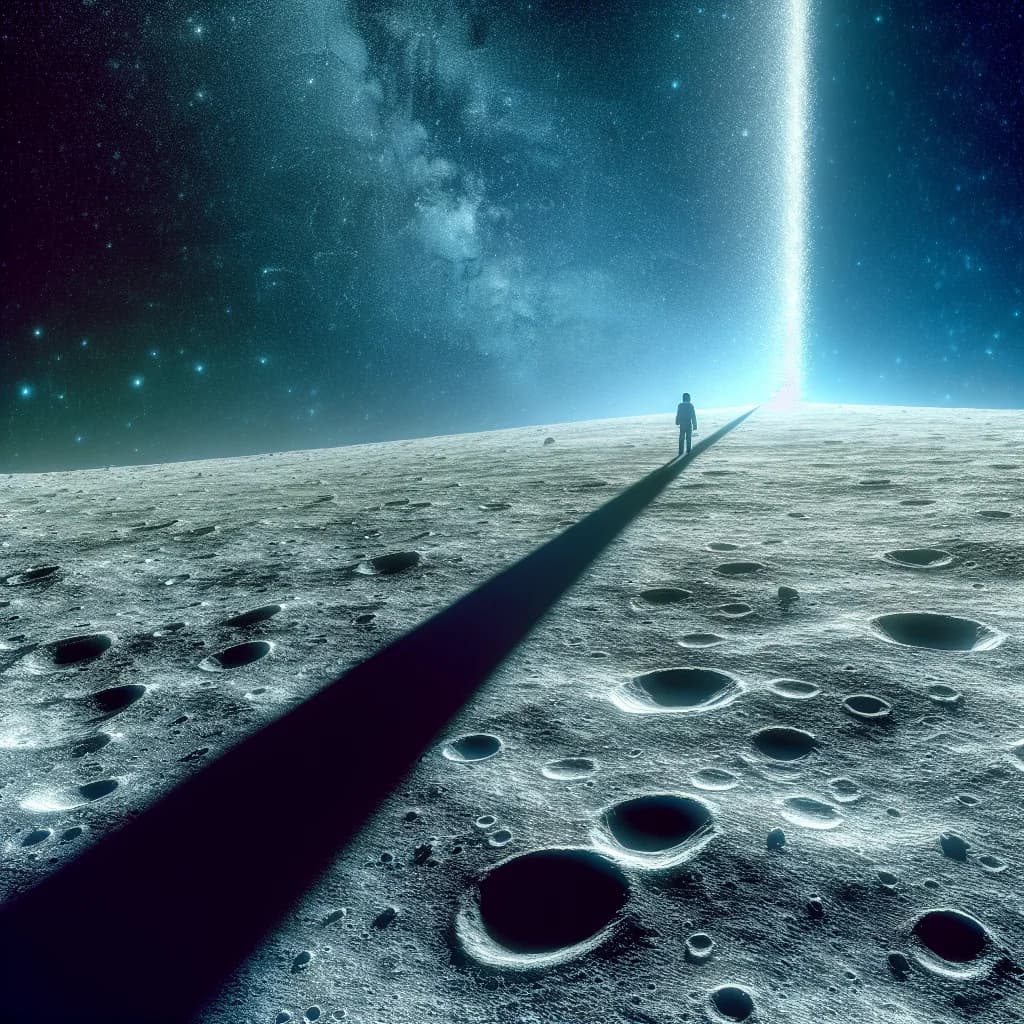
Why does the human body emit a faint bioluminescent glow that is too dim for us to see
You are literally a being of light, radiating a faint, invisible shimmer that pulses from your skin every single day. Discover the hidden science behind our body’s secret bioluminescence and why this "inner fire" remains just out of human sight.


Too Long; Didn't Read
Humans emit ultra-weak bioluminescence as a byproduct of metabolic chemical reactions involving free radicals. This light is 1,000 times dimmer than the human eye can perceive and follows a circadian rhythm, reaching its highest intensity in the late afternoon.
The Invisible Radiance: Why Does the Human Body Emit a Faint Bioluminescent Glow?
Have you ever considered yourself a literal beacon of light? While we usually associate bioluminescence with the enchanting flicker of fireflies or the eerie neon hues of deep-sea jellyfish, humans are part of this luminous club as well. It sounds like the plot of a superhero origin story, but it is a concrete biological reality: the human body glows. This isn’t a metaphorical "inner light," but a physical emission of photons. However, before you try to use your hand as a flashlight in the dark, there is a catch—this light is roughly 1,000 times dimmer than the sensitivity of the human eye.
To understand this phenomenon, we must look at the intersection of biochemistry and quantum physics. By analyzing the metabolic processes that keep us alive, we can uncover why our bodies are constantly broadcasting a faint signal into the darkness.
The Discovery of Our Secret Spark
In 2009, researchers at the Tohoku Institute of Technology and Kyoto University in Japan used ultra-sensitive charge-coupled device (CCD) cameras to capture the first images of human bioluminescence. These cameras were capable of detecting individual photons, allowing scientists to see what the naked eye cannot.
The study revealed that we are not uniformly bright. Our faces, for example, tend to glow more intensely than the rest of our bodies. This is largely because facial skin is more exposed to sunlight and contains higher concentrations of melanin and metabolic activity, which contribute to the chemical reactions that produce light.
The Chemistry of the Glow: Oxidative Stress
The primary engine behind our invisible glow is a process called ultra-weak photon emission (UPE). This isn't the same mechanism used by fireflies, which rely on a specific enzyme called luciferase. Instead, human light is a byproduct of our daily survival.
Free Radicals and Excited States
Our bodies generate energy by reacting oxygen with nutrients. During this metabolic "burn," highly reactive molecules known as free radicals are produced. These free radicals interact with lipids (fats) and proteins in our cells.
- The Reaction: When free radicals react with these cellular components, they can "excite" electrons to a higher energy state.
- The Release: As these electrons return to their stable, lower-energy state, they must shed that extra energy. They do so by releasing a photon—a tiny particle of light.
Quantifying the Radiance
To put the scale of this emission into perspective, consider these metrics:
- Intensity: The light is approximately 1,000 times weaker than what our retinas can register.
- Comparison: If a standard 60-watt light bulb were scaled down to this level of intensity, it would be like trying to spot a single candle burning in the middle of a dark stadium from several miles away.
- Wavelength: Most of this light falls within the visible spectrum (green to red), but the sheer lack of volume makes it invisible to us.
The Circadian Rhythm of Light
Interestingly, our glow is not constant; it follows our internal biological clock. The Japanese study found that the intensity of the light fluctuates throughout the day:
- The Morning Low: We are at our dimmest in the early morning hours.
- The Afternoon Peak: The glow reaches its maximum intensity in the late afternoon, around 4:00 PM.
This suggests that our bioluminescence is tied to our metabolic rate. When our metabolism is most active during the day, we produce more free radicals, which in turn leads to a higher rate of photon emission.
Why Can’t We See It?
The human eye is an incredible organ, but it has its limits. Our photoreceptors, known as rods and cones, require a certain "threshold" of photons to trigger a neural signal to the brain. Because human bioluminescence is so sparse, the photons hitting our eyes are too few and far between to be interpreted as an image or even a faint shimmer. Furthermore, our own internal light is drowned out by even the smallest amount of external light or the thermal radiation (heat) our bodies emit in the infrared spectrum.
Conclusion
The fact that we are walking, glowing entities is a testament to the sheer complexity of human biology. Our invisible radiance is the "smoke" from our metabolic fire—a byproduct of the very chemical reactions that allow us to think, move, and breathe. While we may never be able to see this glow without the help of high-tech sensors, understanding it provides a deeper look into the invisible processes that define life.
It reminds us that even in total darkness, we are technically never without light; we are simply operating on a frequency that requires a different perspective to appreciate. The next time you feel like an ordinary human, remember that you are constantly emitting a signal of life into the universe, one photon at a time.