Why does the snap of a pistol shrimp create a bubble hotter than the surface of the Sun
Discover how a tiny crustacean wields the power of the stars to vaporize its prey with a single, explosive snap. Dive into the mind-bending physics behind the pistol shrimp’s "sonic weapon" and the bubble that briefly burns hotter than the surface of the sun.

Too Long; Didn't Read
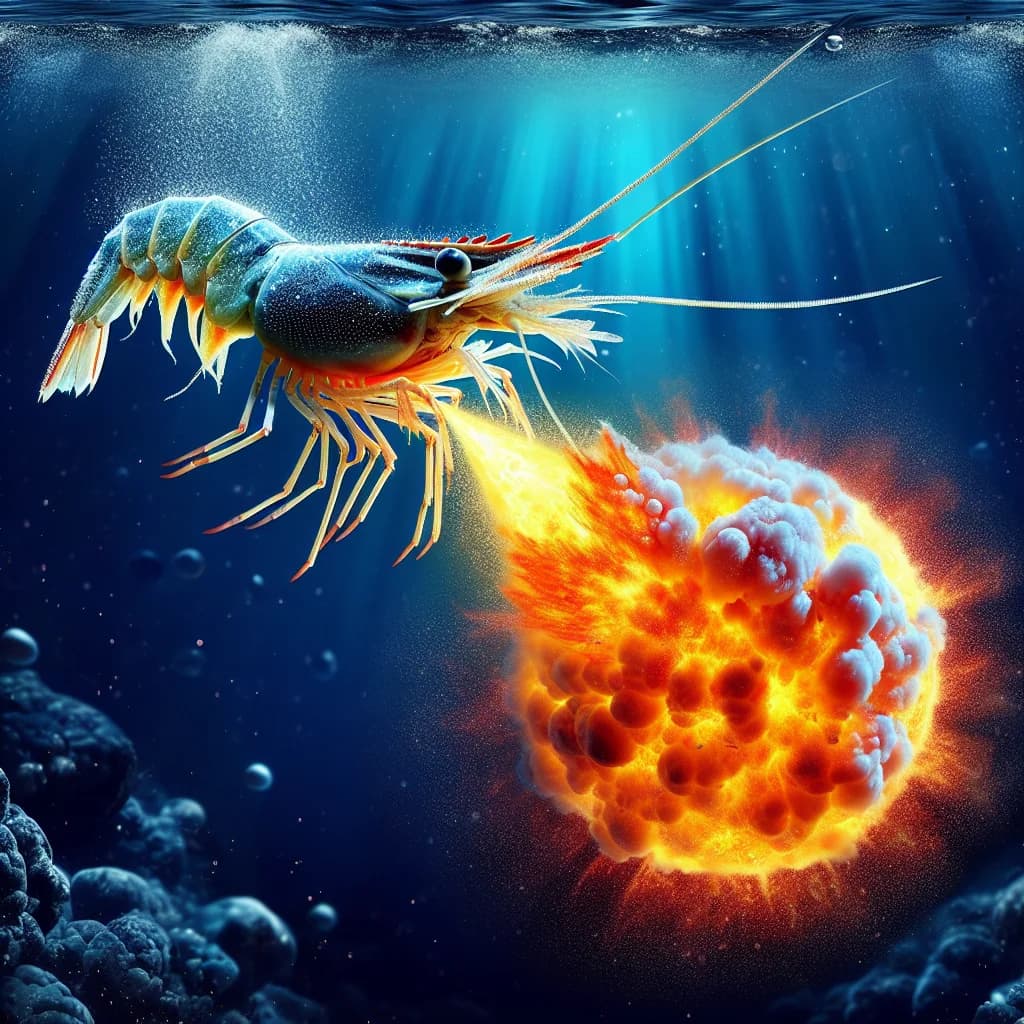
When a pistol shrimp snaps its specialized claw, it ejects a high-speed water jet that creates a low-pressure cavitation bubble. As the surrounding water pressure forces the bubble to collapse instantly, the gas inside is compressed so violently that it generates a shockwave, a flash of light, and temperatures exceeding 8,000 degrees Fahrenheit.
Nature’s Little Sonic Boom: How Does a Pistol Shrimp Create Temperatures Hotter Than the Sun?
Imagine a creature no longer than your pinky finger possessing a "weapon" that rivals the surface of the Sun in temperature and produces a sound louder than a jet engine. This isn't a character from a science-fiction novel; it is the pistol shrimp (family Alpheidae). This tiny crustacean creates a localized physical phenomenon so intense that it defies common sense. While we often associate extreme heat with massive celestial bodies or industrial furnaces, the pistol shrimp achieves it through the sheer mastery of fluid dynamics. By utilizing the principles of cavitation and adiabatic compression, this shrimp transforms kinetic energy into a thermal flash that briefly outshines the solar surface.
The Mechanics of the Snap
To understand the heat, we must first look at the mechanical "trigger." The pistol shrimp possesses an oversized claw that functions unlike any other. Instead of using its claw to pinch or crush prey directly, the shrimp uses a specialized plunger-and-socket mechanism.
When the shrimp snaps its claw shut, it happens at a staggering speed—usually within less than a millisecond. This action doesn't actually hit the target. Instead, the rapid closure ejects a jet of water at speeds reaching 62 miles per hour (100 kilometers per hour). In the underwater world, this velocity is extreme enough to trigger a sequence of events that transitions from simple motion to high-energy physics.
From Movement to Vapor: The Cavitation Bubble
The secret to the "solar" heat lies in a phenomenon called cavitation. According to Bernoulli’s principle, as the velocity of a fluid increases, its internal pressure decreases. Because the shrimp’s water jet moves so incredibly fast, the local pressure drops below the vapor pressure of the water.
- Formation: This low-pressure zone causes the water to "boil" at room temperature, forming a tiny bubble filled with low-pressure vapor.
- Expansion: The bubble expands as long as the water jet maintains its high velocity.
- The Rebound: Once the jet slows down and the surrounding high-pressure water rushes back in, the bubble reaches a point of instability.
The Great Collapse: Sonoluminescence
The "magic" happens during the collapse of this cavitation bubble. As the surrounding water pressure crushes the bubble, the vapor inside is compressed at an astronomical rate. This is known as adiabatic compression—a process where a gas is compressed so quickly that the heat generated has no time to escape into the surrounding environment.
The physical metrics of this collapse are staggering:
- Pressure: The pressure inside the collapsing bubble reaches massive levels, effectively concentrating the energy of the snap into a microscopic point.
- Temperature: Scientists have measured the temperature inside these collapsing bubbles at approximately 5,000 to 8,000 Kelvin. For comparison, the surface of the Sun is roughly 5,778 Kelvin.
- Light: This extreme heat causes a phenomenon called sonoluminescence, where the bubble emits a brief flash of light. While the flash is too short and faint to be seen by the naked eye without laboratory equipment, it marks the moment the shrimp becomes a biological star-maker.
Why the Ocean Doesn’t Boil
Given that the bubble is hotter than the Sun, one might expect the pistol shrimp to accidentally cook itself or its neighborhood. However, the laws of thermodynamics keep the situation contained.
The volume of the bubble is microscopic, and the duration of the peak temperature is measured in nanoseconds (billionths of a second). Because the total thermal energy is actually quite small—even if the intensity is high—the heat dissipates almost instantly into the surrounding water. The primary "weapon" isn't actually the heat, but the shockwave produced by the bubble’s collapse, which is powerful enough to stun or even neutralize small fish and crabs.
Conclusion
The snap of a pistol shrimp is a masterclass in extreme physics on a miniature scale. By leveraging the power of cavitation and adiabatic compression, this tiny organism achieves temperatures that match or exceed the surface of the Sun. This incredible feat is dictated by the rapid conversion of kinetic energy into a concentrated point of high pressure and thermal radiation.
Ultimately, the pistol shrimp serves as a brilliant reminder that the natural world is full of "hidden" extremes. It proves that you don't need the mass of a star to generate solar-level heat; sometimes, all you need is a very fast claw and the fascinating laws of fluid dynamics.