Why does the snap of a pistol shrimp's claw create a bubble as hot as the Sun's surface
Discover how a tiny crustacean packs the power of a star into a single, sonic snap. It’s a mind-bending collision of physics and fury that creates temperatures hotter than the surface of the sun.

Too Long; Didn't Read
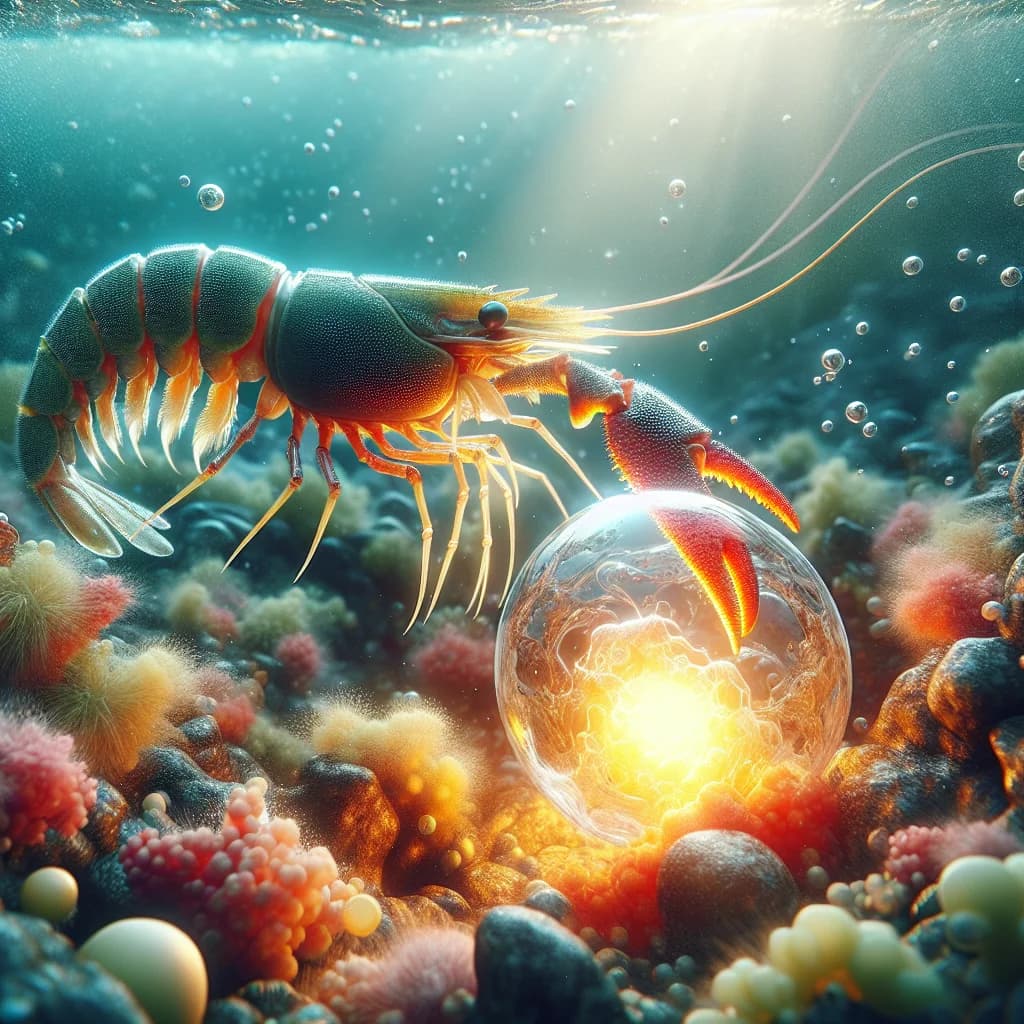
When a pistol shrimp snaps its claw at extreme speeds, it creates a high-pressure water jet that forms a cavitation bubble. As this bubble rapidly collapses, the intense pressure generates a shockwave and extreme temperatures known as sonoluminescence, momentarily matching the heat of the sun's surface.
Nature’s Tiny Supernova: How Does a Pistol Shrimp Create a Bubble as Hot as the Sun?
In the quiet depths of the ocean, a creature no larger than a human thumb wields a power that seems to defy the laws of biology. The pistol shrimp, a member of the Alpheidae family, does not hunt with teeth or venom; instead, it uses a specialized claw to generate a phenomenon so intense it briefly rivals the surface temperature of the Sun. This isn't science fiction—it is a masterclass in fluid dynamics and thermodynamics. By snapping its oversized claw, this "tiny powerhouse" creates a localized burst of energy that produces light, heat, and a sound louder than a jet engine. This post will analyze the physics of cavitation and adiabatic compression to explain how a humble crustacean can create a miniature star in the palm of its claw.
The Mechanics of the High-Speed Snap
The process begins with the pistol shrimp’s unique claw architecture. Unlike most shrimp, one claw is significantly larger and features a "plunger" and "socket" mechanism. When the shrimp releases a powerful tension muscle, the plunger slams into the socket at an incredible velocity.
This physical impact isn't actually meant to hit the prey. Instead, the motion is so rapid—reaching speeds of approximately 30 meters per second (about 67 mph)—that it displaces the surrounding water with extreme force. This creates a high-pressure jet of water that shoots forward. According to Bernoulli's Principle, as the speed of a fluid increases, its internal pressure must decrease. In this instance, the pressure drops so low that the water literally "boils" at room temperature, forming a tiny vapor bubble.
Cavitation: The Birth of the Bubble
This phenomenon is known as cavitation. These bubbles are not filled with air, but with water vapor held at a very low pressure. Because the surrounding ocean pressure is much higher than the pressure inside the bubble, the bubble is inherently unstable.
The lifecycle of a cavitation bubble is measured in microseconds:
- Expansion: The high-speed jet creates a low-pressure void.
- Stabilization: The bubble reaches its maximum size as it moves away from the claw.
- Collapse: The surrounding water pressure crushes the bubble inward with immense force.
Adiabatic Compression: Why It Gets So Hot
The true magic—and the extreme temperature—occurs during the collapse. As the surrounding water rushes back in, the vapor inside the bubble is compressed almost instantaneously. This happens so fast that there is no time for the heat to escape into the surrounding environment. In physics, this is known as adiabatic compression.
When you compress a gas into a smaller volume, its temperature rises. Because the cavitation bubble collapses to a fraction of its original size in a millionth of a second, the energy density becomes astronomical.
- Temperature: Scientists have measured temperatures inside these collapsing bubbles reaching over 5,000 Kelvin (approximately 4,700°C or 8,500°F). For context, the surface of the Sun is roughly 5,778 Kelvin.
- Sonoluminescence: This heat is so intense that it produces a brief flash of light, a phenomenon called "shrimpoluminescence." While the flash is invisible to the naked eye because it is so short-lived, it marks a point where sound energy is converted directly into light.
The Acoustic Impact
The collapse of the bubble is not just hot; it is incredibly loud. The "snap" is actually the sound of the bubble imploding, not the claw closing. The pressure wave generated can reach 218 decibels. To put that in perspective:
- A Jet Engine: 140 decibels (painful to human ears).
- A Rock Concert: 120 decibels.
- The Pistol Shrimp: 218 decibels.
This acoustic shockwave is the shrimp's primary tool for stunning or neutralizing small fish and competitors. It is a clinical application of kinetic energy transformed into thermal and acoustic energy within a microscopic workspace.
Conclusion
The pistol shrimp serves as a brilliant reminder that the most extreme physics often occur in the smallest packages. By leveraging the principles of fluid dynamics and adiabatic compression, this crustacean achieves a thermal state that mimics the stars. The "solar snap" is the result of a perfect sequence: a high-speed mechanical motion creates a low-pressure void, which then collapses under the weight of the ocean to generate incredible heat and light. While we often look to the cosmos to find extreme environments, the pistol shrimp proves that with the right application of physics, the wonders of the Sun can be found right here on Earth, beneath the waves.