Why is it physically impossible for any mountain on Earth to grow taller than fifteen kilometers
Mount Everest may be a giant, but it is bumping against a physical “glass ceiling” that prevents any peak on Earth from ever exceeding fifteen kilometers. Discover the fascinating battle between gravity and rock strength that forces our tallest mountains to literally melt under their own weight.

Too Long; Didn't Read
Earth's gravity and the weight of the rock create a physical height limit. At approximately fifteen kilometers, the pressure at a mountain's base becomes so intense that the underlying rock begins to flow like a liquid or plastic. This causes the mountain to sink into the crust or spread out under its own weight, preventing any further vertical growth.
The Ceiling of the World: Why Can’t a Mountain Reach 15 Kilometers?
Have you ever looked at Mount Everest and wondered why it stops at 8,848 meters? In a world of shifting tectonic plates and massive volcanic upheavals, it seems plausible that a mountain could simply keep climbing until it brushed against the edge of space. However, Earth has a very strict "building code" enforced by the laws of physics. While we can imagine peaks soaring 20 or 30 kilometers high, our planet's gravity and the material strength of rock have combined to set a firm height limit.
This thought experiment explores the geophysics of mountain building, specifically the point at which a mountain’s own weight becomes its undoing. By analyzing gravitational pressure, the "plasticity" of the Earth’s crust, and the thermal limits of stone, we can understand why our planet’s tallest peaks are destined to top out at approximately 15 kilometers.
The Crushing Weight of Gravity
The primary reason a mountain cannot grow indefinitely is the relationship between height, mass, and gravity. As a mountain grows taller, it adds a colossal amount of mass to a relatively small footprint on the Earth's crust.
To understand the stress at the base of a mountain, we look at the formula for pressure: Pressure = Density × Gravity × Height.
For a typical mountain made of granite (with a density of about 2,700 kg/m³), reaching a height of 15 kilometers creates an immense amount of downward pressure. At this height, the pressure at the base exceeds the "yield strength" of the rock. In simpler terms, the weight of the mountain becomes greater than the internal bonds holding the rock together. Instead of standing firm, the base of the mountain begins to behave like a very thick liquid or soft plastic, essentially "oozing" outward in a process known as gravitational collapse.
The "Butter Base" Effect: Heat and Plasticity
Even if the rock were theoretically strong enough to withstand the pressure, we have to account for the Earth’s internal temperature. The deeper a mountain's "roots" go into the crust, the warmer they get due to the geothermal gradient.
- Rock Softening: At depths associated with massive mountains, the heat from the Earth's interior softens the lithosphere.
- Basal Melting: Under extreme pressure and heat, the bottom of the mountain reaches a state of partial melt.
- The Limit: Just as a sculpture made of warm wax cannot be built too high before the bottom sags, a 15-kilometer mountain would find its base turning soft, causing the entire structure to sink or spread.
Isostasy: The Iceberg Principle
Mountains do not just sit on top of the Earth; they "float" in the mantle. This is a principle called isostasy. Much like an iceberg in the ocean, a mountain has a large "root" extending deep into the Earth's crust to support the weight seen on the surface.
To support a peak 15 kilometers high, the mountain would need a root extending dozens of kilometers into the hot, viscous mantle. At a certain point, the buoyant force of the mantle cannot support any more weight. If you were to pile more rock onto the peak, the entire mountain would simply sink deeper into the Earth, effectively cancelling out the height gain. It is a geological balancing act where gravity always wins.
A Galactic Comparison: Why Mars Wins
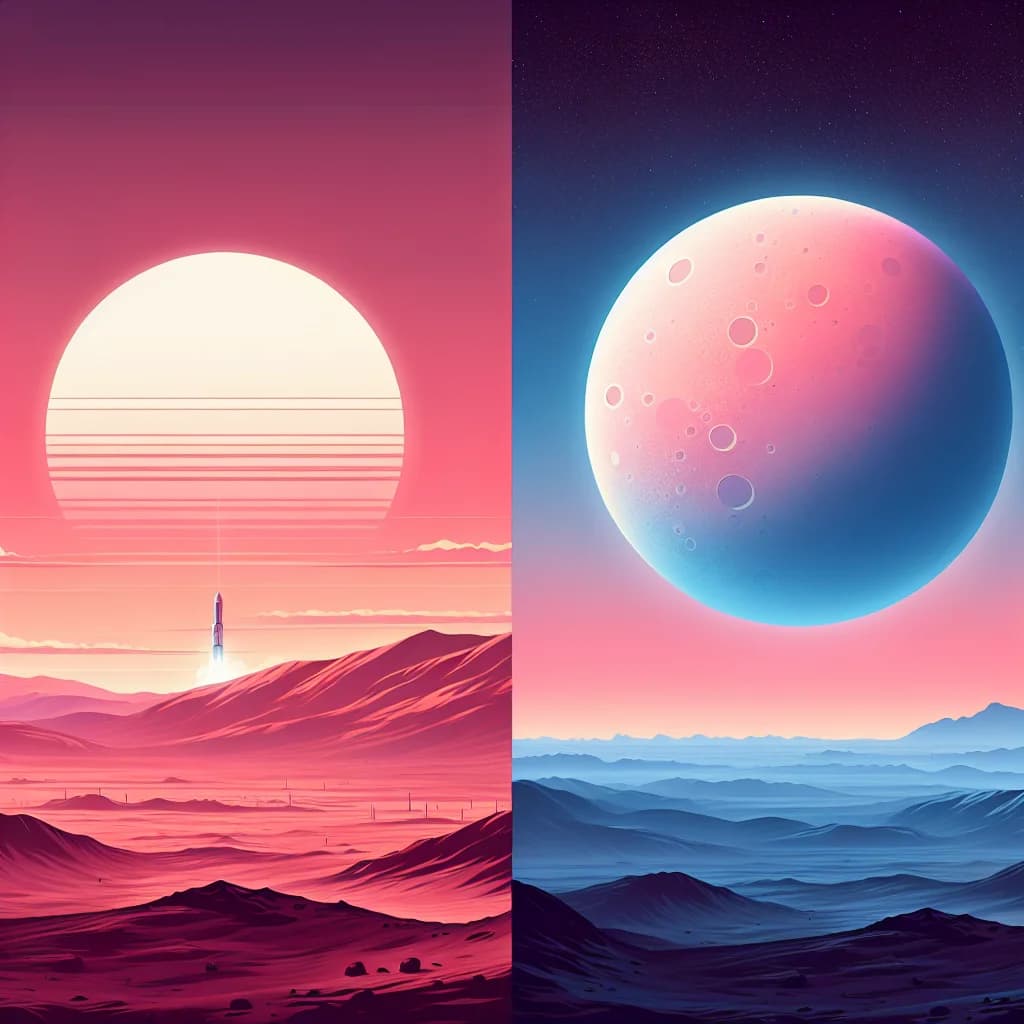
To put Earth’s 15-kilometer limit into perspective, we can look at our neighbor, Mars. The Martian volcano Olympus Mons stands at a staggering 21 kilometers high—nearly two and a half times the height of Everest. How does Mars break the 15-kilometer rule?
- Lower Gravity: Mars has only about 38% of Earth's gravity. This means the downward "pull" on the mountain’s mass is significantly weaker, allowing the rock to stack higher before reaching its breaking point.
- Tectonic Stability: Unlike Earth, Mars lacks active plate tectonics. The "hot spot" fueling the volcano stayed in one place for billions of years, allowing it to pile up more material than any terrestrial mountain ever could.
Conclusion
The 15-kilometer limit is a fascinating intersection of chemistry, geometry, and physics. While tectonic forces are constantly trying to push the Earth’s crust upward, the relentless pull of gravity and the thermal limits of granite ensure that no peak can ever truly "touch the stars." A mountain taller than 15 kilometers would literally melt and sink under its own majesty, proving that even the most ancient and solid structures on our planet are subject to the delicate balance of physical laws. We live on a planet that prefers its scenery to stay within a specific, habitable scale—a reality that makes our existing mountain ranges all the more impressive.