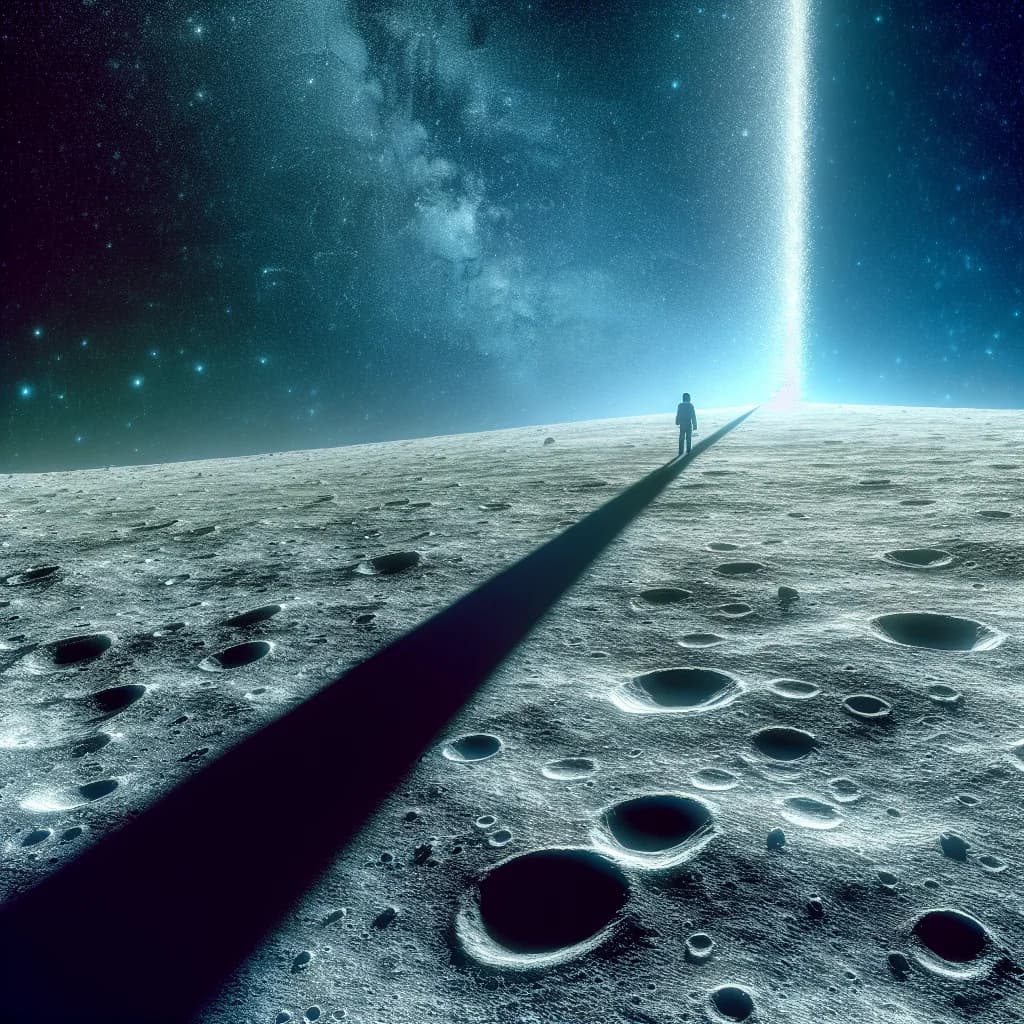
Why would a single satellite collision in orbit eventually trap humanity on Earth
One accidental bump in orbit could trigger a catastrophic chain reaction, transforming our skies into an impenetrable shield of lethal debris. Discover how a single collision could permanently lock the gates to the stars and trap humanity on Earth for centuries.

Too Long; Didn't Read
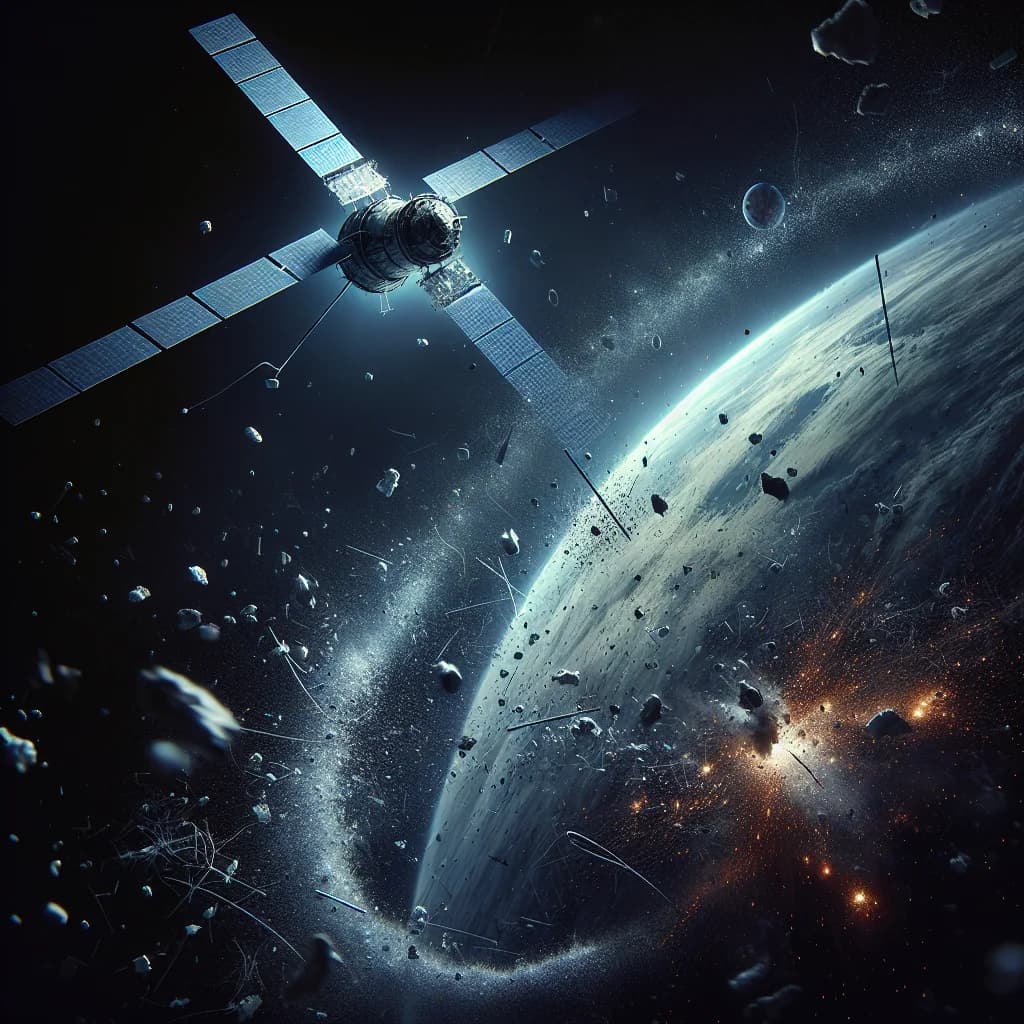
A single satellite collision can trigger the Kessler Syndrome, a chain reaction where resulting debris destroys other objects and creates an exponential cloud of junk. This runaway effect would make low Earth orbit too dangerous for spacecraft, effectively destroying global communication networks and trapping humanity on the planet for generations.
The Celestial Domino Effect: Could a Single Satellite Collision Trap Humanity on Earth?
Imagine the vastness of space as a pristine, high-speed highway. Now, imagine a single fender bender on that highway—except the cars are traveling at 17,500 miles per hour, and the wreckage never leaves the road. This is the foundational premise of the Kessler Syndrome, a theoretical scenario where the Earth’s orbit becomes so cluttered with debris that space travel becomes impossible. While it sounds like the plot of a science-fiction thriller, the Kessler Syndrome is rooted in the very real laws of orbital mechanics and kinetic energy. By analyzing the physical constraints of Low Earth Orbit (LEO), we can understand how one localized accident could create a self-sustaining shell of shrapnel, effectively locking the door to the stars for generations.
The Physics of a High-Speed Intersection
To understand how a single collision triggers a global lockout, we must first look at the incredible energy involved in orbital flight. Objects in Low Earth Orbit must maintain a velocity of approximately 7.8 kilometers per second (about 17,500 mph) to counteract the pull of gravity. At these speeds, the physics of a collision change drastically.
The formula for kinetic energy ($KE = ½mv²$) tells us that velocity is the most critical factor. Because the velocity is squared, an object’s destructive power increases exponentially as it speeds up. For context:
- A tiny fleck of paint traveling at orbital speeds can impact a spacecraft with the force of a 550-pound weight dropped from a height of ten feet.
- A 1-centimeter bolt carries the kinetic energy equivalent to a hand grenade.
- A decommissioned satellite, weighing several tons, possesses enough energy to instantly pulverize any object it strikes into tens of thousands of smaller pieces.
The Cascade: From One to Millions
The "trapping" effect occurs through a process known as collisional cascading. When two large satellites collide, they don’t just stop; they shatter. This transforms two trackable objects into a cloud of thousands of jagged fragments, each moving on a slightly different trajectory but at the same lethal speeds.
The Mathematics of Probability
As the number of fragments increases, the "cross-sectional area" of debris in a specific orbital plane expands. This increases the mathematical probability of a secondary collision.
- Primary Event: Two satellites collide, creating 10,000 fragments.
- Secondary Events: Those 10,000 fragments spread out, eventually striking other active satellites or debris.
- The Tipping Point: Eventually, the density of objects reaches a "critical mass" where the rate of new debris generation exceeds the rate at which old debris falls back into the atmosphere and burns up.
At this stage, the process becomes self-sustaining. Even if we never launched another rocket, the objects already in orbit would continue to smash into one another, grinding themselves down into a permanent, impenetrable cloud of high-speed dust and shrapnel.
The "Orbital Shell" and the End of Spaceflight
If this cascade reaches its peak, Low Earth Orbit would essentially become a cosmic minefield. For humanity, the consequences would be a physical and technological "lock-in."
Any attempt to launch a new rocket would be akin to trying to run through a storm of supersonic bullets. A single puncture to a fuel tank or a crew capsule would be catastrophic. This would result in:
- The Loss of Global Infrastructure: Our GPS, weather forecasting, and global telecommunications networks rely on these orbits. A Kessler event would systematically dismantle the modern digital age.
- Scientific Isolation: Without the ability to pass through LEO safely, deep-space exploration to the Moon or Mars would be grounded. We would be physically confined to our planetary surface.
Conclusion
The Kessler Syndrome demonstrates that orbit is not just an empty void, but a finite and fragile environment. A single significant collision could initiate a chain reaction governed by the immutable laws of kinetic energy and orbital mechanics, turning our gateway to the universe into a barrier. While the scenario of being "trapped" is a sobering thought experiment, it serves as a powerful reminder of the importance of space sustainability. Just as we protect our oceans and forests, maintaining "orbital hygiene" ensures that the highway to the stars remains open for the explorers of tomorrow. Our continued journey into the cosmos depends on ensuring that our first steps into space don't accidentally become our last.