Why would a straw reaching into space be unable to suck a single drop of water from the ocean
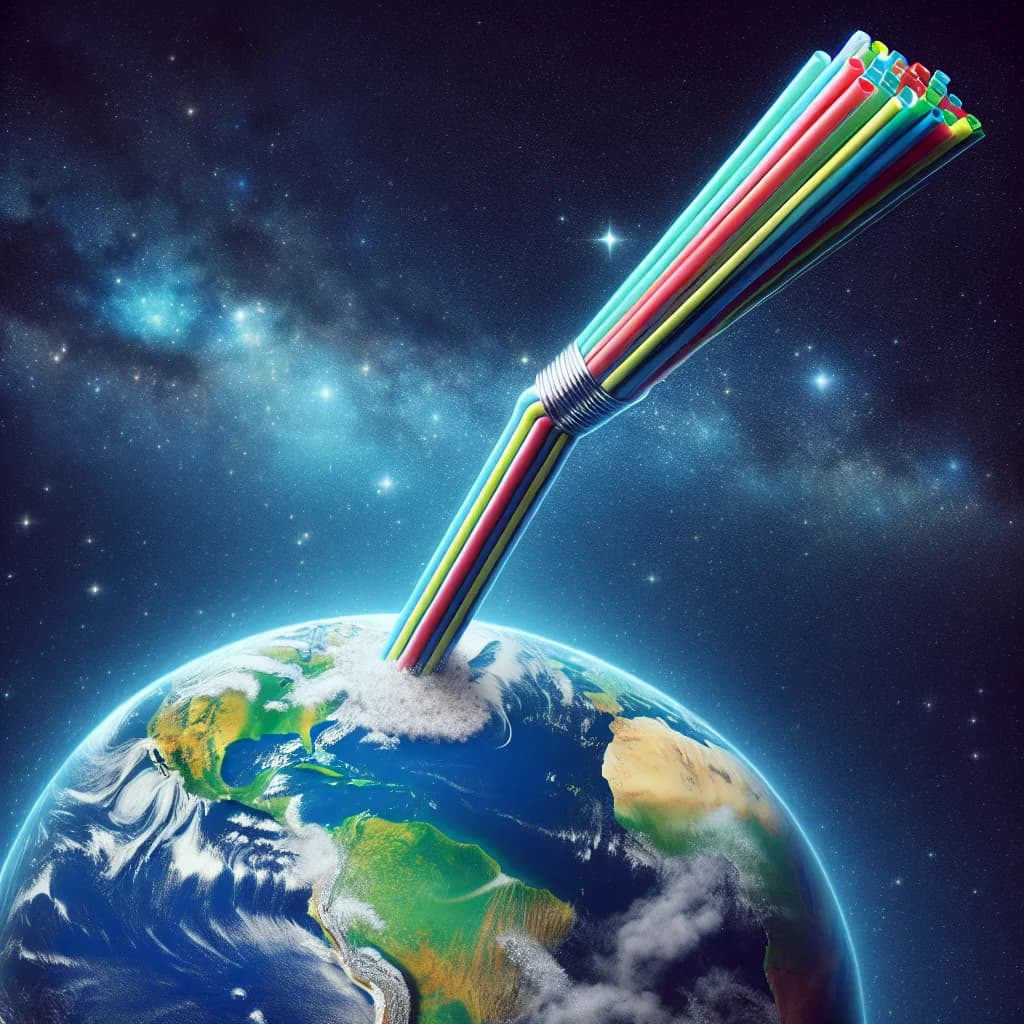
Imagine a straw stretching from the ocean floor all the way to the stars—yet, no matter how hard you pull, it remains bone dry. Discover the surprising atmospheric limits that prove why physics simply won't let you drink from the cosmos.

Too Long; Didn't Read
Atmospheric pressure, not suction, pushes liquid up a straw. Because Earth’s atmosphere can only support a water column roughly 10 meters high, it is physically impossible to lift water any further regardless of how strong the vacuum is at the top.
The Impossible Slurp: Why a Straw Reaching into Space Couldn’t Siphon a Single Drop of Water
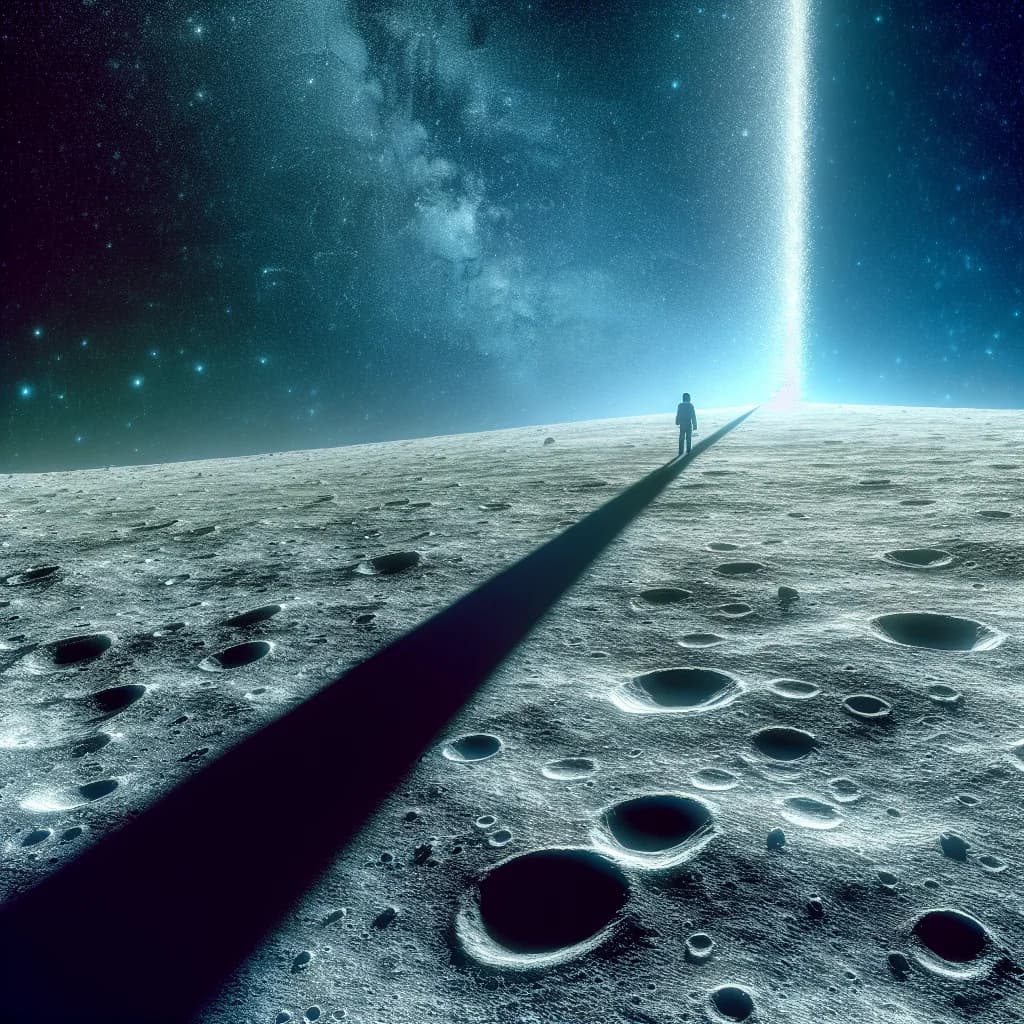
Imagine an astronaut perched on a platform at the edge of the Karman line—the theoretical boundary of space—clutching an impossibly long, indestructible straw. Looking down at the shimmering blue expanse of the Pacific Ocean 100 kilometers below, they take a deep breath and attempt the ultimate cosmic refreshment. Despite their best efforts and the vast vacuum of space seemingly "pulling" from above, not a single drop of seawater would ever reach their lips.
This thought experiment might seem like a simple case of "it’s too far," but the failure of the giant straw is actually dictated by the rigid laws of fluid dynamics and atmospheric pressure. To understand why this interstellar sip is impossible, we must look at the physics of how straws actually work and the invisible weight of the air around us.
The Great Suction Misconception
The primary reason our cosmic straw fails is a misunderstanding of what "suction" actually is. In our daily lives, we think of suction as a pulling force. However, in physics, suction is actually a pushing force.
When you use a straw in a glass of water, you aren't pulling the liquid up. Instead, you are removing some of the air inside the straw, which lowers the air pressure above the liquid. The much higher atmospheric pressure outside the straw—the weight of the miles of air above the glass—pushes down on the surface of the water. Because the pressure inside the straw is now lower, the atmosphere literally shoves the water up into your mouth.
The Barometric Limit: Earth’s 10-Meter Ceiling
Even with a perfect vacuum at the top of a straw, there is a hard limit to how high water can be pushed. This is known as the barometric limit.
- The Calculation: At sea level, Earth’s atmosphere exerts a pressure of approximately 101,325 Pascals (14.7 pounds per square inch).
- The Height: Water has a specific density (roughly 1,000 kg/m³). When you calculate how much water the atmosphere can support against gravity, the answer is consistently about 10.3 meters (roughly 33.8 feet).
Whether your straw is 20 meters long or 100 kilometers long, the atmosphere only has enough "muscle" to push that water up to the height of a three-story building. Once the column of water reaches 10.3 meters, the weight of the water pushing down perfectly balances the atmospheric pressure pushing up. The water simply stops rising, leaving tens of kilometers of empty straw above it.
Comparisons of Scale
To put this into perspective, the distance to space is roughly 100,000 meters. The atmosphere can only lift water about 0.01% of the way there. It would be like trying to climb a mountain but stopping after taking just one single step.
The Boiling Point Problem
Even if we ignored the pressure limits, we would run into a second "phase" of trouble: thermodynamics. As you lower the pressure inside the straw to create suction, you also lower the boiling point of the water.
In the near-vacuum conditions required to pull water upward, the water at the top of the 10.3-meter column would begin to undergo boling at room temperature.
- The liquid would turn into water vapor (gas).
- This gas would fill the vacuum, equalizing the pressure.
- The "suction" would vanish as the straw fills with steam rather than liquid.
Conclusion
The dream of a space-based soda straw is ultimately defeated by the very atmosphere that sustains us. While the vacuum of space is powerful, it cannot "suck" water upward; it can only provide a space for the atmosphere to perform the heavy lifting. Because our atmosphere is only heavy enough to support a column of water about 10.3 meters high, the vast majority of our cosmic straw would remain frustratingly empty.
This experiment highlights a fascinating reality: we live at the bottom of a deep "ocean" of air. The same pressure that prevents us from drinking the ocean from space is the same force that keeps our liquid oceans pressed firmly against the Earth’s surface, ensuring our planet remains a lush, watery oasis in the vacuum of the cosmos.