Why would an astronaut’s fingernails potentially fall off after a long spacewalk in pressurized gloves
While spacewalking offers the ultimate view, it can come at a gruesome cost: losing your fingernails. Discover the high-pressure science behind this bizarre occupational hazard and why even the most advanced spacesuits can’t always prevent it.

Too Long; Didn't Read
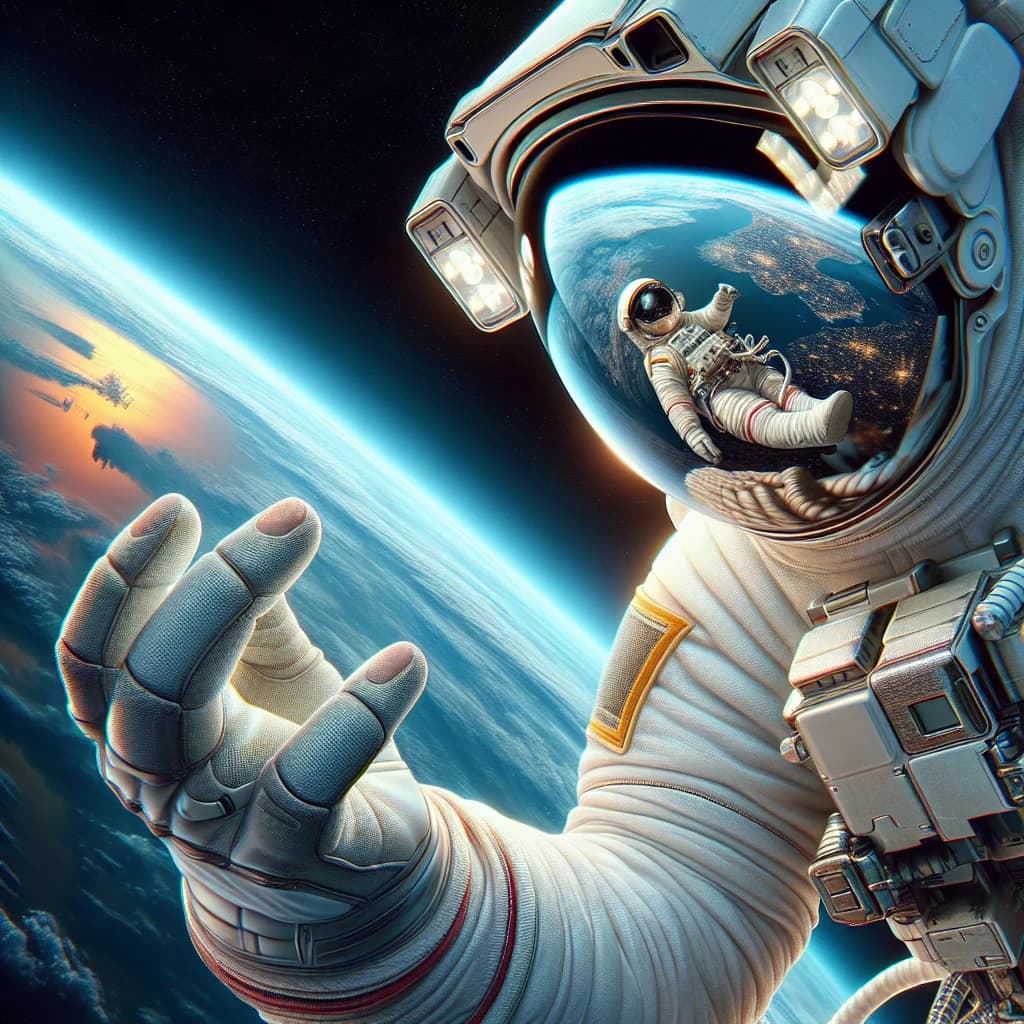
Astronauts can lose their fingernails after long spacewalks because pressurized gloves are extremely stiff and tight. The constant friction and intense pressure against the fingertips during manual tasks cause physical trauma and restricted circulation, leading to a condition called fingernail delamination where the nails painfully detach from the nail bed.
The Cost of a Cosmic Handshake: Why Do Astronauts’ Fingernails Fall Off During Spacewalks?
Exploring the vast expanse of the cosmos is often viewed through the lens of grand orbital mechanics and breathtaking nebulae. However, for the men and women working outside the International Space Station (ISS), the most significant challenges are often found in the palm of their hands—quite literally. One of the strangest occupational hazards of being an astronaut is a condition known as nail delamination. After a long Extravehicular Activity (EVA), or spacewalk, some astronauts have reported their fingernails becoming loose or even falling off entirely. This phenomenon is not the result of a space-borne illness, but rather a fascinating intersection of biomechanics, pressure physics, and ergonomic engineering. By analyzing the structural constraints of pressurized suits, we can understand why the simple act of moving a finger becomes a battle against physics.
The Balloon Effect: Physics Under Pressure
To understand why a fingernail might detach, we must first look at the environment of the Extravehicular Mobility Unit (EMU), or the spacesuit. Outer space is a vacuum, meaning it has zero atmospheric pressure. To keep an astronaut alive, the suit must be pressurized, typically to about 4.3 pounds per square inch (psi) of pure oxygen.
While 4.3 psi might sound low compared to Earth’s 14.7 psi at sea level, it creates a significant mechanical challenge. When a glove is pressurized in a vacuum, it behaves like a rigid, over-inflated balloon. It naturally wants to maintain a stiff, fingers-extended position. To perform any task—such as turning a bolt or gripping a handrail—an astronaut must use muscular force to overcome the internal pressure of the glove.
The Mechanics of Resistance
Every time an astronaut closes their hand, they are fighting against the suit's internal pressure. Imagine squeezing a tennis ball repeatedly for eight hours straight. The energy output required for this constant manipulation is immense.
- Constant Force: Over an eight-hour spacewalk, an astronaut may perform thousands of gripping motions.
- Mechanical Leverage: The fingertips are the primary point of contact where this pressure is translated into physical work, concentrating the mechanical stress directly on the nail bed.
Onycholysis: The Science of Nail Delamination
The clinical term for a fingernail falling off is onycholysis. In the context of spaceflight, this is caused by the repetitive mechanical trauma of the fingertip rubbing against the hard inner cap of the glove.
Friction and Moisture
During an EVA, the hands are subjected to unique stressors:
- Frictional Heat: As the finger moves within the pressurized glove, the skin and nail rub against the fabric and the rubber fingertip caps.
- Moisture Accumulation: Despite cooling systems, hands often sweat during intense physical labor. This moisture softens the nail and the surrounding skin (maceration), making the nail more susceptible to pulling away from the underlying tissue.
- Blood Flow Restriction: The constant pressure on the fingertips can temporarily impede local blood circulation. When the pressure is released after the spacewalk, the sudden "re-perfusion" can contribute to tissue swelling, further loosening the nail.
Size Matters: The Engineering Paradox
Interestingly, studies conducted by Wyle Laboratories and NASA have shown that the risk of losing a fingernail is higher for astronauts with larger hands. This is because the circumference of the glove's finger joints must be standardized to some degree to maintain structural integrity. For an astronaut with larger hands, the glove fits more tightly, causing the fingertips to press more firmly against the end of the glove's interior. This increased "knuckle-to-tip" pressure significantly accelerates the delamination process.
Cascading Consequences of Ergonomic Strain
The physical result of this pressure is a clinical separation of the nail plate from the nail bed. While the process is bloodless and occurs over several hours of intense labor, the environmental impact within the glove is significant.
- Tactile Sensitivity Loss: As the nail begins to loosen, the astronaut loses some of the "feel" required for delicate tasks.
- Thermal Regulation: The loss of a nail can change how the fingertip perceives the extreme temperature fluctuations of space, as the nail acts as a protective shield for the sensitive nerves beneath.
Engineers have attempted to mitigate this by using custom-molded gloves and "fingernail caps," but the fundamental physics of a pressurized cylinder—which the glove finger essentially is—remains a stubborn hurdle.
Conclusion
The phenomenon of fingernail delamination in space is a striking reminder that human physiology is finely tuned to the atmospheric conditions of Earth. The loss of a nail is not caused by a failure of the suit, but rather by the suit doing its job too well—maintaining a pressure differential that turns a flexible glove into a rigid mechanical barrier. This scenario highlights the core principles of pressure physics and mechanical friction that engineers must balance to keep explorers safe. As we look toward longer missions to Mars and beyond, solving the "glove problem" remains a priority, ensuring that the human hand—our most versatile tool—remains intact while we reach for the stars.