Why would it rain liquid glass sideways at five thousand miles per hour on the exoplanet HD 189733b
Beyond our solar system lies a cobalt-blue nightmare where the forecast calls for horizontal shards of molten glass moving at seven times the speed of sound. Uncover the chaotic science behind HD 189733b and why this stunning exoplanet is home to the deadliest weather in the galaxy.

Too Long; Didn't Read
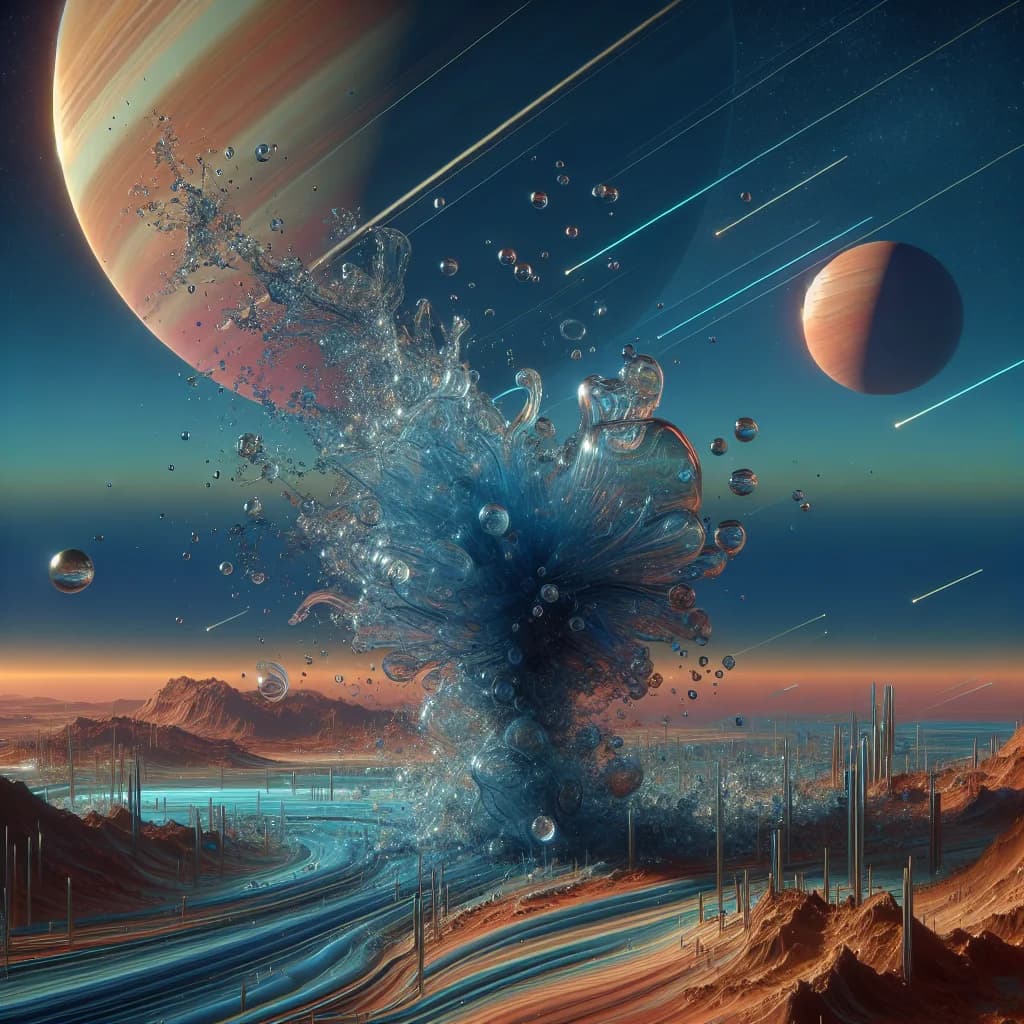
On the exoplanet HD 189733b, extreme temperatures exceeding 1,700 degrees Fahrenheit melt silicate particles in the atmosphere into liquid glass. Combined with howling winds reaching 5,400 miles per hour, these molten particles are whipped horizontally across the planet, creating a lethal storm of sideways glass rain.
A Storm of Shards: Why Does it Rain Liquid Glass Sideways on HD 189733b?
Imagine standing on a world that, from a distance, looks like a serene, cobalt-blue marble suspended in the velvet of space. It mimics the tranquil hue of Earth’s oceans, suggesting a paradise of deep waters and cool breezes. However, step closer to the exoplanet HD 189733b, and you will find a celestial environment that defies every earthly intuition. This "Hot Jupiter" is home to a climate so energetic that it doesn't just rain—it rains molten glass, and it does so horizontally at over seven times the speed of sound.
To understand how such an alien spectacle is possible, we must look at the intersection of planetary thermodynamics, atmospheric chemistry, and fluid dynamics. By analyzing the planet's proximity to its host star and its unique chemical composition, we can decode the physics behind this supersonic, silicate-filled atmosphere.
The Chemistry of a Cobalt Giant
The striking blue color of HD 189733b is its first great deception. On Earth, our sky is blue due to Rayleigh scattering by nitrogen and oxygen. On HD 189733b, the blue comes from a much more rugged source: silicates. Silicates are the primary components of rocks like quartz and granite.
Because the planet is extremely close to its sun, atmospheric temperatures soar to a blistering 1,700°F (930°C). At these temperatures, silicates do not form solid rocks; instead, they exist as a haze of tiny particles or even liquid droplets suspended in the atmosphere. These particles scatter blue light more efficiently than red, giving the planet its beautiful but misleading appearance. Essentially, the "clouds" on this world are made of the raw materials used to manufacture glass.
The Supersonic Engine: 5,000 MPH Winds
Weather is driven by temperature differences. On Earth, a tropical storm might reach 150 mph. On HD 189733b, the wind speed is estimated at a staggering 5,400 miles per hour (roughly 2.4 kilometers per second).
- The Mach Factor: This speed is nearly seven times the speed of sound (Mach 7).
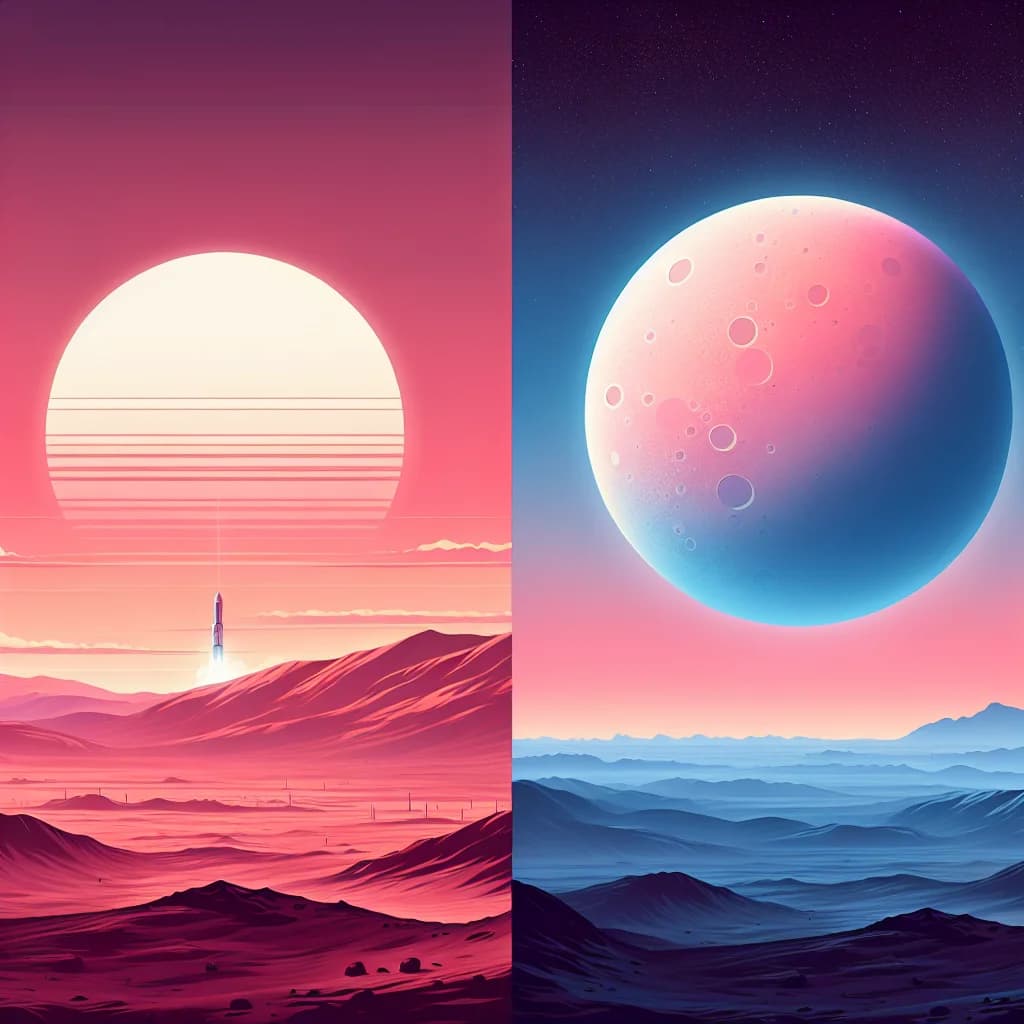
- The Heat Gradient: The planet is "tidally locked," meaning one side always faces its star while the other remains in perpetual darkness. This creates a massive temperature imbalance.
- The Result: Nature abhors a vacuum and a temperature gap. To equalize the heat, massive amounts of energy roar from the day side to the night side, creating a continuous, planet-wide gale that moves faster than a high-velocity bullet.
Why the Rain Moves Sideways
On Earth, gravity is the dominant force acting on a raindrop, pulling it toward the center of the planet. While we experience "driving rain" during storms, the vertical descent is usually quite clear. On HD 189733b, the physics of motion change the game entirely.
- Condensation: As the silicate-rich air moves from the scorching day side to the slightly cooler night side, the gaseous silicates condense into liquid glass droplets.
- Horizontal Dominance: The 5,000 mph wind provides so much kinetic energy that the horizontal velocity of the "raindrop" vastly outweighs the vertical pull of gravity.
- The Trajectory: Instead of falling down, the glass particles are swept along the atmospheric currents. This creates a continuous, high-speed abrasive flow that circles the planet horizontally.
To put this in perspective, if a breeze on Earth is a gentle push, the wind on HD 189733b is a particle accelerator. The glass doesn't have time to "fall" in the traditional sense before it is whipped thousands of miles across the horizon.
Conclusion
The exotic weather of HD 189733b is a perfect demonstration of how extreme environmental variables can transform familiar concepts into something unrecognizable. The combination of intense stellar radiation, tidal locking, and a silicate-rich atmosphere creates a "glass-rain" effect that is governed by the laws of thermodynamics and high-velocity fluid dynamics.
Ultimately, this cobalt-blue world serves as a reminder of the vast diversity of the cosmos. While we often look for "Earth-like" planets, the universe is filled with wonders like HD 189733b that challenge our understanding of what a planet can be. It proves that even in the vacuum of space, reality is often more imaginative than fiction, turning a rainstorm into a supersonic journey through a kaleidoscope of molten glass.