Why would the Sun appear to rise, set, and rise again during a single morning on the planet Mercury
Imagine a world where the Sun rises, changes its mind, and sinks back below the horizon before starting the day all over again. Discover the mind-bending orbital physics that turn a simple morning on Mercury into a celestial double take.


Too Long; Didn't Read
On Mercury, the Sun can appear to rise, briefly set, and rise again because the planet's orbital speed temporarily exceeds its slow rotation speed when it is closest to the Sun. This causes the Sun's path across the sky to reverse direction before continuing its normal course.
The Double Dawn: Why Does the Sun Rise and Set Twice on Mercury?
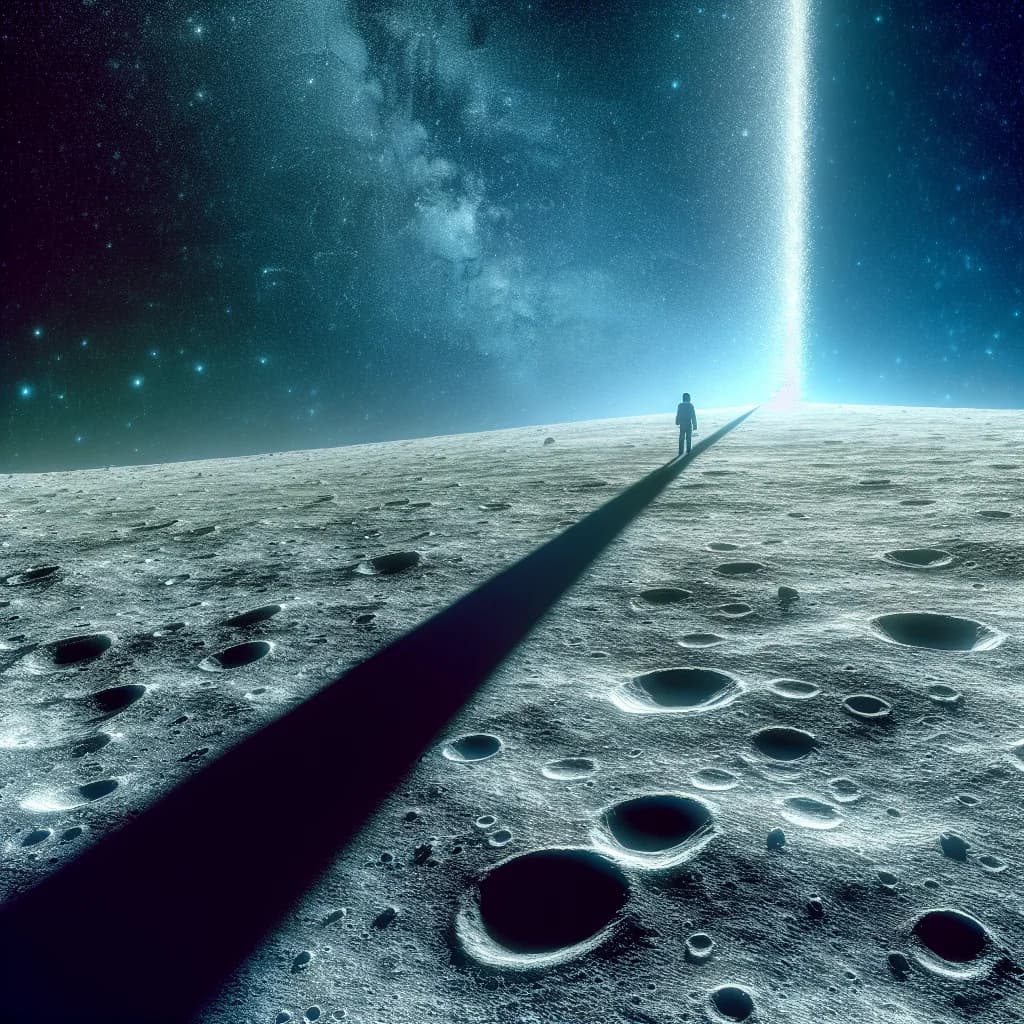
Imagine standing on a desolate, cratered landscape where the morning sun doesn’t just climb into the sky—it changes its mind. You watch a giant, glowing orb peek over the horizon, hover momentarily, and then slowly sink back into the ground as if it forgot something. Moments later, it emerges for a second time to begin its long journey across the heavens. This isn't a scene from a glitchy video game; it is a real celestial phenomenon on the planet Mercury. To understand this "double sunrise," we must dive into the fascinating interplay of orbital mechanics, tidal locking, and Kepler’s laws of planetary motion.
The Cosmic Slow-Dance: 3:2 Resonance
To understand why the Sun behaves so strangely on Mercury, we first have to look at how the planet spins. For a long time, astronomers thought Mercury was tidally locked to the Sun, meaning one side always faced the heat while the other faced the cold. However, we now know Mercury exists in a 3:2 spin-orbit resonance.
This means that for every two times Mercury orbits the Sun, it rotates on its axis exactly three times.
- Rotation period: Approximately 59 Earth days.
- Orbital period: Approximately 88 Earth days.
Because Mercury rotates so slowly compared to how fast it moves around the Sun, a single "solar day" (the time from one sunrise to the next) actually takes about 176 Earth days. This sluggish rotation sets the stage for a celestial tug-of-war between the planet’s spin and its path through space.
The Speed Demon at Perihelion
Mercury’s orbit is not a perfect circle; it is a highly eccentric ellipse. According to Kepler’s Second Law of Planetary Motion, a planet moves faster when it is closer to the Sun (perihelion) and slower when it is further away (aphelion).
At perihelion, Mercury is roughly 46 million kilometers from the Sun, compared to 70 million kilometers at aphelion. As Mercury whips around the Sun at its closest point, its orbital velocity increases significantly, reaching speeds of about 59 kilometers per second. This is nearly twice as fast as Earth’s average orbital speed!
The Moment the Sun Backtracks
The "double sunrise" occurs because of a temporary mismatch in speeds. Usually, Mercury’s rotation (spinning on its axis) is what causes the Sun to appear to move across the sky from east to west. However, as Mercury approaches perihelion, its orbital angular velocity—the speed at which it moves through its path around the Sun—actually becomes faster than its rotational angular velocity.
The Visual Reversal
- The First Rise: As the morning begins, Mercury’s rotation pushes the Sun above the horizon.
- The Mid-Morning U-Turn: For about four Earth days near perihelion, the planet’s orbital speed is so high that it "overtakes" the rotation. From the perspective of an observer on the surface, the Sun appears to stop its westward progress and loop backward toward the east.
- The Second Rise: Once Mercury moves past perihelion and its orbital speed slows down again, the rotation regains control. The Sun stops its backward slide and rises for the second time, finally continuing its trek across the sky.
This phenomenon doesn't happen everywhere on the planet; it is most prominent at specific longitudes known as the "hot poles," where the Sun is directly overhead or on the horizon during perihelion.
A Solar System Oddity
This unique behavior creates a environment where "morning" is less of a moment and more of a complex mechanical event. While the Sun's backtrack is mathematically predictable, the visual result is a staggering reminder of how much our experience of time and light depends on the specific geometry of our world.
On Earth, our nearly circular orbit and rapid 24-hour rotation keep our sunrises simple and consistent. Mercury, however, serves as a celestial laboratory, proving that in the right gravitational conditions, even the most fundamental constants—like the Sun rising in the east—can become a matter of perspective. This double dawn is a testament to the beautiful, complex physics that governs our local neighborhood in space.