Why would the thin atmosphere of Mars make it physically impossible for an astronaut to whistle a clear note
Imagine puckering up to whistle a tune on the Red Planet, only to be met with a frustrating, breathless silence. Discover why the bizarre physics of Mars’ ultra-thin atmosphere makes it impossible to carry a note, no matter how hard you try.


Too Long; Didn't Read
Mars' atmosphere is roughly 1% as dense as Earth's, which is too thin to provide the air pressure and density required for resonance. Because whistling relies on moving air molecules to create sound waves, the sparse Martian air cannot sustain the vibrations needed to produce a clear audible note.
Can You Carry a Tune on the Red Planet? The Surprising Physics of Why Whistling on Mars is Impossible
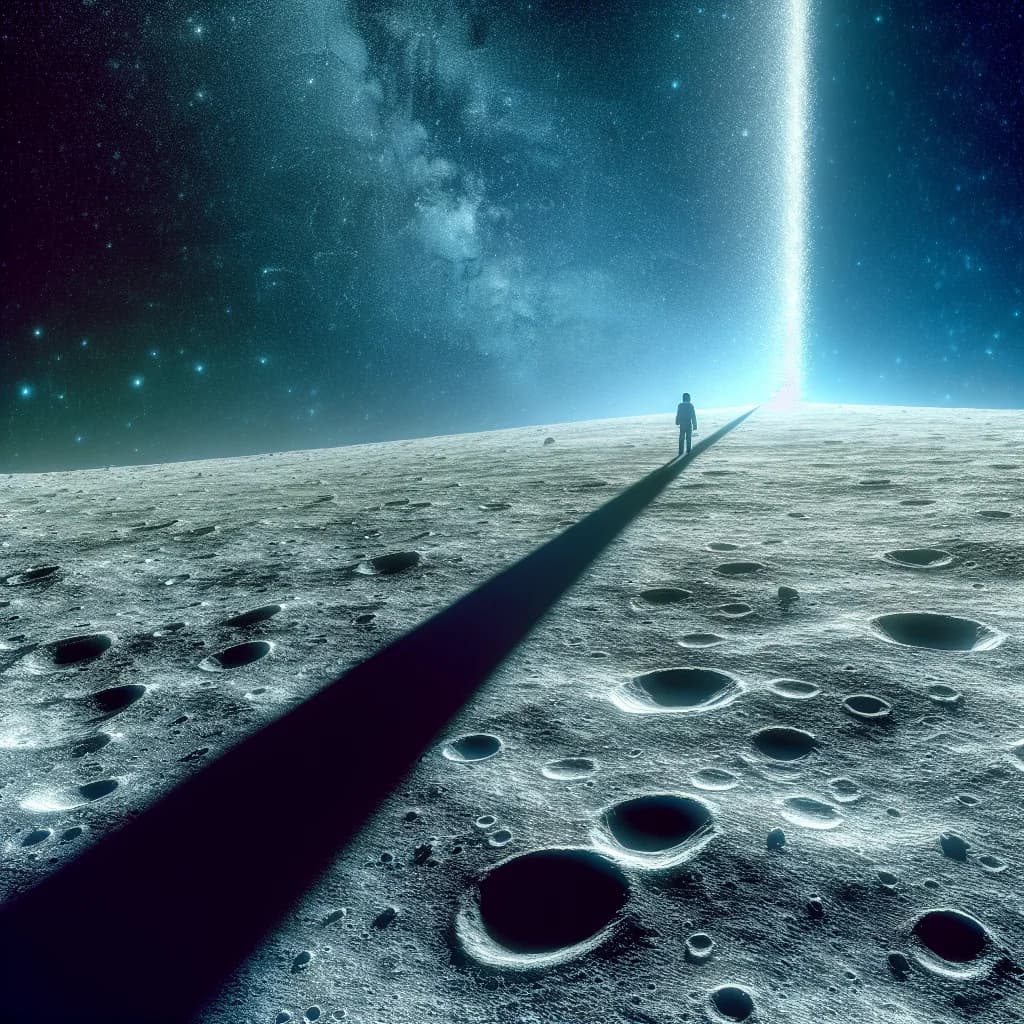
Imagine a lone astronaut trekking across the dusty plains of Jezero Crater. The sun is setting, casting a blue hue over the horizon, and the explorer feels a sudden urge to whistle a cheerful tune. They pucker their lips, blow a steady stream of air, and... nothing happens. Despite their best efforts, the only sound is a faint, breathy hiss. This isn't a failure of talent or a case of dry mouth; it is a fundamental consequence of Martian physics. While science fiction often portrays space as a place of grand soundscapes, the reality of the Martian environment creates a "silent barrier" for the human voice. By examining the principles of fluid dynamics and acoustic resonance, we can uncover why the thin Martian air makes whistling a physical impossibility.
The Mechanics of a Whistle: It’s All About Turbulence
To understand why whistling fails on Mars, we first have to understand how it works on Earth. Whistling is not just blowing air; it is an act of precision fluid dynamics. When you whistle, you create a narrow jet of air with your lips. As this air passes over the edge of your teeth or the outer atmosphere, it creates a "Karman vortex street"—a repeating pattern of swirling vortices.
These tiny cyclones of air oscillate at a specific frequency. When that frequency matches the resonant frequency of the cavity of your mouth, the air vibrates sympathetically, producing a clear, melodic note. This process requires two things that Mars lacks in abundance: high air density and high internal pressure.
The Martian Density Deficit
The primary obstacle to a Martian melody is the sheer thinness of the atmosphere. Earth’s atmospheric pressure at sea level is approximately 101.3 kilopascals (kPa). In contrast, the average surface pressure on Mars is a mere 0.6 kPa. This means the Martian atmosphere is roughly 1% as dense as Earth’s.
To visualize this difference, imagine trying to swim in a pool filled with water versus a pool filled with light steam. On Earth, our air is "thick" enough that a small movement of your lips can displace a significant mass of molecules, creating a robust pressure wave. On Mars:
- Mass Flow: An astronaut would have to exhale air at roughly 10 times the velocity used on Earth just to move the same mass of atmospheric particles.
- The Power Gap: Because the air is so thin, the energy transferred from your breath to the surrounding environment is negligible. The "acoustic impedance"—the measure of how much a medium resists the motion of sound—is incredibly low, meaning your whistle simply doesn't have enough "stuff" to push against.
The Reynolds Number Hurdle
In fluid mechanics, the Reynolds Number determines whether a fluid (like air) flows in a smooth, "laminar" fashion or a chaotic, "turbulent" fashion. Whistling requires turbulence to create those musical vortices.
The formula for the Reynolds Number ($Re$) is: $Re = (\text{density} \times \text{velocity} \times \text{characteristic length}) / \text{viscosity}$
Because the density of the Martian air is so low, the Reynolds Number for the air exiting an astronaut’s lips drops significantly. Under Martian conditions, the air tends to remain in a laminar flow state. Instead of tumbling and swirling to create a note, the air slides out smoothly. Without the creation of these turbulent vortices, there is no vibration, and without vibration, there is no sound. You could blow until you were blue in the face, but the physics of the thin air would keep the flow too "silky" to ever produce a whistle.
Acoustic Coupling and the Speed of Sound
Even if an astronaut managed to generate a tiny vibration, they would face the problem of acoustic coupling. Sound on Mars travels at a different speed—about 240 meters per second compared to Earth's 343 meters per second. Furthermore, the carbon dioxide-rich atmosphere of Mars is an excellent absorber of high-frequency sounds.
- Damping: High-pitched sounds (like a whistle) are absorbed by $CO_2$ molecules far more rapidly than low-pitched sounds.
- Volume: Calculations suggest that a sound produced on Mars would be roughly 20 decibels quieter than the same sound on Earth.
By the time a whistle left your lips, the atmosphere would have effectively "eaten" the sound energy before it could reach your own ears.
Conclusion
The dream of whistling while you work on the Red Planet is, unfortunately, a scientific impossibility. The combination of an ultra-thin atmosphere, the lack of turbulent flow (low Reynolds Number), and the sound-dampening qualities of carbon dioxide creates a world where the human whistle simply cannot exist. Physics dictates that the Martian environment is too "frail" to support the complex interplay of vortices and resonance required for a musical note. While Mars offers stunning vistas and the thrill of discovery, it remains a world of profound acoustic solitude, reminding us that even the simplest joys of Earth, like a clear whistled tune, are a gift of our thick, life-sustaining atmosphere.