Why can pet cats squeeze through any gap that fits their head due to their free-floating collarbones
Ever wondered how your cat manages to "liquidize" through the tiniest of gaps? Discover the incredible anatomical secret of the free-floating collarbone that transforms every feline into a master of the impossible squeeze.

Too Long; Didn't Read
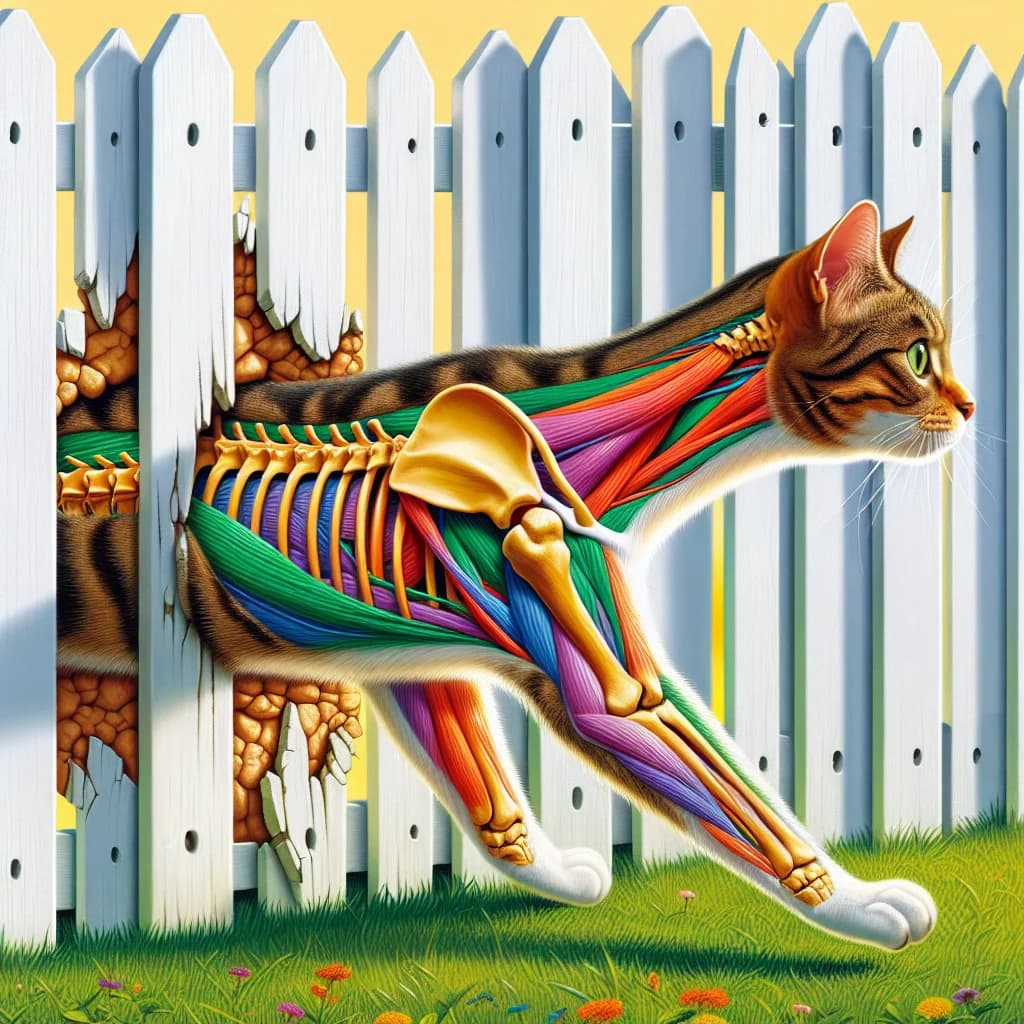
Cats can squeeze through narrow gaps because their collarbones are buried in muscle rather than attached to other bones. This allows their shoulders to fold inward, meaning any opening large enough for their rigid skull is wide enough for their entire body to pass through.
The Science of Feline Fluidity: Why Can Pet Cats Squeeze Through Any Gap That Fits Their Head Due to Their Free-Floating Collarbones?
It is a common sight for cat owners: a feline companion effortlessly pouring itself through a narrow crack or disappearing into a space that seems physically impossible for its size. This "liquid" behavior has sparked countless internet memes, but the reality behind it is a fascinating marvel of evolutionary biology. While humans are restricted by a rigid skeletal frame, cats possess a specialized anatomy that prioritizes flexibility and stealth. At the heart of this ability is a unique skeletal feature that differentiates them from many other mammals. Understanding why can pet cats squeeze through any gap that fits their head due to their free-floating collarbones provides essential insight into their history as apex ambush predators. This blog post will explore the biological mechanisms of the feline clavicle, the supplementary role of the spine, and how this unique anatomy impacts their daily welfare and safety.
The Floating Clavicle: A Masterclass in Flexibility
The primary reason a cat can navigate tight spaces is its vestigial collarbone, or clavicle. In humans, the collarbone is firmly attached to the shoulder blade (scapula) and the breastbone (sternum), creating a rigid bridge that provides support for the arms but limits the range of shoulder movement. In contrast, a cat’s collarbone is not bone-anchored.
The Mechanism of Movement
Instead of being part of a rigid skeletal circuit, the feline clavicle is "free-floating," meaning it is embedded deep within the muscles of the chest. This lack of bony attachment allows the shoulders to move independently and much more freely than a human's. When a cat enters a narrow passage:
- The shoulder blades can fold inward toward the body.
- The chest diameter narrows significantly.
- The only limiting factor becomes the cat’s skull, which is the only part of the upper body that cannot be compressed.
Beyond the Collarbone: The Role of the Feline Spine
While the free-floating collarbone is the catalyst for squeezing through gaps, it is supported by a highly specialized vertebral column. Cats possess an extraordinarily flexible spine, containing more vertebrae than the human spine. Specifically, while humans have 24 vertebrae, cats have approximately 30 (excluding the tail).
These vertebrae are connected by incredibly elastic cushioning discs that allow for extreme rotation and contraction. This flexibility enables the cat to twist its body into various shapes once the head and shoulders have cleared an opening. Furthermore, the feline rib cage is surprisingly compressible, further aiding in their ability to "thin out" as they navigate through narrow apertures.
The Evolutionary Context: Why Did This Develop?
This anatomical specialization is not a domestic accident but an evolutionary necessity for a solitary hunter. Ancestral cats, such as the Near Eastern wildcat (Felis lybica lybica), relied on their ability to pursue small rodents and birds into burrows or dense undergrowth.
- Predatory Advantage: Being able to follow prey into tight tunnels ensured a higher success rate for hunting.
- Escape Mechanisms: The ability to hide in crevices that larger predators could not access provided a significant survival advantage.
- Stealth: The lack of a rigid shoulder girdle contributes to the cat’s low-profile, stalking gait, allowing them to move silently through complex environments.
Whiskers: Nature’s Measuring Tape
A cat does not simply guess if it can fit through a hole; it uses a sophisticated sensory tool called vibrissae, or whiskers. These long, stiff hairs are deeply embedded in the nervous system and are generally proportional to the width of the cat's body. Before attempting to squeeze through a gap, a cat uses its whiskers to detect air currents and physical dimensions. If the whiskers touch the sides of the opening, the cat receives a neurological signal that the space may be too tight for its body to follow its head.
Safety and Environmental Considerations for Owners
Understanding the science behind feline flexibility is vital for responsible pet ownership. Because cats believe they can fit anywhere their head does, they may occasionally find themselves in dangerous situations, such as getting stuck in reclining chairs, pipes, or behind heavy appliances.
- Cat-Proofing: Ensure that gaps behind large appliances are blocked if they lead to dangerous areas like ventilation shafts.
- Weight Management: It is important to note that while the skeletal structure allows for flexibility, excess body fat (adipose tissue) does not compress. Overweight cats are at a higher risk of getting stuck because their "girth" no longer matches the clearance provided by their head and shoulders.
- Veterinary Care: If your cat appears to lose its coordination or ability to navigate tight spaces, it may indicate a spinal or muscular issue that requires professional evaluation.
Conclusion
The remarkable ability of felines to navigate narrow spaces is a testament to millions of years of predatory refinement. By answering the question of why can pet cats squeeze through any gap that fits their head due to their free-floating collarbones, we gain a deeper appreciation for the complex biology of our household companions. Their vestigial clavicles, coupled with a highly elastic spine and sensory whiskers, create a unique "fluid" anatomy designed for survival. As owners, recognizing this trait allows us to better appreciate their natural behaviors while ensuring their home environment remains safe. Always monitor your cat’s exploration habits and maintain their physical fitness to ensure their anatomical "superpowers" continue to function safely throughout their lives.