Why do pet dogs curl their tongues backward to ladle water into their mouths instead of scooping forward
It looks like a messy splash, but your dog’s backward tongue-curl is actually a high-speed feat of fluid physics in action. Discover why this counterintuitive "reverse scoop" is the secret to how they stay hydrated so efficiently.

Too Long; Didn't Read
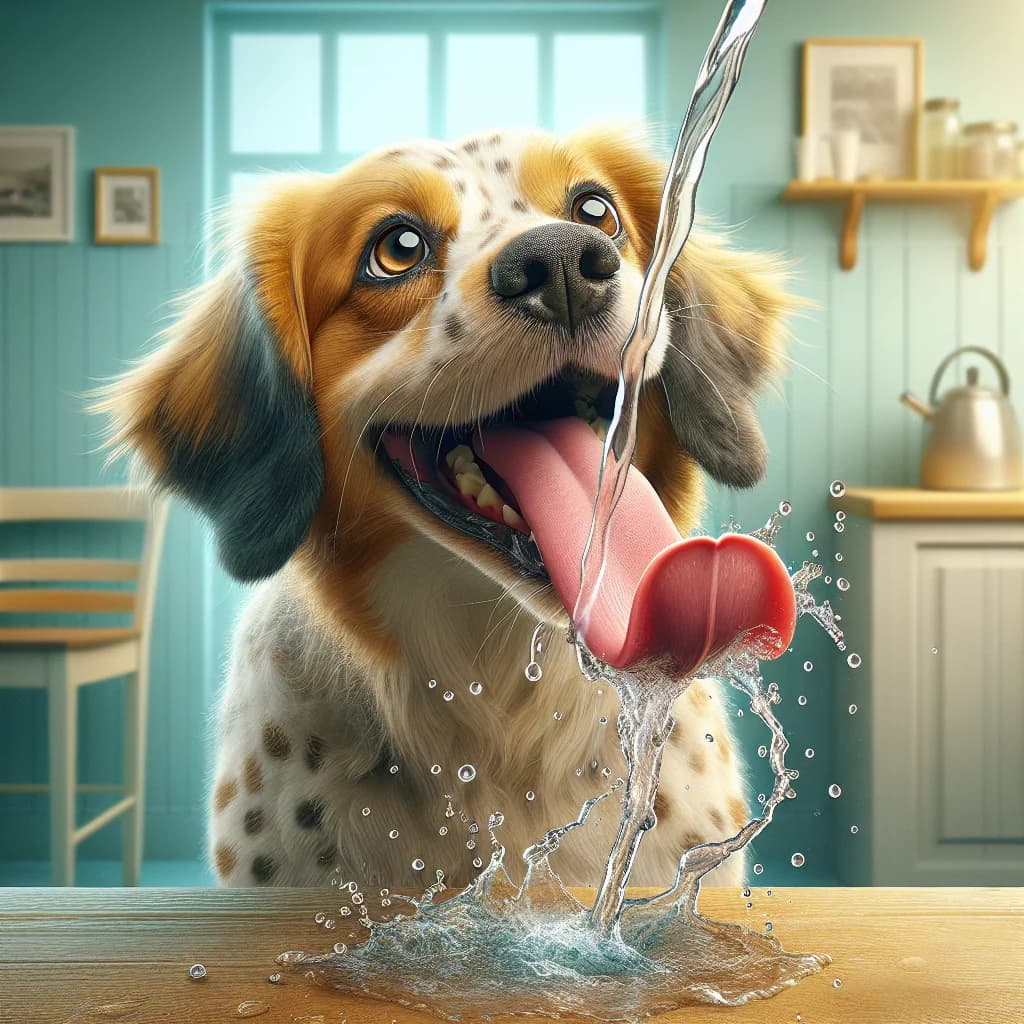
Dogs lack the cheeks necessary to create suction, so they curl their tongues backward to pull a column of water into the air using fluid dynamics. They then bite down on the water column to swallow it before gravity pulls it back down, a method far more efficient for their anatomy than forward scooping.
The Fluid Dynamics of the Slurp: Why Do Pet Dogs Curl Their Tongues Backward to Ladle Water into Their Mouths Instead of Scooping Forward?
Have you ever paused to watch your canine companion drink after a vigorous game of fetch? To the naked eye, it appears to be a frantic, messy splashing of water. However, high-speed videography reveals a complex and highly efficient feat of fluid dynamics. Unlike humans, who can create suction with their lips and cheeks, dogs utilize a unique "ladling" technique that involves curling their tongues backward. This behavior is not a random quirk of evolution but a necessary biological adaptation. Understanding why do pet dogs curl their tongues backward to ladle water into their mouths instead of scooping forward offers a fascinating glimpse into canine anatomy and the physics of survival. This post will explore the biomechanics of the canine "lap," comparing it to other species and explaining the science behind the splash.
The Anatomy of the Slurp: Why Dogs Can’t Sip
To understand why dogs curl their tongues backward, we must first look at their facial structure. Most mammalian "suction drinkers," such as humans, horses, and sheep, possess "complete" cheeks. These cheeks allow the animal to seal their mouth and create a vacuum, drawing liquid upward.
Canines, however, are predators evolved for a specific type of hunting and heat regulation. They have "incomplete" cheeks—large, flexible gapes that allow them to open their mouths wide to catch prey and to pant efficiently for cooling. Because they cannot seal their lips to create suction, they must use their tongues as a mechanical pump to move water against gravity. If a dog attempted to scoop water forward, the physics of the motion would result in significantly less water reaching the throat, as the liquid would simply spill out of the sides of their open jowls.
The Physics of the Water Column
Research from institutions like Virginia Tech and Harvard University has utilized high-speed cameras to break down the mechanics of the canine drink. The process is far more sophisticated than a simple "scoop." It follows a specific biological sequence:
- The Plunge: The dog extends its tongue and plunges it into the water.
- The Backward Curl: Instead of curving the tongue upward into a "spoon" shape, the dog curls the tip of the tongue backward toward the throat.
- The Acceleration: The dog retracts its tongue rapidly. Because the water adheres to the rough surface of the tongue (due to surface tension), this rapid upward acceleration creates a "liquid column."
- The Bite: Just as gravity begins to pull the column of water back down into the bowl, the dog snaps its jaws shut, capturing the top portion of the column in its mouth.
The backward curl is essential because it creates a larger surface area on the top of the tongue for the water to cling to. By curling backward, the dog creates a "ladle" that directs the momentum of the water column straight toward the back of the oral cavity.
Dogs vs. Cats: A Study in Elegance and Power
While both dogs and cats lack the ability to suck water, they employ the backward curl with different levels of intensity. Evolutionary biologists note that cats are "elegant" drinkers; they lightly touch the surface of the water with their tongues and pull up a small, neat column.
In contrast, dogs are "inertial" drinkers. They plunge their tongues deep into the water, maximizing the surface area of the backward curl to pull up a much larger volume of liquid. This is why dogs are notoriously messy drinkers compared to cats. A dog relies on the sheer speed and mass of the water column, often splashing significantly as they "bite" the water out of the air. This method is highly effective for a larger animal that needs to hydrate quickly after physical exertion.
The Importance of Efficient Hydration
Understanding this mechanism is more than just a scientific curiosity; it highlights the importance of accessibility in animal husbandry. Because dogs rely on the formation of a liquid column, the depth of the water bowl matters. If the water level is too shallow, the dog cannot submerge the tongue enough to create a sufficient backward curl, making it difficult to form the necessary column for a deep drink.
Providing a deep, clean water source ensures that your dog can utilize their natural biomechanics to stay hydrated. Furthermore, noticing changes in how a dog "laps"—such as hesitating to curl the tongue or frequent coughing during drinking—can be an early indicator of neurological or dental issues, warranting a consultation with a veterinary professional.
Conclusion
The next time you hear the rhythmic splashing of your dog at their water bowl, you are witnessing a masterclass in fluid mechanics. The reason why do pet dogs curl their tongues backward to ladle water into their mouths instead of scooping forward is a brilliant evolutionary workaround for their lack of suction-capable cheeks. By using acceleration and surface tension to create a vertical column of water, dogs can hydrate efficiently despite their predatory anatomy. Appreciating these subtle biological adaptations helps us better understand the needs of our pets and reinforces the incredible complexity of the animal kingdom. Always ensure your pet has access to a full bowl of fresh water to support this unique and vital behavior.