Why does a fresh pineapple physically digest the inside of your mouth while you are eating it
Ever wonder why your tongue stings after a few slices of fresh pineapple? It turns out this tropical fruit contains a powerful enzyme that is actually trying to digest **you** right back.

Too Long; Didn't Read
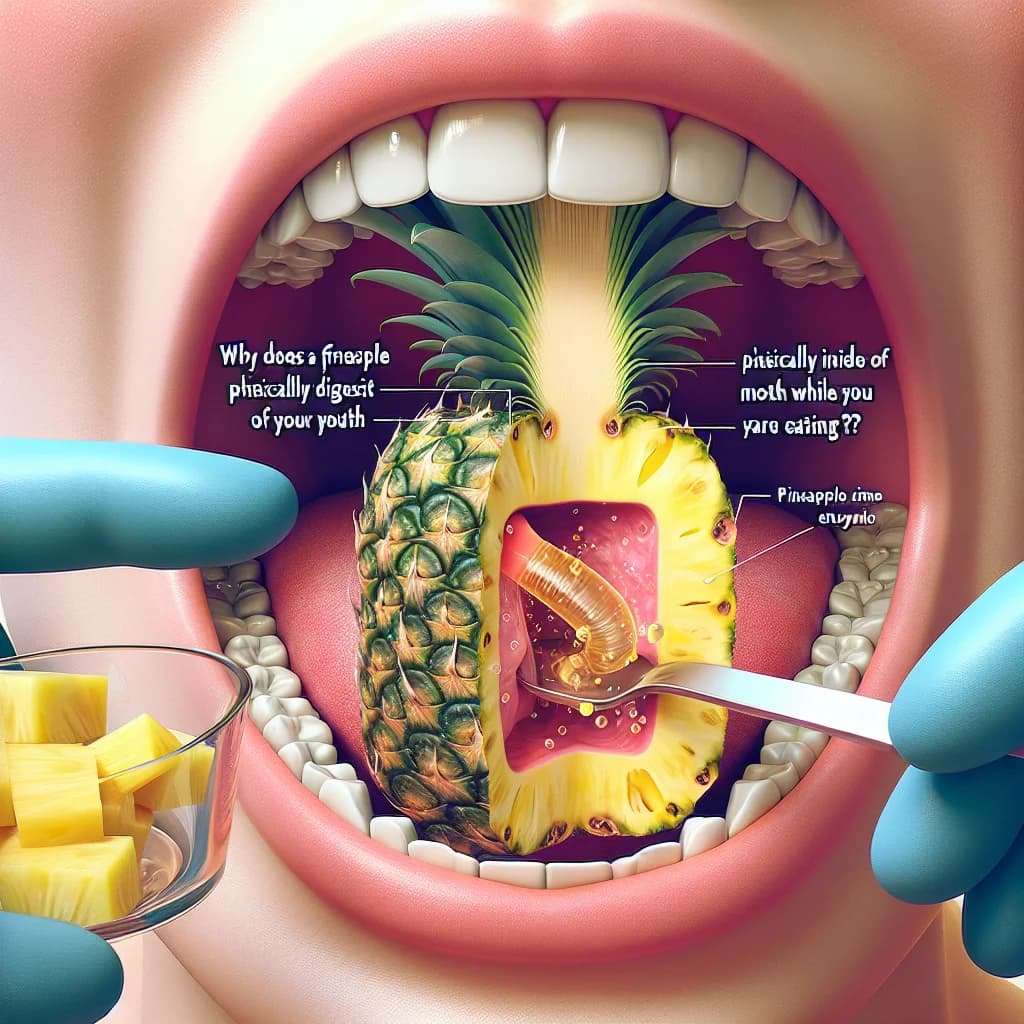
Pineapples contain a protein-digesting enzyme called bromelain. When you eat fresh pineapple, this enzyme begins breaking down the proteins in your mouth’s sensitive lining, resulting in a tingling or burning sensation.
The Fruit That Bites Back: Is Your Pineapple Actually Digesting You?
Have you ever noticed a peculiar tingling or a slight roughness on your tongue after enjoying a few slices of fresh pineapple? While we usually think of ourselves as the undisputed top of the food chain when it comes to our snacks, the pineapple presents a rare and fascinating biological reversal. In a strictly chemical sense, while you are eating the pineapple, the pineapple is technically "eating" you back. This isn't a scene from a science fiction movie, but rather a brilliant display of molecular biology in action. By examining the roles of enzymatic catalysts and protein structures, we can uncover the scientific reality behind this culinary skirmish and understand how a tropical fruit performs a localized "digestion" of the sensory surfaces within your mouth.
The Molecular Scissors: What is Bromelain?
The secret behind the pineapple’s sting is a complex mixture of enzymes known collectively as bromelain. Specifically, bromelain is a protease, a type of enzyme designed to break down proteins into their constituent building blocks, amino acids.
In the natural world, plants often develop chemical defenses to deter pests or fungi. While the tough, spiky exterior of the pineapple provides a physical barrier, bromelain serves as a biochemical deterrent. When you bite into a fresh slice, you release these enzymes from the fruit’s cellular compartments. Once they contact the mucosal linings of your mouth—which are primarily composed of proteins like collagen and various glycoproteins—the bromelain begins a process called proteolysis.
How the "Digestion" Works
- Contact: The juice spreads across the tongue and cheeks.
- Activation: The moist, warm environment of the mouth is ideal for enzymatic activity.
- Hydrolysis: Bromelain targets the peptide bonds that hold protein chains together, essentially acting like microscopic scissors that snip the protein structures on the surface of your tongue.
- Sensation: This structural "remodeling" at a microscopic level is what your nerves perceive as a prickly or itchy sensation.
Measuring the "Bite": Scale and Impact
To understand the scale of this interaction, we have to look at the concentration of these enzymes. While levels vary based on the ripeness of the fruit and the specific variety, a single gram of fresh pineapple juice can contain enough bromelain to catalyze the breakdown of several milligrams of protein in a controlled laboratory setting.
If we consider that the average human tongue has a surface area of roughly 30 to 40 square centimeters, a few slices of pineapple introduce millions of active enzyme molecules across that territory. However, it is important to remember that this process is self-limiting.
- Mass Comparison: While the bromelain is busy at work, your body is constantly producing saliva, which helps dilute the enzyme and wash it away.
- Energy Output: The energy required for these enzymatic reactions is negligible on a human scale, but at the molecular level, thousands of peptide bonds are being broken every second you chew.
- Atmospheric Constraints: Unlike industrial chemical reactions, this process happens at a safe, biological pH and temperature, ensuring that the "digestion" remains strictly superficial.
Why Don’t We Dissolve?
If pineapple is so effective at breaking down proteins, why does the "digestion" stop at a mild tingle? The human body is remarkably resilient and possesses several layers of defense against this botanical interloper.
The Biological Reset
The primary reason you don't sustain lasting damage is the rapid regenerative power of the human mouth. The cells lining your oral cavity are among the fastest-growing in the body, replacing themselves every few days. Furthermore, the moment you swallow the pineapple, the environment changes drastically. The highly acidic gastric juices in your stomach (with a pH of around 1.5 to 3.5) denature the bromelain. To "denature" an enzyme means to unfold its specific 3D shape; once the enzyme loses its shape, it loses its ability to function as a pair of scissors.
Interestingly, if you cook pineapple, you won't feel the sting at all. Heat provides enough kinetic energy to break the weak bonds holding the bromelain enzyme together, permanently deactivating its protein-dissolving powers. This is why canned pineapple, which is heat-treated during the canning process, lacks the "bite" of the fresh fruit.
The Ultimate Scientific Outcome
In summary, the sensation of a pineapple "digesting" your mouth is a real, measurable biochemical event driven by the enzyme bromelain. Through the process of proteolytic hydrolysis, the fruit temporarily breaks down the surface proteins of your tongue and cheeks. However, thanks to the dilution from saliva, the deactivating power of stomach acid, and our body’s rapid cellular turnover, the effect is entirely harmless and fleeting.
This curious interaction serves as a vivid reminder that the kitchen is essentially a chemistry lab. The same principles of molecular biology that govern the most complex organisms are at play in a simple fruit salad. The next time you enjoy a slice of fresh pineapple, you can appreciate the tiny, invisible molecular scissors at work, making your snack a truly interactive scientific experience.